Will a Stud Finder Find Metal Studs? Complete Guide
Yes, many electronic stud finders can find metal studs, especially models designed to detect both wood and steel framing behind drywall.
However, finding a metal stud is not always the same as identifying it as metal. A basic electronic stud finder may simply show that a stud-like object is behind the wall, while a multi-mode scanner may have a dedicated metal setting that helps distinguish steel framing from wood studs, pipes, screws, or other hidden metal.
The accuracy of the result also depends on wall thickness, scan depth, the type of stud finder, nearby wiring or plumbing, and how the tool is used. For that reason, it is better to confirm a reading with more than one scan before drilling or mounting anything.
Will a Stud Finder Find Metal Studs?

Most modern electronic stud finders can detect metal studs if the manufacturer designed the tool for both wood and metal framing.
A basic model may locate the edges or center of a stud behind drywall. It may not specifically tell you whether that stud is made of wood or steel.
More advanced stud finders may include:
- Stud Scan
- Deep Scan
- Metal Scan
- Live-wire detection
- Center finding
- Material identification
A dedicated metal mode is particularly useful when you already suspect that a wall contains steel studs.
The important distinction is this:
A stud finder may detect a metal stud without necessarily identifying it as metal.
If you need to know both the location and material, a multi-mode wall scanner is usually more useful than a basic stud finder.
How Does a Stud Finder Detect Metal Studs?
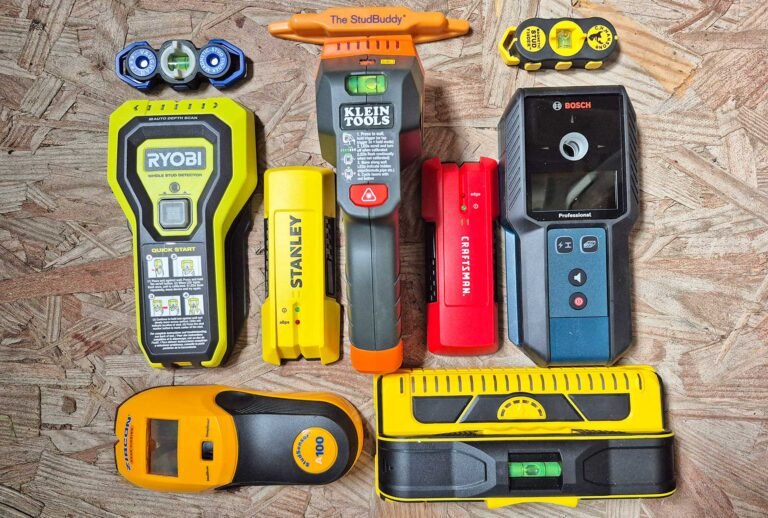
Different stud finders use different sensing methods.
Electronic Stud Finders
Many electronic stud finders detect changes in density or other properties behind the wall surface.
Drywall by itself produces one type of reading. When the sensor passes over a framing member, the material behind the drywall changes, allowing the tool to recognize a likely stud.
This can work with both:
- Wood studs
- Metal studs
The tool may show:
- First edge
- Second edge
- Center point
- Width of the detected area
Basic models often focus on locating framing rather than identifying its composition.
Metal-Detection Stud Finders
Multi-mode scanners may include a dedicated metal setting.
Instead of looking primarily for changes associated with framing, this mode searches for metallic objects.
It can potentially detect:
- Steel studs
- Metal pipes
- Conduit
- Rebar
- Screws
- Nails
- Metal plates
This is useful for confirming steel framing, but it also creates a new problem: not every metal signal is a stud.
You still need to evaluate the pattern and location of the detected object.
Magnetic Stud Finders
A magnetic stud finder does not sense the density of the wall.
Instead, it responds to ferrous metal.
That may include:
- Drywall screws
- Nails
- Steel studs
- Metal corner bead
A magnet often finds the screws used to attach drywall to a stud rather than directly sensing the stud itself.
If several magnetic points line up vertically, they may reveal the position of the framing.
Can a Regular Stud Finder Detect Steel Studs?
Yes, many regular electronic stud finders can detect steel studs.
The finder does not necessarily need a dedicated metal mode if its normal stud mode is designed to find both wood and metal framing.
However, capabilities vary between models.
One stud finder may work well through standard 1/2-inch drywall but struggle through thicker wall assemblies. Another may include a deeper scan mode that can find framing farther below the surface.
Check whether your tool is rated for:
- Wood studs only
- Wood and metal studs
- Deep scanning
- Dedicated metal detection
Do not assume every low-cost stud finder performs the same way.
Can a Stud Finder Tell Wood From Metal?
A basic stud finder often cannot.
It may simply display:
- Stud detected
- Edge
- Center
If that is all the tool provides, you may know where the framing is without knowing whether it is wood or steel.
A finder with Metal Scan can make the distinction easier.
For example:
- Use normal stud mode to locate a vertical framing member.
- Mark the edges or center.
- Switch to metal mode.
- Scan the same location again.
- Check whether the metal signal follows the full vertical stud line.
A continuous metal indication in the same location makes steel framing more likely.
Even then, you should consider pipes, conduit, and other metallic objects before concluding that the target is definitely a stud.
How to Find Metal Studs With a Stud Finder
Using the tool correctly can matter as much as the tool itself.
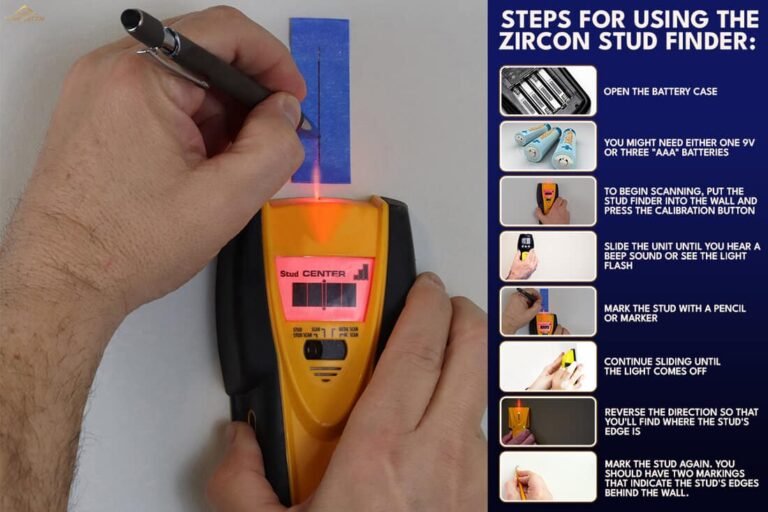
1. Check the Stud Finder’s Modes
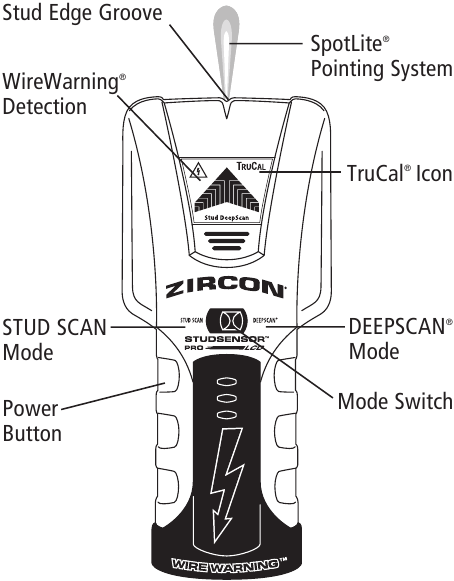
Before scanning, look at the available settings.
You may see:
- Stud
- Deep
- Metal
- AC or wire detection
Use standard stud mode first if the tool supports metal framing.
Metal mode can then help confirm the material.
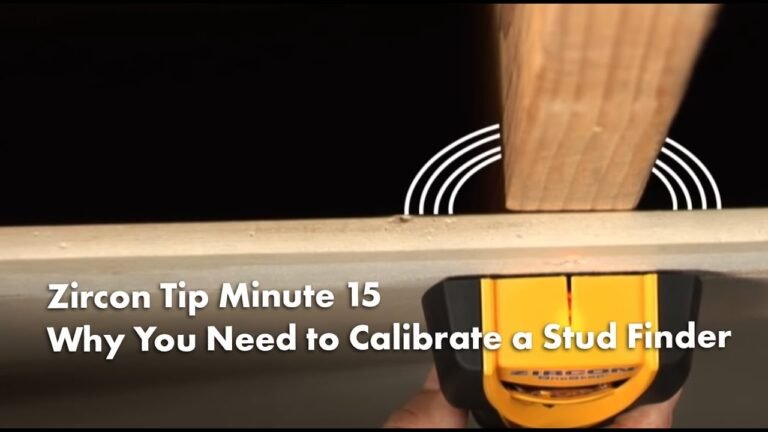
2. Read the Instructions for Calibration
Some stud finders require calibration against the wall before scanning.
Others calibrate automatically.
If manual calibration is required, starting directly over a stud can sometimes produce an inaccurate reading.
Follow the procedure for your specific model.
3. Hold the Finder Flat Against the Wall
Keep the entire sensing surface in contact with the wall.
Avoid:
- Tilting
- Rocking
- Lifting one side
- Scanning over large bumps
Uneven contact can interfere with the reading.
4. Move Slowly Across the Wall
Scan horizontally.
Do not move the finder too quickly.
Slow movement gives the sensor more opportunity to respond to changes behind the surface.
5. Mark the First Edge
When the finder indicates the beginning of a stud, mark the location lightly with a pencil.
6. Locate the Other Edge
Continue across the wall until the tool indicates the opposite edge.
Mark it.
The center is approximately between the two marks unless the finder provides automatic center detection.
7. Scan From the Opposite Direction
Repeat the scan from right to left.
If the marks are similar from both directions, the reading is more convincing.
8. Scan Above and Below
Move several inches higher and lower on the wall and scan again.
A wall stud should usually continue vertically.
If the metal signal appears only at one small point, you may be detecting a screw or nail instead.
9. Use Metal Mode if Available
Switch to metal detection and rescan the same vertical line.
This helps determine whether the framing is likely steel.
How to Confirm You Found a Metal Stud
Do not rely on one isolated beep.
Use several clues together.
Look for a Vertical Pattern
Most wall studs run vertically from floor to ceiling.
A metal signal that continues vertically is more consistent with framing than a small isolated target.
Find Neighboring Studs
Scan farther across the wall.
If you find several similar vertical framing locations, you are probably seeing the wall’s stud pattern.
Compare Stud Scan and Metal Scan
If both modes indicate the same vertical target, a metal stud becomes more likely.
Look for Fastener Patterns
Drywall is commonly attached to framing with screws.
If a magnet or metal scanner detects several small metal targets running in a vertical line, they may be drywall screws attached to the stud.
Scan From Several Heights
Checking the same location near:
- Floor level
- Mid-wall
- Higher on the wall
can help distinguish continuous framing from a short pipe or isolated fastener.
Can a Stud Finder Mistake a Metal Pipe for a Stud?
Yes.
A dedicated metal scanner cannot automatically know whether detected metal is structural framing or plumbing.
Metal behind a wall may include:
- Copper pipe
- Steel pipe
- Electrical conduit
- Steel stud
- Protective nail plate
- Rebar
- Fastener
That is why the direction of the signal matters.
A metal stud usually runs vertically.
A pipe may run:
- Horizontally
- Vertically
- Diagonally
If a metal target travels horizontally across several stud bays, it is unlikely to be a wall stud.
Still, plumbing can run vertically as well, so orientation alone is not absolute proof.
Can Screws Fool a Stud Finder?
Yes, particularly when using metal mode or a magnetic finder.
Drywall screws create small metal targets.
The difference is usually the pattern.
A screw tends to produce a localized response.
A metal stud can produce a larger or more continuous response, depending on the tool and wall construction.
If several screws appear vertically aligned, that pattern can actually help locate the stud.
Can Electrical Wiring Affect Stud Finder Readings?
It can.
Modern walls may contain:
- Electrical cable
- Metal conduit
- Junction boxes
- Plumbing
- Protective plates
A multi-mode wall scanner may include live-wire detection to help identify energized wiring.
However, live-wire detection should be treated as an additional warning feature, not a guarantee that an area is safe to drill.
A scanner may have difficulty detecting wiring depending on:
- Wire depth
- Wall thickness
- Shielding
- Moisture
- Cable orientation
- Electrical load
- Wall material
Do not assume that the absence of a wire warning means there are definitely no electrical hazards behind the wall.
How Deep Can a Stud Finder Detect Metal Studs?
There is no universal detection depth.
Typical stud-finding performance depends on:
- Finder model
- Normal vs deep scan
- Wall material
- Stud size
- Surface thickness
- Target material
Basic stud modes are usually intended for framing located fairly close behind drywall.
Deep Scan modes may detect farther beneath the surface.
Dedicated metal modes can sometimes detect large metal objects deeper than standard stud mode.
However, maximum advertised metal depth should not be confused with guaranteed metal-stud detection at that depth.
A large steel pipe is easier to detect deeply than a thin metal-stud flange.
Will a Stud Finder Find Metal Studs Through Drywall?
Yes.
Standard drywall is one of the easiest surfaces for compatible electronic stud finders.
Results are generally best when:
- The wall has one normal drywall layer
- The surface is smooth
- The stud is within rated depth
- The correct scan mode is selected
- The finder is moved slowly
Multiple layers of drywall can reduce reliability.
Will a Stud Finder Find Metal Studs Behind Plaster?
Possibly, but plaster can be more difficult than drywall.
Traditional plaster walls may contain:
- Wood lath
- Metal lath
- Multiple plaster layers
These materials create changing densities that can confuse conventional electronic stud finders.
Wood Lath and Plaster
One useful strategy is to switch to metal mode and locate the nails or screws that attach the lath to the framing.
A vertical line of fasteners can indicate the stud position.
Metal Lath and Plaster
Metal lath presents a larger problem.
Because the wall may contain metal across a broad area, a metal scanner can respond almost everywhere.
In that case, identifying an individual metal stud from the metal signal becomes much more difficult.
Will a Stud Finder Find Metal Studs Behind Tile?
Some stud finders can work through tile, but performance depends heavily on the wall assembly.
Factors include:
- Tile thickness
- Thinset or adhesive
- Cement backer board
- Drywall behind tile
- Stud depth
A finder with deeper scanning capability is more likely to succeed.
Always check whether the manufacturer lists tile as a supported surface.
Do not assume a finder that works perfectly on drywall will perform the same way through ceramic or stone tile.
How Wide Does a Metal Stud Appear on a Stud Finder?
The indicated width may not exactly equal the actual stud width.
Steel framing commonly has a shaped profile rather than being a solid rectangular piece like dimensional lumber.
A scanner may respond more strongly to:
- Front flange
- Edges
- Screws
- Other nearby metal
The apparent width also depends on sensor resolution and wall thickness.
Use the marks primarily to establish a probable center or fastening area, not to measure the exact steel profile behind the wall.
Metal Stud vs. Wood Stud on a Stud Finder
A normal stud scan can often find either material.
The main difference appears when you use a separate metal mode.
| Feature | Wood Stud | Metal Stud |
| Standard Stud Scan | Usually detected | Usually detected by compatible models |
| Metal Scan | Little continuous response | Stronger continuous response |
| Magnetic finder | Mainly finds fasteners | May respond to stud and fasteners |
| Center finding | Possible | Possible |
| Material identification | Requires capable scanner | Requires capable scanner |
Remember that screws inside a wood stud can still create metal signals.
Metal Stud vs. Pipe on a Stud Finder
| Feature | Metal Stud | Metal Pipe |
| Typical direction | Vertical | Vertical or horizontal |
| Repeating wall pattern | Common | Less common |
| Stud mode response | Often | May vary |
| Metal mode response | Yes | Yes |
| Safe to identify from one reading | No | No |
A metal scanner tells you where metal is.
It does not necessarily tell you why that metal is there.
Are Metal Studs Harder to Find Than Wood Studs?
Not always.
With standard drywall and a good electronic finder, both may be relatively easy to locate.
Difficulty is often caused more by the wall assembly than the framing material.
Common problems include:
- Thick plaster
- Double drywall
- Tile
- Metal lath
- Nearby plumbing
- Electrical conduit
- Uneven wall texture
Using the correct scan mode and checking the result more than once usually matters more than whether the stud is wood or metal.
Can You Use a Magnet to Find Metal Studs?
Yes, although the result requires interpretation.
A strong magnet may stick where it encounters:
- Steel framing
- Drywall screws
- Nails
- Corner bead
One isolated magnetic hit probably tells you only that some ferrous metal is present.
Several magnetic hits aligned vertically are more useful.
This often indicates drywall fasteners installed into a stud.
A magnet is therefore especially useful as a low-cost confirmation method after an electronic stud finder has identified a probable framing location.
Is a Metal Detector Better Than a Stud Finder for Metal Studs?
It depends on what information you need.
Stud Finder
Best when you primarily need:
- Stud edges
- Stud center
- Framing layout
Metal Detector
Best when you need to confirm:
- Presence of metal
- Hidden pipes
- Steel components
- Fasteners
Multi-Mode Wall Scanner
Best when you need a broader picture of:
- Studs
- Metal
- Pipes
- Live wiring
For normal mounting work on a drywall wall, a stud finder that includes metal mode offers a useful balance.
Why Is My Stud Finder Not Finding the Metal Stud?
Several issues can cause inconsistent readings.
The Wall Is Too Thick
The stud may sit beyond the tool’s rated scan depth.
Wrong Scan Mode
Deep framing may require Deep Scan rather than normal Stud Scan.
Poor Calibration
Some models need to be calibrated away from framing.
You Are Moving Too Fast
Slow the scan.
Battery Is Weak
Replace or charge the finder battery if applicable.
Wall Is Uneven
Heavy texture can prevent consistent contact.
Metal Lath Is Present
Widespread metal can overwhelm metal-scanning modes.
There Are Multiple Hidden Objects
Nearby pipes or conduit can create overlapping signals.
Can You Drill Into a Metal Stud After Finding It?
You can fasten into metal framing when the project and fastener are designed for it, but locating the stud is only the first step.
Metal studs differ from wood studs.
The correct fastening method depends on:
- Fixture weight
- Stud gauge
- Wall thickness
- Fastener type
- Load requirements
A wood screw intended to bite deeply into lumber does not behave the same way in thin steel framing.
Also remember that identifying a metal stud does not mean you have confirmed the absence of:
- Electrical wiring
- Plumbing
- Conduit
Use appropriate wall-scanning and installation precautions before drilling.
Common Mistakes When Looking for Metal Studs
Assuming Every Stud Finder Works on Metal
Check the tool’s specifications.
Assuming Every Metal Reading Is a Stud
It could be a pipe, screw, nail plate, or conduit.
Scanning Only Once
Repeat from both directions.
Moving Too Fast
Slow movement usually produces more consistent results.
Ignoring Wall Thickness
Standard scan modes have limited depth.
Calibrating Incorrectly
Follow your tool’s procedure.
Trusting Live-Wire Detection Too Much
Treat it as one safety aid rather than proof an area is electrically clear.
Drilling Immediately After One Reading
Confirm the vertical framing pattern first.
Which Type of Stud Finder Is Best for Metal Studs?
| Type | Finds Metal Studs? | Identifies Metal? | Best For |
| Basic electronic finder | Often | Usually no | Standard drywall |
| Center-finding model | Often | Model-dependent | Precise stud center |
| Deep-scan finder | Often | Model-dependent | Thicker wall surfaces |
| Multi-mode scanner | Yes | Usually | Metal framing and pipes |
| Magnetic finder | Detects ferrous metal | Metal only | Low-cost confirmation |
| Advanced wall scanner | Yes | Often | Complex walls |
If you already know the building uses steel framing, a model with both Stud Scan and Metal Scan is especially useful.
Frequently Asked Questions
Will a Stud Finder Find Metal Studs?
Yes, many electronic stud finders can detect metal studs behind drywall. Check the specifications for your exact model to confirm that it supports steel or metal framing.
Can a Regular Stud Finder Detect Steel Studs?
Many regular electronic stud finders can detect both wood and steel studs. A metal mode is useful but is not always necessary simply to find the framing.
How Do I Know If My Stud Finder Found Wood or Metal?
Use a dedicated Metal Scan mode if available. A stud indication combined with a continuous metal response along the same vertical line makes steel framing more likely.
What Setting Should I Use for Metal Studs?
Start with normal Stud Scan if your finder supports metal framing. Then use Metal Scan to help confirm the material. Use Deep Scan when the wall assembly places the stud beyond the normal scan range.
Can a Stud Finder Mistake a Pipe for a Metal Stud?
Yes. A metal pipe, conduit, or other hidden object can create a metal reading. Scan the target vertically and horizontally and compare it with the wall’s overall framing pattern.
Will a Stud Finder Find Metal Studs Through Drywall?
Yes. Standard drywall is one of the most common surfaces for locating steel studs with an electronic stud finder.
Can a Stud Finder Find Metal Studs Behind Plaster?
Some can, but plaster and lath make detection more difficult. A metal mode may help locate fasteners, while metal lath can interfere with metal detection across a large section of the wall.
Will a Magnet Find Metal Studs?
A magnet can detect ferrous metal, but it may find drywall screws or nails instead of directly detecting the stud. A vertical pattern of magnetic hits can help locate the framing.
Are Metal Studs Harder to Find Than Wood Studs?
Not necessarily. Wall thickness, material, scan depth, and nearby hidden objects often have a greater effect on detection than the stud material itself.
Can a Stud Finder Detect Metal Pipes?
A stud finder with a dedicated metal mode may detect metal pipes as well as steel studs. This is one reason a metal signal alone should not be interpreted as proof of framing.
How Do I Confirm I Found a Metal Stud?
Scan from both directions, scan above and below the location, find neighboring studs, and use Metal Scan if available.
Can I Drill Where the Stud Finder Shows a Metal Stud?
Do not drill based only on one reading. First confirm the framing location and consider the possibility of wiring, plumbing, or conduit nearby. Then use a fastener appropriate for metal framing and the required load.
Conclusion
If you’re wondering “will stud finder find metal studs,” the answer is yes for many electronic stud finders, provided the model is designed to detect steel framing and the stud lies within its rated scanning depth.
A basic electronic finder may locate the stud without identifying whether it is wood or metal. A multi-mode scanner can provide more information by combining conventional stud detection with a dedicated metal scan.
The main challenge is not always finding metal. It is correctly identifying what the detected metal represents. Pipes, conduit, drywall screws, nails, corner bead, and other hidden objects can all create metal readings.
For the most reliable result, scan the wall slowly in both directions, confirm that the target continues vertically, compare neighboring framing locations, and use Metal Scan when available. If a magnet or metal mode finds several aligned fasteners, that pattern can provide additional confirmation.
A stud finder can be very effective for locating metal studs, but one positive signal should never be treated as proof that the object is definitely a stud or that the location is automatically safe to drill.