Can I Rent a Stud Finder: When It Works and What to Check First
Yes, you may be able to rent a stud finder, but availability depends on the tool-rental department, store location, and the type of detector you need. Many rental counters carry larger electronic scanners or multi-function wall scanners, while basic magnetic stud finders are inexpensive enough that stores often sell them instead of renting them.
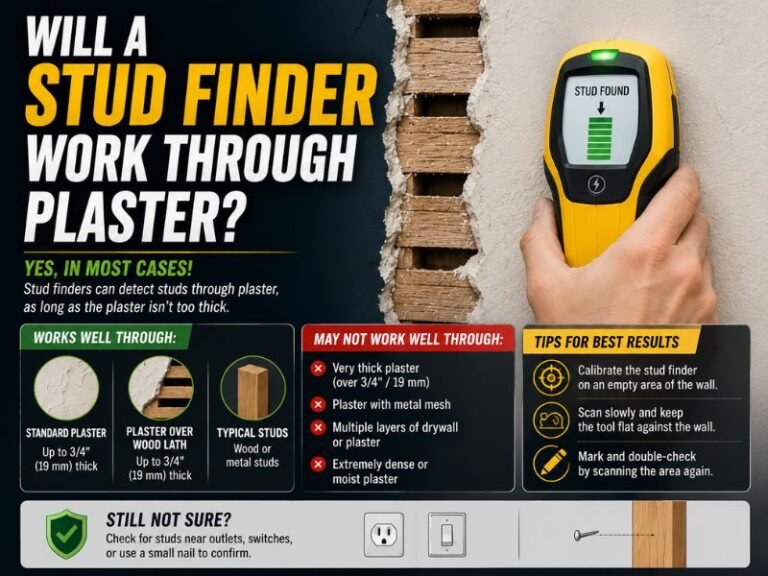
The real issue is identifying what the wall, ceiling, or floor is made of before choosing a tool. A stud finder can indicate a change in density, locate an edge, or detect metal and live electrical wiring, but those signals do not always prove that you have found the center of a safe structural stud. Thick plaster, tile, foil-backed insulation, lath, moisture, and multiple layers of drywall can all change the reading.
This guide explains where rentals are most likely to be available, which type is appropriate for a short project, what to ask before paying a rental fee, and how to verify a reading afterward. You will also learn when a magnetic model, an electronic wall scanner, or a different method makes more sense, along with the electrical and plumbing precautions that matter before drilling.
When Renting a Stud Finder Makes Sense
Renting is most useful when the project requires a specialized scanner that you will use only once. A basic tool may be enough for hanging a picture, but a more advanced detector can help when you need to scan a thick wall, locate several framing members, or identify possible pipes and electrical conductors before cutting an opening.
The decision usually comes down to project complexity, wall construction, and total cost. If a rental requires a deposit, identification, travel, and a minimum rental period, buying a simple stud finder may be cheaper and more convenient. Rental becomes more attractive when the tool itself is expensive or when the project needs capabilities beyond ordinary stud detection.
- One-time light-duty task: Compare the rental price with the purchase price of a basic magnetic or electronic model.
- Several rooms or a renovation: A rental may provide a better scanner for repeated use over one or two days.
- Unusual wall materials: Ask for a model designed to scan through plaster, tile, masonry, or multiple wall layers.
- Cutting into a wall: Choose a tool that can detect metal and electrical wiring, but never treat its warning as the only safety check.
Where You Can Look for a Rental
Start with independent tool-rental businesses and the rental counters at large home-improvement stores. Availability is highly local, so the online catalog for one branch may not match another. Search the store’s inventory for terms such as “wall scanner,” “multi-detector,” “deep scan detector,” or “electronic stud finder,” rather than searching only for “stud finder.”
General equipment-rental companies may stock professional scanners intended for remodeling, electrical work, or construction. These tools can cost more to rent but may detect multiple materials and provide clearer indicators than a consumer-level device.
Hardware stores sometimes sell several stud-finder models without offering them for rent. A staff member may still be able to identify a nearby rental source or explain whether a low-cost purchase is the more practical option. Calling ahead is worthwhile because a listing may show a broader product category without confirming that a specific unit is available, charged, or in working condition.
Questions to ask the rental counter
- Is the tool intended for drywall, plaster, tile, masonry, or another surface?
- Does it detect only framing, or can it also identify metal and live AC wiring?
- What is the maximum scanning depth in the material being tested?
- Are batteries, a charger, calibration instructions, or a case included?
- What happens if the tool gives inconsistent readings or appears defective?
- What are the rental period, late fee, deposit, damage policy, and return requirements?
Ask whether the scanner is demonstrated or checked before it leaves the counter. A tool with a weak battery, damaged sensor surface, missing calibration block, or unclear operating mode can produce confusing results even when the tool itself is capable of accurate detection.
Which Type of Stud Finder Should You Rent?
“Stud finder” can describe several different tools. Choosing the wrong type is a common reason for inaccurate results, so match the device to the surface and the task rather than choosing solely by rental price.
Magnetic stud finders
A magnetic stud finder uses a strong magnet to locate drywall screws or nails attached to framing. It does not electronically scan the wall, require batteries, or directly sense the wood stud. When the magnet attracts to a fastener, you can infer that framing is nearby.
Magnetic models are simple and reliable on standard drywall when fasteners are present. They are less helpful when the wall has thick plaster, metal framing, sparse fasteners, decorative panels, or other materials that block or weaken the attraction. They also do not warn you about electrical wires or plumbing.
Electronic stud finders
Electronic models measure changes in wall density or capacitance as they move across the surface. They commonly provide an edge mode, a center mode, or both. Many need to be calibrated on the wall before scanning, and calibration in the wrong location can create a false reading.
These models are convenient for drywall and ordinary interior partitions. However, moisture, uneven surfaces, thick paint, wallpaper, foil insulation, and nearby metal can affect the signal. Treat the displayed center as an estimate that should be confirmed with additional passes.
Multi-function wall scanners
A professional or advanced wall scanner may offer separate settings for wood, metal, deep scanning, and electrical detection. Some models distinguish between different target types, while others simply warn that a conductive or dense object may be present.
This type is the most likely to justify a rental, particularly for remodeling or drilling into unfamiliar walls. It still has limitations: detection depth varies by material, electrical warnings may require a live energized circuit, and the scanner may not detect a small pipe or wire outside its sensing range.
How to Use a Rented Scanner Correctly
Read the instructions for the exact model before scanning. Controls, calibration procedures, target indicators, and recommended surface conditions vary, so general stud-finder habits should not replace the manufacturer’s directions supplied with the rental.
- Inspect the surface. Remove nearby objects that may interfere, such as metal shelving, magnets, or large electrical devices. Make sure the tool’s sensing surface is clean.
- Select the appropriate mode. Use the setting that matches drywall, deep scanning, metal, or another material. A deep mode may not be more accurate on a thin wall.
- Calibrate on the wall. Follow the required startup procedure in a location believed to be clear. Do not calibrate directly over a suspected stud or metal target unless the instructions specifically allow it.
- Move slowly and evenly. Keep the tool flat against the surface and follow the required direction. Fast or uneven movement can make an indicator appear earlier or later than it should.
- Mark both edges. Scan from both sides of the suspected target and mark each transition. The space between consistent edge readings provides a better estimate of the stud than a single beep.
- Verify the pattern. Scan above and below the planned location. Repeated vertical alignment is more persuasive than one isolated signal.
Many electronic scanners identify a stud’s edges rather than its exact center. If the tool shows two edges, place the center mark between them, then confirm the position with a small, low-risk method before making a larger hole.
How to Confirm a Stud Before Drilling
A scanner reading is evidence, not a guarantee. Look for repeated readings at different heights, compare the suspected location with nearby framing patterns, and consider whether the result makes sense for the room’s construction.
A small finish nail or an appropriately sized pilot hole can confirm wood framing, but this method is not suitable where hidden utilities may be present. If the planned hole is near a switch, receptacle, plumbing fixture, radiator, vent, or visible pipe, assume that wiring or plumbing may be nearby even if the scanner shows no warning.
Framing is often spaced at regular intervals, but older homes, remodeled walls, corners, doors, windows, and plumbing walls do not always follow a simple pattern. A stud may also be doubled, offset, or located behind a furring strip. Do not force a standard spacing assumption to fit a questionable reading.
Important Limits and Safety Checks
A stud finder cannot reliably map every hidden hazard. A wire may be de-energized, too deep, shielded, or outside the detector’s sensing range. A pipe may be plastic, small, or positioned beyond the tool’s rated depth.
Some scanners warn only about conductive material under particular conditions.
Before drilling or cutting, use a noncontact voltage tester where appropriate, check both sides of the wall if accessible, and turn off the relevant circuit at the breaker when the work could reach wiring. Verify that power is off with a properly functioning tester before touching conductors or opening an electrical box.
- Do not drill into a location that produces an electrical or metal warning until the hazard is identified.
- Avoid deep drilling when a shallow fastener will do the job.
- Use a depth stop or mark the drill bit to limit penetration.
- Do not rely on a stud finder alone near plumbing, gas lines, electrical panels, or service equipment.
- If the wall contains tile, masonry, plaster, or several layers, obtain the correct bit and scanning mode before starting.
Stop and seek qualified help when the wall may contain gas piping, high-voltage equipment, structural components, or an unknown utility layout. A rental scanner is a locating aid, not a substitute for professional assessment when a mistake could cause injury, flooding, fire, or structural damage.
Rental Cost, Deposits, and Practical Value
The price of a stud-finder rental varies by location, tool category, rental duration, and deposit policy. A basic consumer model may have a low purchase price, while a professional wall scanner can justify a daily or weekend rental if it prevents repeated holes or helps plan a larger project.
Compare the full cost rather than the advertised daily rate. Include taxes, deposits, transportation, batteries, accessories, late fees, and the time needed to pick up and return the tool. If the project may extend beyond one day, ask whether a multi-day rate changes the calculation.
Buying may be the better choice when you expect future hanging, shelving, or minor repair work. Renting can be sensible when you need a higher-grade detector for one clearly defined task and the rental counter can explain how to operate it on your specific wall surface.
FAQ About Renting a Stud Finder
Can I rent a stud finder from a home-improvement store?
Sometimes, but not at every location. Rental departments are more likely to carry a multi-function wall scanner than a simple magnetic stud finder. Check the inventory for the specific branch and call before traveling.
Is renting a stud finder cheaper than buying one?
It depends on the tool and the project length. A basic electronic or magnetic model may cost less to buy than a rental plus deposit and travel. Renting becomes more valuable when you need a professional scanner or will use it for only a short, specialized project.
Can I rent a stud finder for plaster walls?
You may be able to rent a scanner designed for plaster, but ordinary models may be unreliable. Plaster and lath can create dense or irregular signals, so ask specifically about plaster compatibility and the tool’s scanning depth before accepting the rental.
Will a rented stud finder detect electrical wires?
Only models with an electrical-detection function can provide that warning, and detection is not guaranteed. The circuit may need to be energized, and wires can be too deep, shielded, or positioned outside the sensor’s range. Follow the scanner’s instructions and use additional electrical safety checks.
Do I need to calibrate a rented stud finder?
Most electronic models require calibration or a startup reference. Calibrate on the intended surface as directed, and repeat the process if the material or scanning mode changes. A magnetic finder does not need electronic calibration.
What should I do if the rental gives several different
Stop and rescan slowly from multiple directions and heights. Check the battery, surface condition, selected mode, and calibration location. If the readings remain inconsistent, return to the rental counter for a demonstration or exchange rather than drilling based on a single signal.
Can a stud finder tell me where it is safe
No, it can only help locate likely framing and possible hazards. Confirm the target, limit the drilling depth, and treat any warning as a reason to investigate. Near utilities or structural components, use a qualified professional.
Conclusion: Choose the Tool for the Wall
You can rent a stud finder, especially if you need a professional wall scanner for a short renovation project, but local availability and wall compatibility determine whether renting is worthwhile. Basic models are often inexpensive to buy, while advanced scanners may offer better value as a rental.
The major limitation is that no stud finder guarantees a hazard-free drilling location. Check the surface, calibrate and scan carefully, verify repeated readings, and investigate electrical or plumbing risks before making a hole. The practical next step is to call a nearby rental counter with the wall material and project details, then compare the complete rental cost with buying a suitable basic tool.