How to Find Studs in a Mobile Home: 7 Easy Methods That Work
Knowing how to find studs in a mobile home can make many home projects safer and easier. You may need a stud to hang a TV, mount a shelf, install cabinets, secure a grab bar, or attach other heavy items. The hard part is that manufactured homes do not all use the same wall design.
A standard stud finder can help, but mobile home walls can have thin panels, different framing sizes, insulation, wiring, and metal parts. That can cause false readings. The most reliable approach is to use more than one clue and confirm the location before you drill.
What Is a Stud in a Mobile Home?
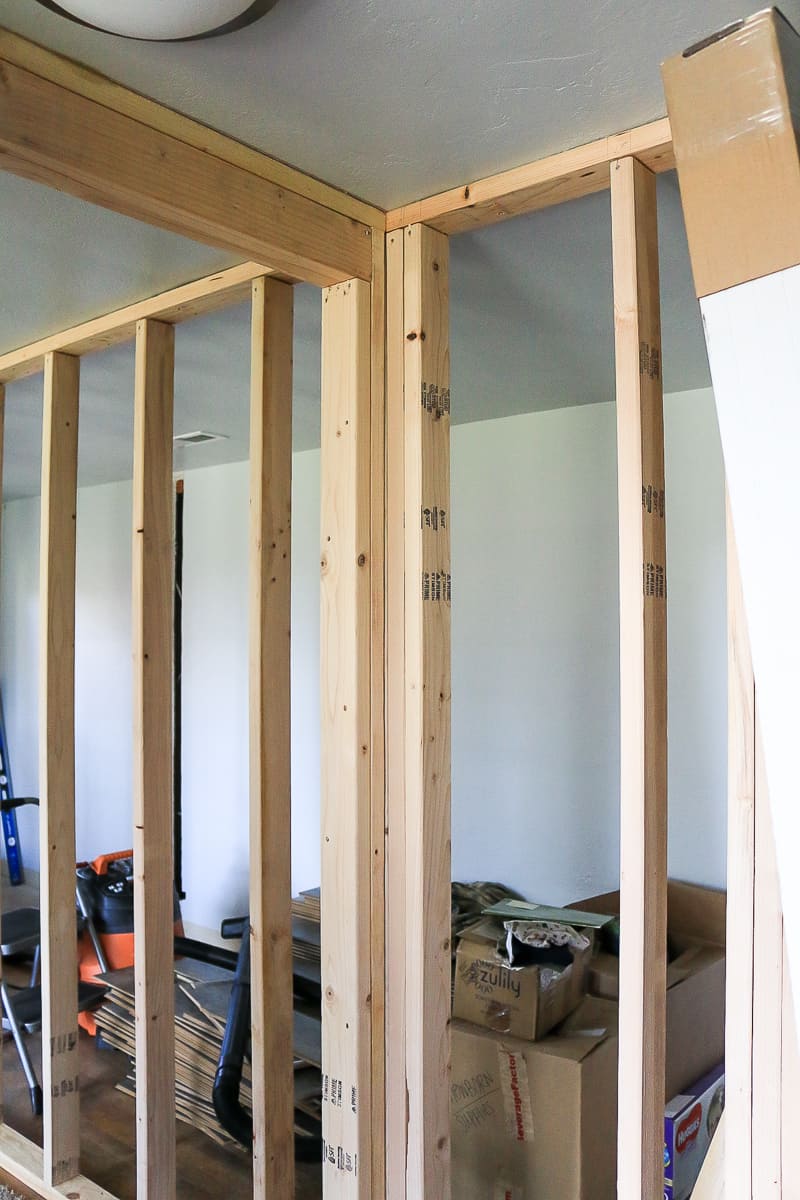
A stud is a vertical framing member inside a wall. It gives the wall strength and provides a solid place to attach certain items. In a manufactured home, studs may be made from wood or, in some designs, metal.
Many people use the words mobile home and manufactured home in the same way. Older mobile homes and newer manufactured homes can have different framing details. The home’s age, builder, model, and wall system all matter when you try to locate a stud.
The key point is simple: do not assume every mobile home has studs in the same size or spacing as a site-built house. Treat common spacing as a guide, not proof.
- ✦ Wood studs
Wood framing is common in many manufactured homes. A wood stud usually gives a firm feel when you tap or drill into it.
- ✦ Metal framing
Some homes and additions may use metal framing. A magnetic or electronic tool can react to metal, so confirm what you found before choosing hardware.
- ✦ Wall panels
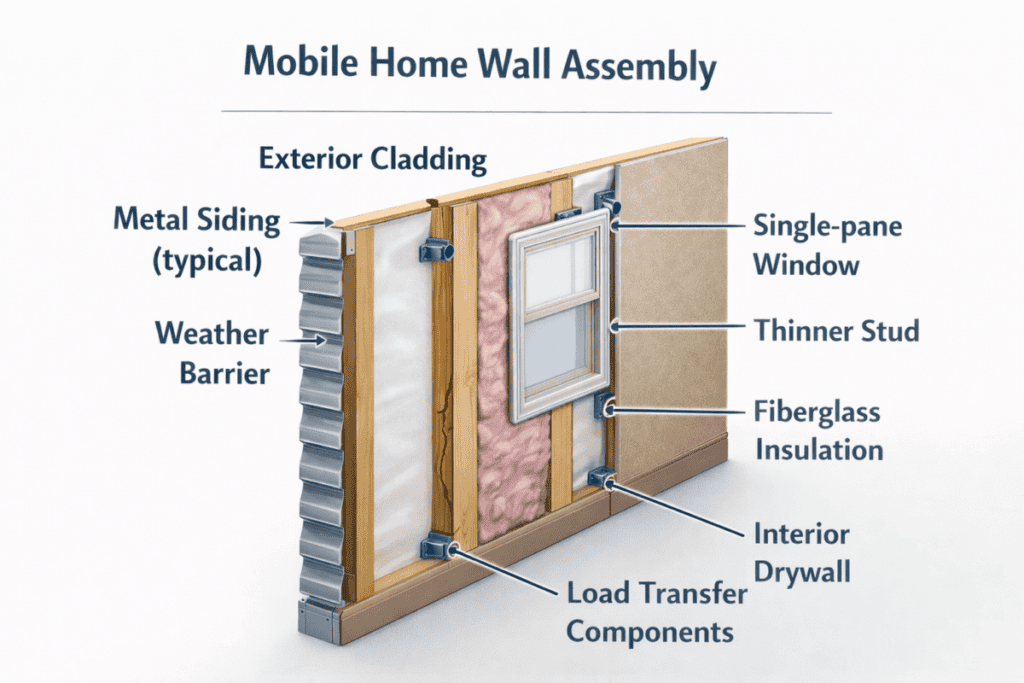
Manufactured homes may use wall panels or finishes that differ from standard drywall. This can affect how a stud finder reads the wall.
Why Stud Spacing Can Vary
Studs are often set at regular centers, but the pattern can change around doors, windows, corners, cabinets, and other openings. Some manufactured homes also use framing that does not match the spacing found in a typical house.
If one stud is found, you can measure from it to look for another. Still, confirm each location rather than drilling based only on a spacing pattern.
- ✦ Use spacing as a clue
Regular spacing can help you narrow the search, but it does not prove that a stud is present at every expected point.
- ✦ Watch for openings
Doors and windows can change the framing pattern. A stud may sit beside an opening instead of following the normal wall layout.
How to Find Studs in a Mobile Home With a Stud Finder
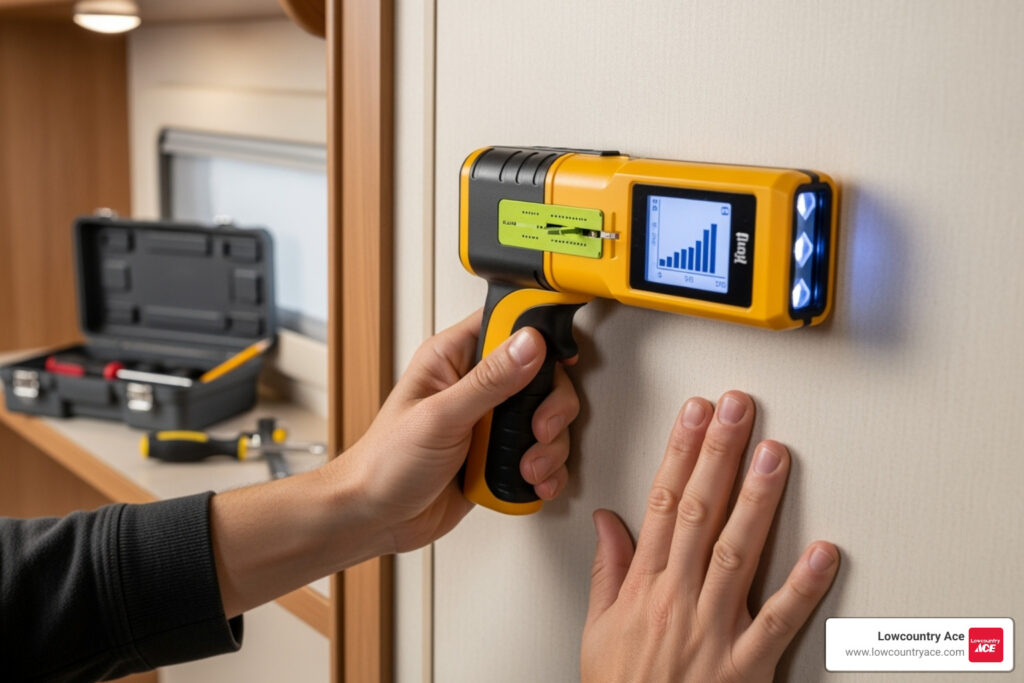
A stud finder is one of the quickest ways to start. Most electronic models look for changes in wall density. Some models detect the edge of a stud, while others show the center. Read the tool instructions before you begin.
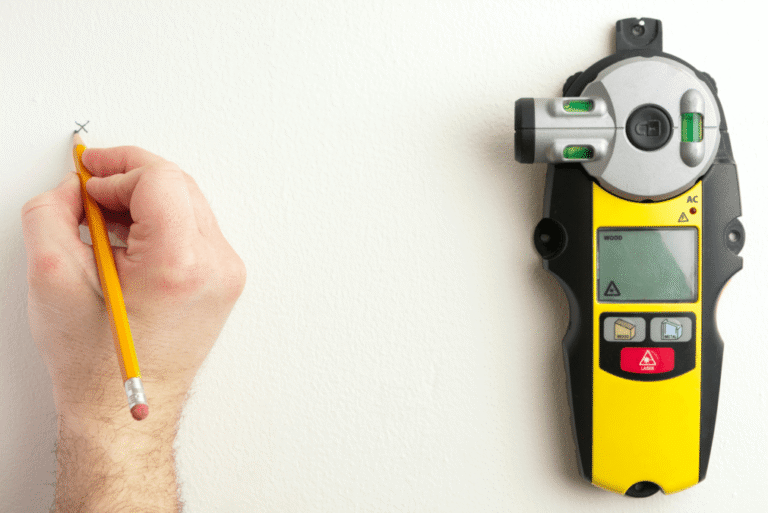
Start with a clean section of wall. Remove nearby objects that could affect the tool. Hold the finder flat against the wall and move it slowly across the surface. Mark the point where the tool signals a stud.
Do not assume the first beep is correct. Move the tool back and forth across the same area. Mark both edges if the tool allows it. The center between those marks can give you a better target.

- ✦ Calibrate first
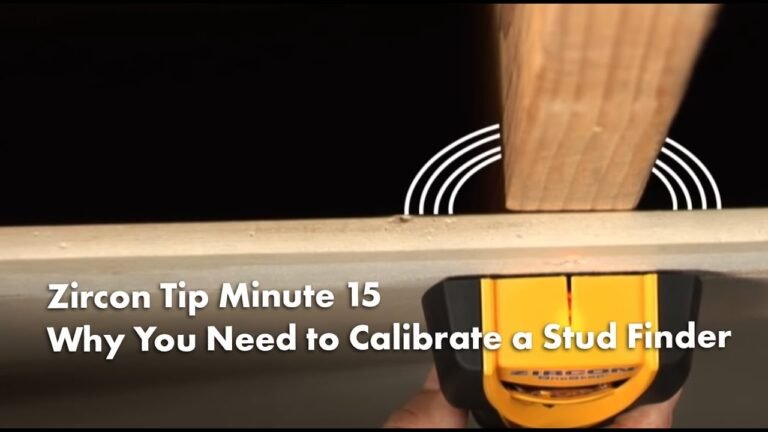
Place and calibrate the finder as directed by the manufacturer. Some tools need calibration on the wall before scanning.
- ✦ Move slowly
A slow, steady pass is easier to read than a quick sweep.
- ✦ Scan more than once
Run the tool over the same area from different directions when possible. A repeated signal is more useful than one isolated beep.
- ✦ Mark the wall
Use painter’s tape or a light pencil mark so you can compare several readings without damaging the wall.
Why a Stud Finder May Give a False Reading
A stud finder does not actually see the entire framing system inside your wall. It reads changes that may also come from pipes, wires, screws, braces, dense material, or other objects. This is why a second check matters.
Textured walls can also make it harder to keep the tool flat. If the wall surface is uneven, move the tool slowly and use another method to confirm the location.
- ✦ Metal can confuse some tools
Metal framing, fasteners, or other metal parts may trigger a magnetic or electronic response.
- ✦ Dense areas can look like studs
A pipe, wire, or other material may change the reading. Never drill deeply based on a stud finder signal alone.
How to Find Studs in a Mobile Home Without a Stud Finder
You can still learn how to find studs in a mobile home without buying a tool. Several simple clues can help. The best results usually come from combining two or three methods.
Start with features that are already attached to the wall. Electrical boxes, trim, corners, and door openings can reveal where framing is likely to be. Then use a tape measure and a light tap to narrow the exact spot.
/find-a-stud-in-a-wall-182288-hero-f847727ab7274a9082010f1227cbf104.jpg "Using common wall clues to locate a wall stud")
- ✦ Check an electrical outlet
Electrical boxes are often attached to framing. Look at the side of the box or use a safe visual check to determine where the framing is located. Never remove an electrical box cover unless you know it is safe to do so.
- ✦ Follow the trim
Baseboards and other trim are often fastened to framing. Look for repeated nail or screw locations along the trim.
- ✦ Use wall corners
Corners need framing to join the wall sections. A stud or other framing member is usually close to a corner.
- ✦ Tap the wall
Tap lightly across the wall with your knuckles. A solid area may sound different from a hollow area, but this method is only a clue.
- ✦ Look for fasteners
Small dimples, screws, nails, or patched spots can show where wall material was attached to framing.
Using Measurements to Narrow the Search
Once you find one likely stud, measure across the wall and look for a similar spacing pattern. Use a tape measure and mark likely points. This method works best when you already have one confirmed stud.
Do not treat a standard spacing pattern as a guarantee. Manufactured home framing can vary, and openings can change the layout.
- ✦ Start from a known point
A confirmed stud near a corner or outlet gives you a better reference than an unverified mark.
- ✦ Confirm before drilling
Use tapping, a stud finder, or a very small test hole where appropriate before installing a screw.
Check Outlets, Switches, Doors, and Corners
Wall features can give you useful clues when learning how to find studs in a mobile home. Electrical outlets and switches are often installed near framing. Doors and windows also need framing around their openings.
Use these clues to build a map of the wall. For example, if you find a likely stud beside an outlet, you can scan or measure from that point to locate other possible framing members.
- ✦ Outlets and switches
The electrical box may be mounted to a stud or another framing part. Treat its location as a clue, not a guarantee of the exact screw point you need.
- ✦ Door frames
Door openings require framing. A stud is commonly found beside the opening, though the exact structure varies.
- ✦ Window frames
Windows also need framing around the opening. Nearby framing can help you establish a reference point.
- ✦ Inside corners
Wall corners require a connection between wall sections. This makes corners useful starting points when you map the wall.
Stay Away From Electrical and Plumbing Hazards
Finding a stud does not mean the space is safe to drill. Wires and pipes may run inside the same wall. Electrical wiring can also be near outlets and switches.
For a shallow screw, use hardware and a drilling depth that fit the job. If you need a deep hole, if the wall layout is unclear, or if you suspect wiring or plumbing, stop and get professional help.
- ✦ Do not drill blindly
A stud can be present even when a wire or pipe is nearby.
- ✦ Use the right depth
Choose a fastener that reaches the framing without creating an unnecessarily deep hole.
How to Tell if a Mobile Home Wall Has Wood or Metal Studs
Before you choose screws or anchors, try to learn what type of framing is behind the wall. Wood and metal studs behave differently. A fastener made for wood may not work the same way in metal framing.
A magnet can provide a simple clue if the wall has metal fasteners or metal framing. An electronic tool may also detect metal, but the result needs interpretation. When the wall construction is unclear, check the home’s documentation or ask a qualified contractor.
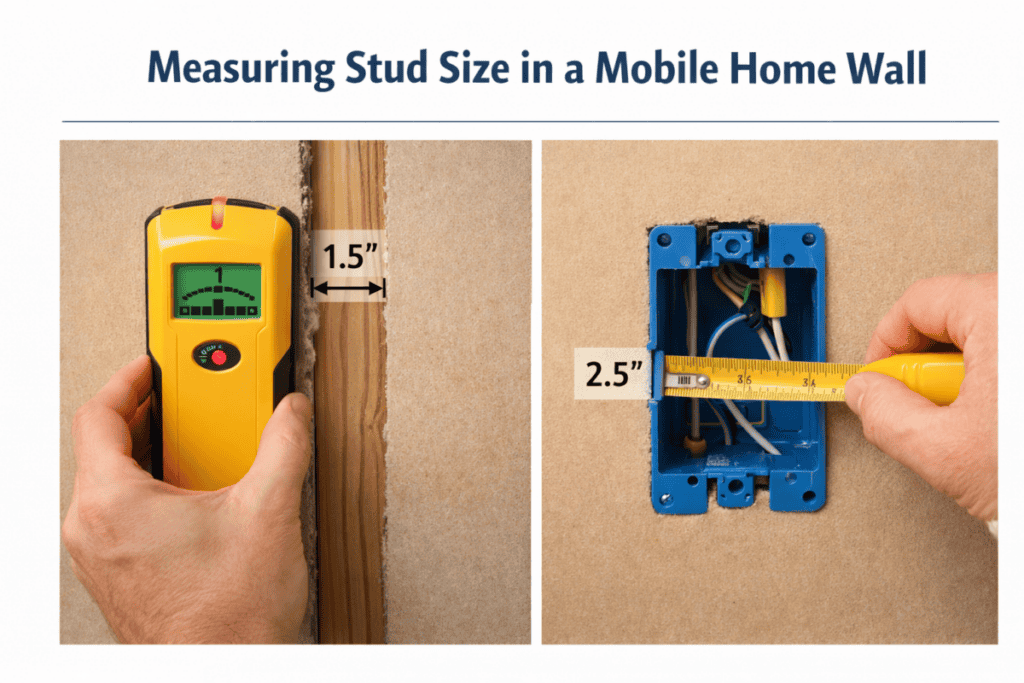
- ✦ Magnet test
A strong magnet may stick where steel screws or nails are present. Repeated vertical patterns can provide clues about framing.
- ✦ Sound and feel
Wood framing may feel firm when a screw enters it. Metal framing can feel different and may require a different fastener.
- ✦ Inspect an accessible area
An open cabinet area, repair spot, or other safe access point may reveal the wall construction without creating a new hole.
Why Framing Material Matters
The framing type affects how much weight a screw can hold and which hardware you should use. Wall thickness also matters. A long screw is not automatically stronger if it does not match the framing or creates a hazard.
For a heavy TV, large shelf, cabinet, or safety rail, do not rely on a hollow-wall anchor when the item should be secured to framing. Use hardware designed for the actual wall structure.
- ✦ Wood framing
Wood screws or other fasteners designed for the known wood framing can provide a direct connection when the size and load are suitable.
- ✦ Metal framing
Metal studs may need screws or anchors designed for steel framing. The load rating and stud thickness should guide the hardware choice.
- ✦ Heavy loads
For high loads, use a mounting method that spreads the load across suitable framing and follows the item’s installation instructions.
How to Confirm a Stud Before You Drill
The safest answer to how to find studs in a mobile home is not one single method. It is confirmation. A stud finder signal, a measured pattern, and a physical check together give you much more confidence.
If the project allows it, use a very small pilot hole at the marked location. Stop if the material does not behave as expected. A drill that suddenly meets metal, empty space, or unexpected resistance is a reason to reassess the wall.

- ✦ Scan again
Run your stud finder across the same area several times. Confirm that the signal repeats.
- ✦ Measure from a known stud
Use the confirmed stud as a reference and compare nearby locations.
- ✦ Tap around the mark
Compare the sound near the mark with the sound on each side. Use this only as supporting evidence.
- ✦ Use a small pilot hole
When appropriate and safe, a small pilot hole can help confirm the material. Keep it shallow and stop if you meet unexpected resistance.
- ✦ Check the hardware
Make sure the screw or anchor is rated for the framing type, wall material, and weight of the item.
A Simple Three-Step Confirmation Test
First, scan the wall and mark the suspected stud. Second, compare that mark with nearby clues such as trim, an outlet, or a measured framing pattern. Third, confirm the material before you install the final fastener.
This process may take a few extra minutes, but it can prevent a misplaced hole or a weak mount. It is especially useful when working with an older mobile home or a wall with an unusual finish.
- ✦ Step 1
Find and mark the strongest repeated stud signal.
- ✦ Step 2
Compare the mark with wall features and measured spacing.
- ✦ Step 3
Confirm the framing before installing the final hardware.
Best Tools for Finding Mobile Home Wall Studs
You do not need a large tool kit to find a stud. A few basic tools can make the job faster and more accurate. Choose tools based on the wall finish and the weight of the item you plan to install.
For most simple projects, start with a tape measure, pencil, flashlight, and stud finder. A magnet can add another useful clue. Keep a small drill and suitable bit available only when you have confirmed that drilling is safe.

- ✦ Electronic stud finder
Useful for scanning broad areas and finding changes behind the wall surface.
- ✦ Tape measure
Helps you compare spacing from a confirmed stud or wall feature.
- ✦ Strong magnet
Can help locate steel fasteners and may provide clues about metal framing.
- ✦ Pencil or painter’s tape
Lets you mark possible stud locations without making a permanent mark.
- ✦ Flashlight
Useful for spotting trim fasteners, patches, surface changes, and other clues.
- ✦ Small drill and bit
Can help confirm the wall material when drilling is safe and a pilot hole is appropriate.
What to Avoid
Avoid relying on one clue. A single stud finder beep, one nail mark, or a guessed measurement can lead to a bad mounting point. This matters even more when the item is heavy.
Also avoid making large test holes. Start with the least invasive method. If you cannot confidently identify the framing, use the home’s construction information or contact a qualified professional.
- ✦ Do not guess from a standard house plan
A mobile or manufactured home may use a different wall system from a site-built house.
- ✦ Do not use a random long screw
Longer hardware can create more risk if wiring, plumbing, or other hidden materials are present.
- ✦ Do not overload a wall mount
The framing, wall material, fastener, and mounting bracket must all support the planned load.
How to Find Studs in a Mobile Home for Heavy Items
Finding a stud becomes more important when you plan to hang something heavy. A small picture may work with a suitable wall anchor, but a large TV, cabinet, shelf, or grab bar can place much more force on the wall.
For these projects, locate the framing and check the mounting instructions for the item. A strong mount depends on more than the stud location. You also need the correct fastener, enough engagement, a suitable bracket, and a wall structure that can carry the load.
If you are mounting a safety device, such as a grab bar, use the manufacturer’s requirements and local building guidance. Do not rely on a light-duty drywall anchor when the item needs a structural connection.
- ✦ TV mounts
Confirm the mount’s weight rating and attach it to suitable framing when the installation instructions call for it.
- ✦ Shelves
Consider both the shelf’s weight and the weight of the items placed on it. Loads can increase when someone pulls or leans on a shelf.
- ✦ Cabinets
Cabinets can be heavy before you add dishes or other contents. Follow the cabinet maker’s mounting instructions.
- ✦ Grab bars
Safety rails need a secure structural attachment. Use the specified mounting method and verify the framing before installation.
When to Call a Professional
Call a qualified professional when the wall structure is unclear, when you need to drill near plumbing or electrical systems, or when the project carries a major safety risk. This is also a good idea if you find unexpected metal or resistance behind the wall.
A professional can help identify the wall system and select a suitable mounting method. For major alterations, follow applicable local rules and the manufacturer’s requirements for the home.
- ✦ Electrical uncertainty
Get help if you are unsure where wires run or if the planned hole is near electrical equipment.
- ✦ Plumbing uncertainty
Get help if pipes may run behind the planned mounting area.
- ✦ Major structural work
Use a qualified contractor or other appropriate professional for work that changes the wall structure.
Common Mistakes When Finding Studs in a Mobile Home
Many failed wall mounts start with a small assumption. Someone finds one possible stud, guesses the rest of the layout, and drills without confirming the framing. Taking a little more time can make the process much safer.
Another common mistake is treating a stud finder as a perfect scanner. It is a helpful tool, but it can react to materials other than the framing member you want.
- ✦ Mistake: trusting one beep
Confirm the signal with another method before drilling.
- ✦ Mistake: assuming all studs are 16 inches apart
Spacing can vary in manufactured homes and around openings.
- ✦ Mistake: ignoring the wall finish
Paneling, texture, tile, and other finishes can affect tool readings.
- ✦ Mistake: using the wrong fastener
The correct hardware depends on the framing, wall material, load, and mounting system.
- ✦ Mistake: drilling too deep
A deeper hole is not always better. It can increase the chance of hitting hidden wiring or plumbing.
- ✦ Mistake: skipping a load check
Finding a stud does not automatically mean the planned mount can safely carry the load.
A Quick Step-by-Step Method for Finding Mobile Home Studs
If you want a simple process, use the following sequence. It combines the most useful clues without making unnecessary holes in the wall.
This method is a practical starting point for many small DIY jobs. Stop and get professional advice if the wall behaves in an unexpected way or if the project involves a significant safety risk.
- ✦ 1. Pick the mounting area
Choose the exact place where the shelf, TV, cabinet, or other item will go.
- ✦ 2. Look for clues
Check nearby outlets, switches, trim, corners, doors, and windows.
- ✦ 3. Scan the wall
Use a stud finder slowly across the area and mark repeated signals.
- ✦ 4. Measure
Use a confirmed stud or another reliable reference to compare nearby locations.
- ✦ 5. Confirm
Use a second method, such as tapping or checking an accessible area, before drilling.
- ✦ 6. Choose proper hardware
Match the fastener to the wall, framing type, mounting bracket, and load.
- ✦ 7. Install carefully
Drill only as deep as needed and follow the product instructions.
The Main Rule to Remember
When learning how to find studs in a mobile home, think in terms of confirmation rather than certainty from one tool. A stud finder can locate a likely spot, while measurements and physical clues can help verify it.
If two or more methods point to the same location, you have stronger evidence. For important or heavy installations, use the safest available method and seek professional help when the wall construction remains unclear.
- ✦ Find
Locate a likely framing member with a tool or visible clue.
- ✦ Verify
Use another method to check the location.
- ✦ Mount
Install only after confirming the framing and selecting suitable hardware.