How to Find Studs to Hang a Porch Swing Safely
Knowing how to find studs to hang a porch swing is one of the most important parts of a safe installation. The screws must enter solid structural wood or another approved structural member. A screw that only grips thin ceiling boards, drywall, or siding can pull out when the swing moves.
In a typical U.S. home, the framing above a porch ceiling may use ceiling joists, rafters, beams, or added blocking. The exact layout varies by home. Before you drill, learn what is above the finish surface and confirm that it can carry the swing and its users.
A good rule from hands-on installation work is simple: never trust one clue. A stud finder can help, but measurements, fastener patterns, access from above, and small test holes can help confirm the location. If the framing is hard to identify, a qualified contractor can inspect it before you install the swing.
Why Finding the Right Stud Matters for a Porch Swing
A porch swing creates more than a straight downward load. People sit down, stand up, shift their weight, and swing back and forth. That movement can place extra force on the mounting points.
This is why learning how to find studs to hang a porch swing is different from finding a stud for a small picture frame. The mounting hardware needs a strong connection to the home’s structure. The ceiling finish alone is not enough.
The safest mounting point is usually a sound ceiling joist, rafter, or structural beam that matches the swing maker’s installation instructions. Never assume that a visible ceiling seam marks a joist.
- ✦ Structural framing
The mounting screws or bolts should connect to solid framing that is designed to carry the load.
- ✦ Moving load
A swing moves, so its mounting points face changing forces rather than only the weight of a person sitting still.
- ✦ Ceiling finish
Beadboard, plywood, drywall, vinyl, and other ceiling materials can hide the framing and should not be treated as the main support.
Studs vs. Ceiling Joists
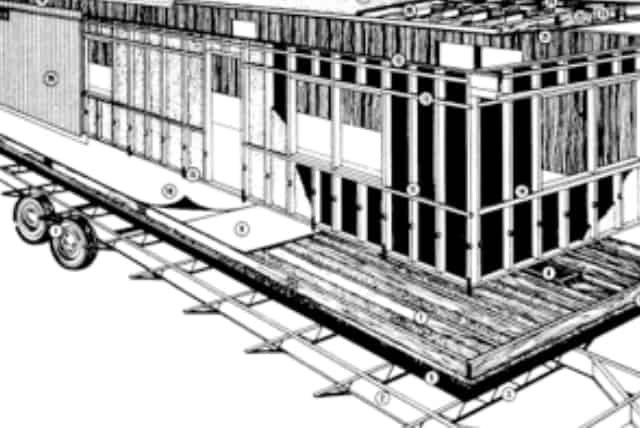
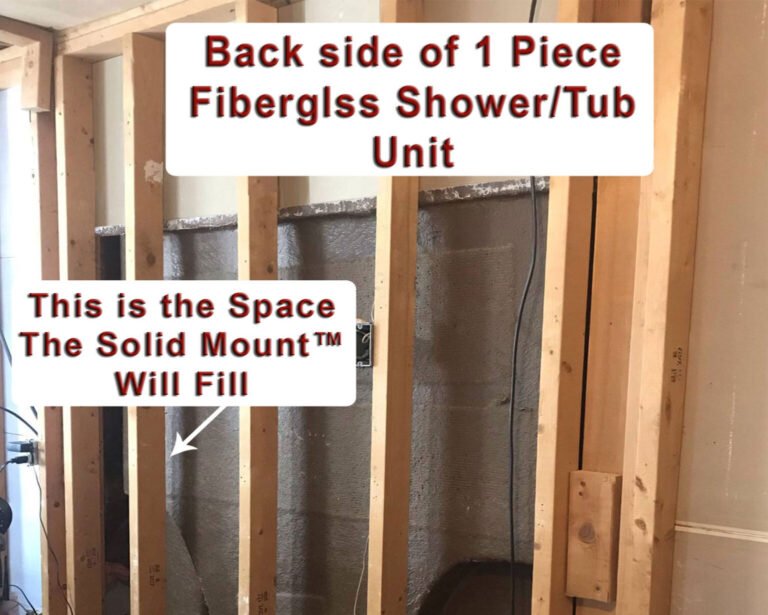
People often use the word stud for any piece of framing. In a porch ceiling, however, you are usually looking for a ceiling joist, rafter, or beam. Wall studs run upright in walls, while ceiling framing supports the roof or ceiling above.
When you search for how to find studs to hang a porch swing, focus on finding the structural member above the ceiling. That distinction helps you choose the right search method and the right mounting hardware.
- ✦ Wall stud
A vertical framing member inside a wall.
- ✦ Ceiling joist
A framing member that supports a ceiling and may provide a mounting point when it is properly sized and sound.
- ✦ Rafter or beam
A larger structural member that may support the roof or porch structure and may serve as a swing attachment point when approved for that use.
What You Need Before You Start
Gather your tools before you start searching. A few simple tools can help you locate framing without making many holes in the porch ceiling.
Read the swing and hardware instructions first. The maker may give a required spacing, fastener type, load rating, or mounting method. Those instructions should guide the installation.
- ✦ Stud finder
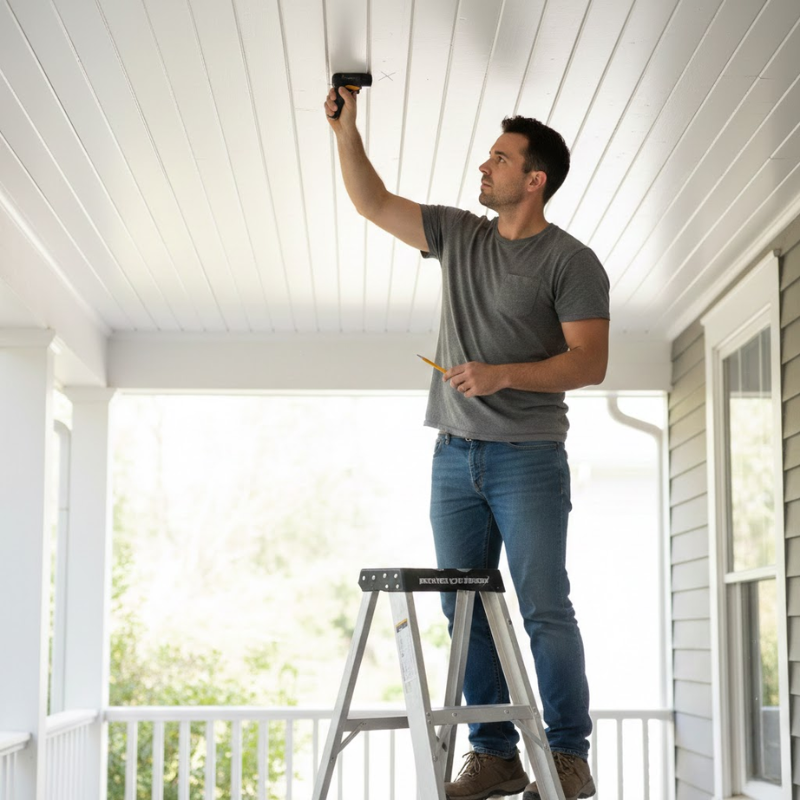
Use an electronic or magnetic stud finder as a first-pass tool. It can help locate framing or fasteners hidden behind the ceiling finish.
- ✦ Tape measure
Use measurements to trace likely framing locations from known walls, beams, seams, or exposed framing.
- ✦ Small drill bit
A small bit can help confirm solid wood when a safe test point has been selected. Stop if the material does not behave as expected.
- ✦ Pencil
Mark the center of the suspected joist and the planned hardware locations.
- ✦ Flashlight
A bright light helps you inspect ceiling seams, trim, old holes, and exposed areas.
- ✦ Approved swing hardware
Use hardware rated for the application and suitable for the actual structural member. Do not replace structural fasteners with ordinary screws.
Check the Swing and Hardware First
Measure the swing before choosing the mounting points. Note the distance between its hanging chains or ropes and compare that distance with the framing you find.
A strong joist in the wrong location may not work with the swing’s mounting layout. In some cases, the structure needs added blocking or a support beam. That work should follow a sound structural plan rather than guesswork.
- ✦ Check mounting spacing
Know the distance between the swing’s attachment points before you mark the ceiling.
- ✦ Check hardware rating
Use hardware that is designed and rated for a porch swing and its expected load.
How to Find Studs to Hang a Porch Swing Step by Step
The best way to learn how to find studs to hang a porch swing is to use several clues together. Start with the least invasive method, then confirm the framing before you drill the final mounting holes.
Begin by looking at the porch ceiling. Look for seams, rows of fasteners, trim lines, old light fixtures, vents, or other features that may reveal the framing pattern. These clues do not prove where the joist is, but they can give you a starting point.
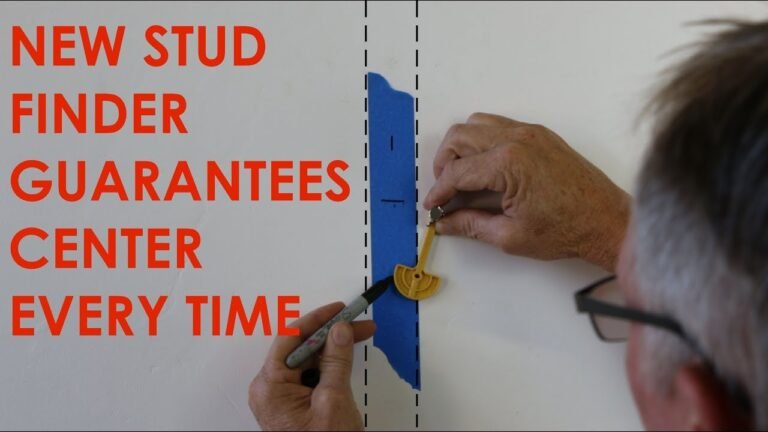
Next, use a stud finder if the ceiling finish allows it. Move the tool slowly in both directions. Mark the edges of the detected framing, then mark the center between those edges. A center mark is more useful than one single detection line.

- ✦ Start at a known edge
Measure from a wall or exposed beam and look for a repeated framing pattern. Many wood-framed homes use regular spacing, but do not assume the spacing without confirmation.
- ✦ Scan slowly
Move the stud finder at a steady pace. Mark both sides of a detected framing member when the tool allows it.
- ✦ Mark the center
The center of the detected member is usually a better target than its edge.
- ✦ Confirm before final drilling
Use another clue or a safe test point to confirm that the marked location contains solid framing.
Use Measurements to Trace the Framing
Once you identify one likely joist, measure from it to find other likely framing members. Regular spacing is common in wood framing, but porch additions can have unusual layouts. Old repairs and remodels can also change the pattern.
Do not treat a standard spacing pattern as proof. Use it to narrow the search, then confirm each mounting point.
- ✦ Measure from a known point
Use a wall, beam, or exposed framing member as a reference point.
- ✦ Look for repeated spacing
A repeated pattern can help predict where other framing members may be located.
Confirm With a Small Test Hole
If you cannot see the framing, a small test hole may help confirm the location. Choose a point where a tiny hole will be hidden by the final hardware or otherwise repaired. Drill only as far as needed to learn what is behind the finish.
Solid wood should feel different from an empty cavity. If you meet unexpected resistance, metal, wiring, or a hollow space, stop and reassess. Never keep drilling simply because the location was marked as a stud.
- ✦ Test carefully
Use a small bit and shallow drilling. The goal is to confirm the material, not create the final mounting hole.
- ✦ Stop for surprises
Stop if you encounter metal, wiring, plumbing, or a material that does not match your expectations.
Check From Above the Porch Ceiling When Possible
If you can safely access the space above the porch ceiling, this may be the clearest way to locate the framing. An attic, unfinished porch roof area, or accessible ceiling cavity can show the actual joist or rafter layout.
This method removes much of the guesswork. You can see the wood member, measure its width, check its condition, and plan the mounting points from the framing itself.
Do not enter an attic or roof space unless the area is designed for safe access. Watch for electrical wiring, insulation, fragile ceiling material, and areas that are not made to support foot traffic.
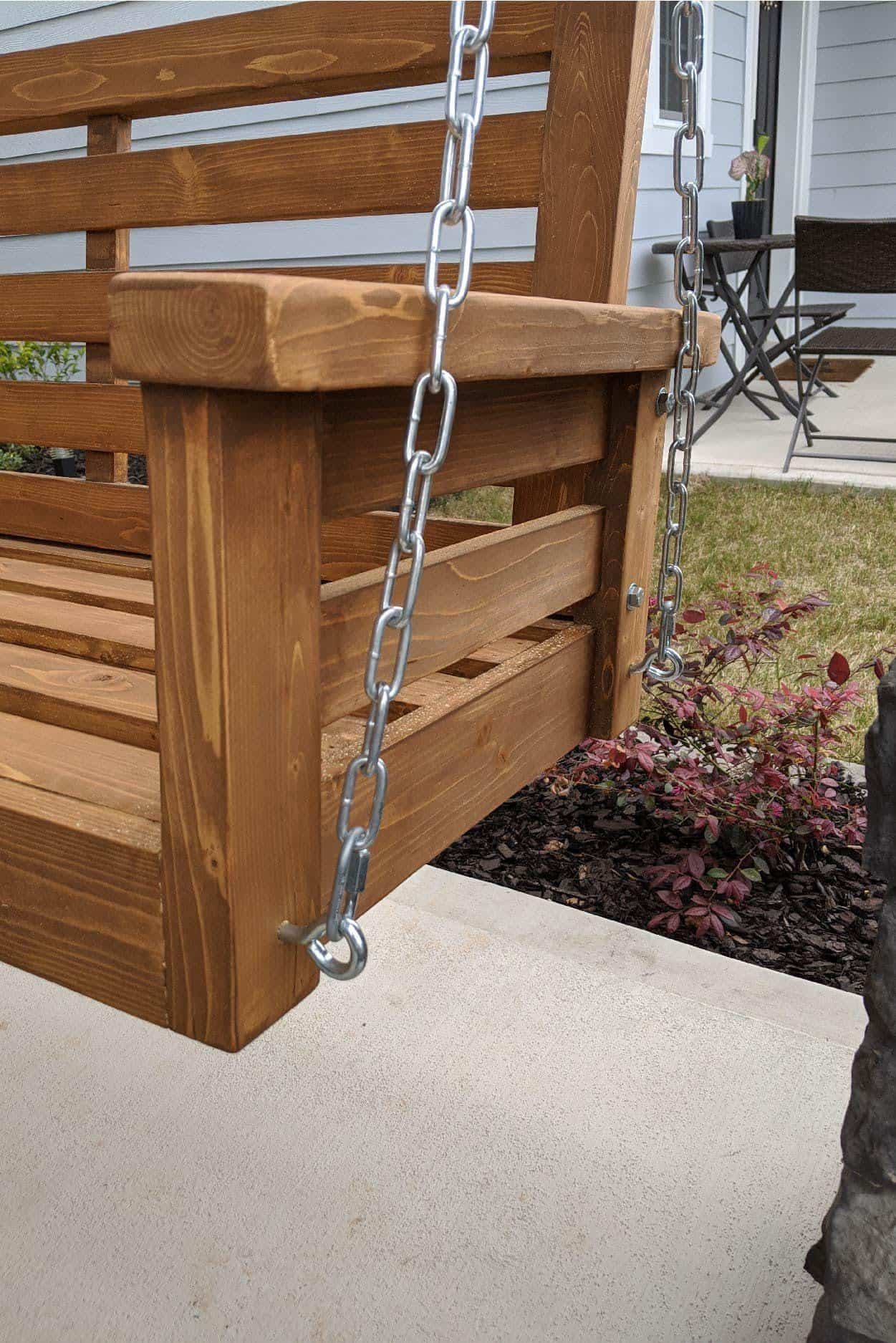
- ✦ Look for exposed framing
An unfinished area above the porch may let you see the joists, rafters, or beams directly.
- ✦ Inspect the wood
Look for cracks, rot, insect damage, water damage, or other signs that could affect the framing.
- ✦ Measure the member
Knowing the framing size can help you select a suitable mounting method and hardware.
- ✦ Plan the hardware
Mark the exact locations where the swing hardware will connect to the structural member.
Why Top-Side Access Can Be Better
A finished porch ceiling can hide the full shape of a joist. From above, you may be able to see whether a suspected member is a full structural joist or only a small piece of trim or blocking.
This is especially useful on older homes and remodeled porches. The visible ceiling may not match the original framing plan.
- ✦ Less guesswork
Direct visual access makes the framing easier to identify.
- ✦ Better inspection
You can check the member for visible damage before attaching the swing.
How to Find the Center of a Ceiling Joist
Finding a joist is only part of the job. You also need to place the fastener in a sound part of the member. If you drill too close to an edge, the connection may not have the strength you expect.
When using an electronic stud finder, mark both edges of the detected joist. The midpoint between those marks gives you a better estimate of the center. If the ceiling has visible fasteners, use them as another clue, but remember that fasteners may attach to other materials.
For a critical load such as a porch swing, confirm the framing location before making the final holes. When access allows, measure the framing directly from above.

- ✦ Mark both edges
Do not rely on one stud-finder line. Mark where the signal starts and ends.
- ✦ Find the midpoint
The midpoint between the detected edges is a useful center mark.
- ✦ Confirm the result
Use a second method when the installation carries a meaningful load.
What If the Joist Does Not Line Up With the Swing?
Do not move the swing hardware to a weak spot just to make the spacing work. The structure comes first. If the joists do not match the swing’s mounting points, the ceiling may need properly designed blocking or a structural support beam.
Added framing must connect correctly to the existing structure. A thin board screwed into the ceiling finish is not the same as structural blocking. If you are unsure how to add support, have a qualified professional assess the framing.
- ✦ Do not force the layout
Keep the hardware aligned with suitable structural members rather than placing it in a convenient but weak location.
- ✦ Consider added support
Properly designed blocking or a beam may solve a spacing problem when the existing framing is suitable for modification.
How to Tell if the Ceiling Framing Can Support the Swing
Finding a piece of wood does not automatically mean it is safe for a porch swing. You also need to consider the framing size, condition, connection to the rest of the structure, and the swing maker’s requirements.
A porch ceiling may contain decorative boards that look strong but carry little structural load. A ceiling joist may also have damage from moisture, insects, age, or past alterations. Inspect the area before installation.
If the porch was added to an existing home, the framing may differ from the main house. Plans, permits, inspection records, or a professional inspection may help when the structure is not clear.
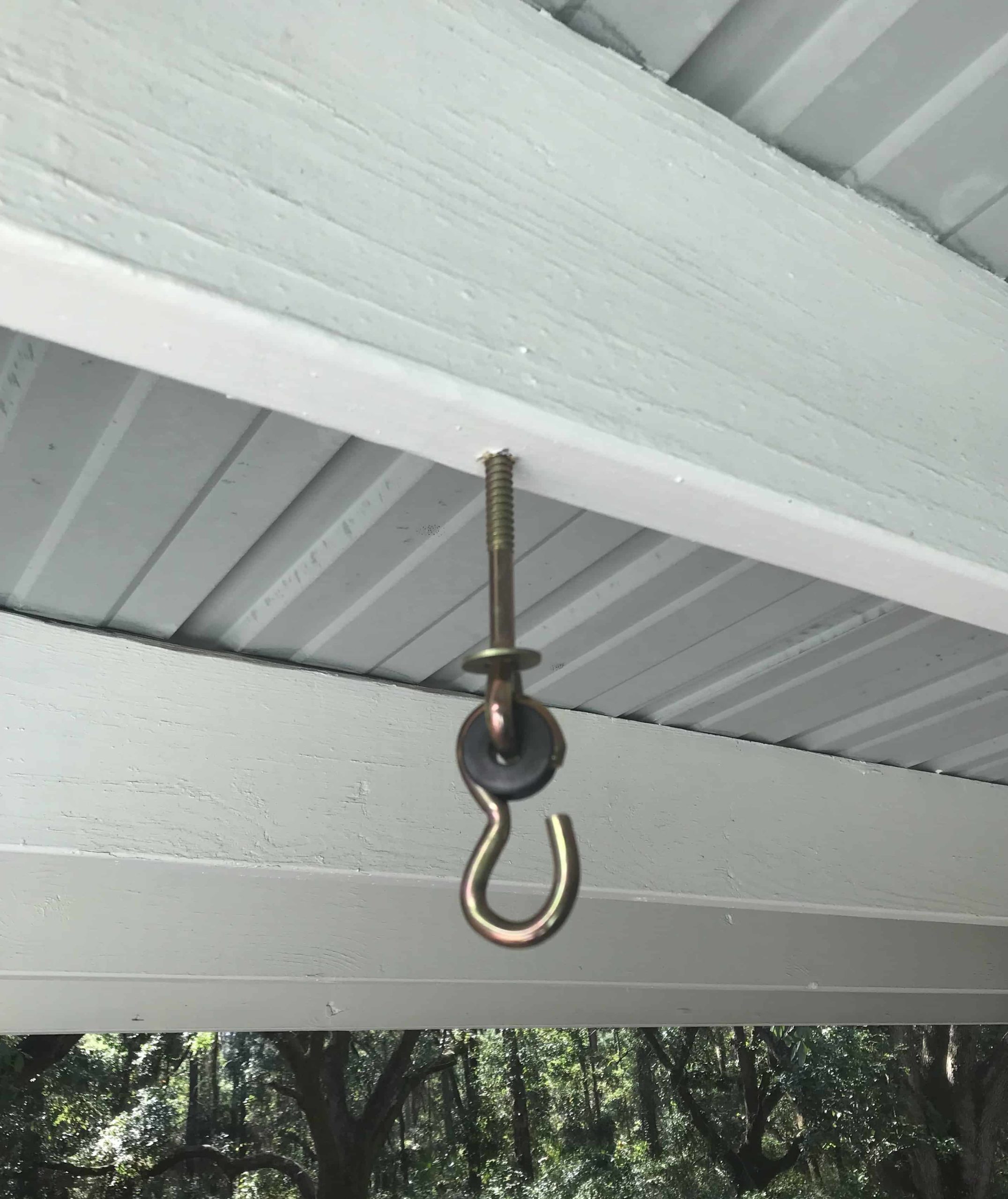
- ✦ Look for damage
Do not mount a swing to framing that shows significant rot, splitting, severe cracking, or other structural damage.
- ✦ Check the connection
A framing member should be properly tied into the supporting structure. A loose or poorly attached member is not a reliable anchor.
- ✦ Follow manufacturer limits
Use the swing and hardware instructions to understand the required mounting method and load limits.
- ✦ Consider the whole system
The swing, chains or ropes, hangers, fasteners, framing, and their connections all matter.
Signs You Should Stop and Get Help
Some installations are not good candidates for a simple DIY approach. Stop if you cannot identify the structural framing, find unexpected wiring or plumbing, see major wood damage, or discover that the proposed mounting points do not match the swing hardware.
A qualified contractor, carpenter, or other suitable professional can inspect the framing and determine what support is needed. This is a small step compared with repairing a damaged ceiling or dealing with a failed swing mount.
- ✦ Unknown framing
Get help when you cannot determine what supports the porch ceiling.
- ✦ Damaged wood
Do not use visibly damaged framing as your anchor without professional evaluation.
- ✦ Unexpected utilities
Stop when your drilling path may contain electrical wires or plumbing.
Common Mistakes When Finding Studs for a Porch Swing
Many swing installation problems start before the first mounting bolt goes in. The most common mistake is treating a ceiling finish as structural support. Another is trusting a single stud-finder reading without confirming the framing.
Take your time at this stage. A few extra minutes of checking can prevent misplaced holes and help you build a stronger installation.
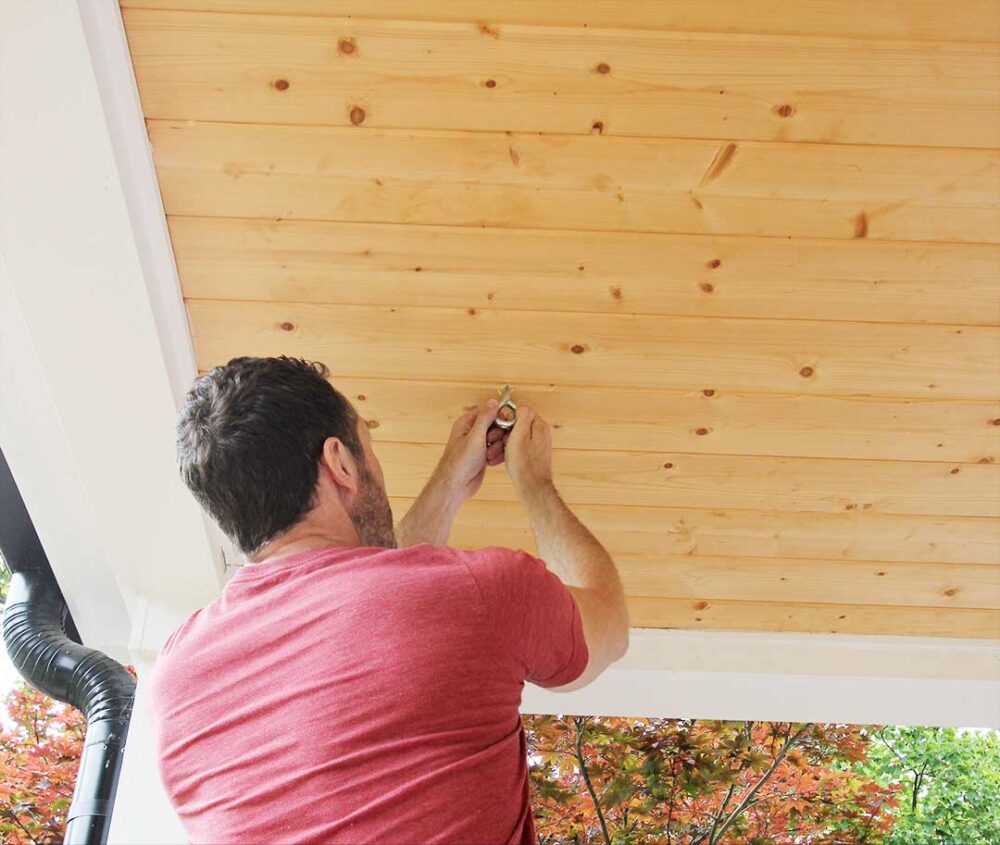
- ✦ Using ceiling drywall as the anchor
Drywall and similar finish materials should not carry the main load of a porch swing.
- ✦ Guessing from ceiling seams
A seam can suggest a framing location, but it does not prove that a joist is directly behind it.
- ✦ Trusting one tool
Stud finders can give false readings due to thick finishes, irregular framing, metal, moisture, or other conditions.
- ✦ Drilling without checking utilities
Always consider hidden wiring and plumbing before drilling into a ceiling.
- ✦ Ignoring swing movement
A swing moves and can create changing forces. Do not size the mounting system from the empty swing’s weight alone.
- ✦ Using ordinary screws
Choose mounting hardware that is appropriate for the swing and the structural member.
A Better Way to Avoid Mistakes
Use a simple confirmation process: locate, mark, measure, confirm, then drill. This approach works well because each step checks the one before it.
If two clues disagree, do not average them and hope for the best. Find out why they disagree. The goal is not to find a place that feels solid. The goal is to identify the actual structure.
- ✦ Locate
Use a stud finder and visible clues to identify a likely framing member.
- ✦ Mark
Mark the suspected edges and center.
- ✦ Confirm
Use measurements, a safe test hole, or top-side access to verify the framing.
- ✦ Install
Only after confirmation should you drill the final mounting holes.
How to Find Studs to Hang a Porch Swing When You Have a Finished Ceiling
A finished porch ceiling can make framing hard to see. You may have beadboard, plywood, drywall, tongue-and-groove boards, or another material covering the joists. In this case, combine several low-risk methods instead of relying on one signal.
Start with the stud finder. Then inspect the ceiling for fastener lines and seams. Measure from a known wall or beam and compare the results with the suspected framing pattern.
If you still cannot confirm the joist, consider whether there is safe access above the ceiling. If there is not, a professional may be able to inspect the framing with less risk than repeated drilling.
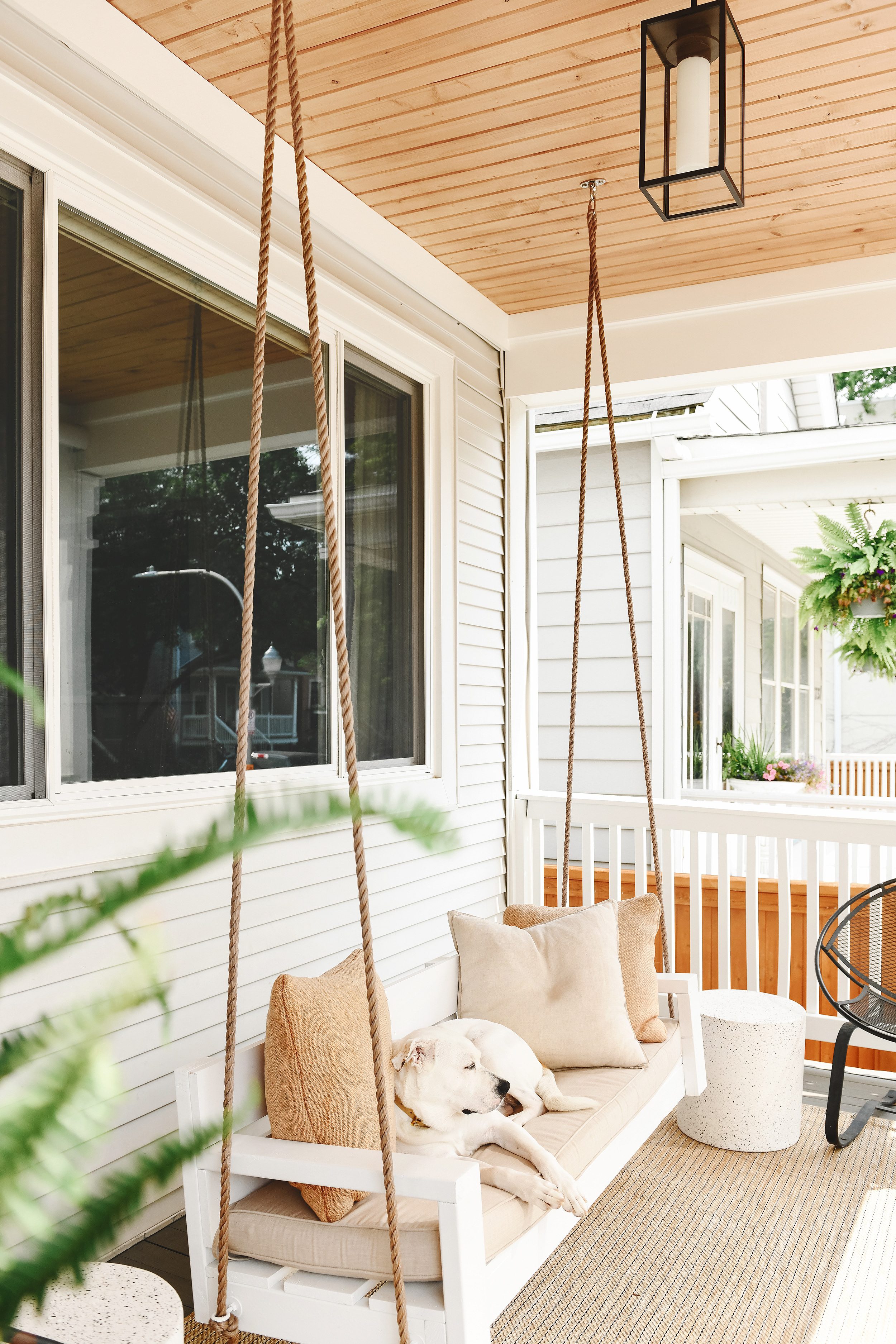
- ✦ Thick ceiling finishes
Some finishes can make electronic stud finders less reliable. Confirm the result with other evidence.
- ✦ Decorative ceilings
Do not assume decorative trim or board seams mark structural framing.
- ✦ Older homes
Older construction may have irregular framing, repairs, or materials that differ from modern framing.
- ✦ Remodeled porches
A newer ceiling can hide an older or altered framing system, so visible patterns may not tell the whole story.
When a Stud Finder Gives Confusing Results
A stud finder is a helpful locating tool, not a structural inspection. It may react to changes in density, metal fasteners, wiring, or other materials. If the readings jump around, slow down and scan the area in more than one direction.
Do not keep drilling to chase a signal. If you cannot identify the framing with reasonable confidence, switch to another inspection method or ask a professional to check the ceiling.
- ✦ Scan both directions
A consistent result from different passes is more useful than one quick reading.
- ✦ Watch for metal signals
Metal may be a fastener or another hidden component. Treat an unexpected metal reading as a reason to investigate.
Final Safety Check Before You Hang the Porch Swing
Before anyone sits on the swing, inspect the complete mounting system. Check that every fastener is installed as directed, the hardware is secure, and the attachment points are aligned with the structural framing.
Test the swing gradually rather than placing a full load on it at once. Watch the mounting points and surrounding ceiling for movement, cracking, or other signs of trouble. If anything shifts or looks wrong, stop using the swing and inspect the installation.
A safe installation depends on the entire support path. The load travels from the swing into the hangers, fasteners, structural framing, and the structure that supports that framing. Every part needs to be suitable for the job.
- ✦ Check every connection
Make sure the hardware is installed correctly and sits firmly against the supporting surface.
- ✦ Inspect the ceiling
Look for cracks, movement, pulled fasteners, or other changes around the mounting points.
- ✦ Test with care
Follow the manufacturer’s testing guidance and avoid sudden loads.
- ✦ Inspect over time
Recheck the hardware and surrounding structure during routine home maintenance, especially after heavy use or severe weather.
When to Call a Professional
Call a qualified professional if the porch framing is unclear, damaged, undersized for the planned load, or difficult to access safely. Professional help is also wise when the swing location requires new structural framing.
The same applies when you find unexpected wiring, plumbing, metal framing, or other materials in the planned drilling area. A correct answer to how to find studs to hang a porch swing is not always a DIY installation.
- ✦ Structural changes
Use professional help when the installation requires changes to load-bearing framing.
- ✦ Unsafe access
Do not climb into an unsafe attic or roof space just to locate a joist.