How to Remove Socket From Impact Wrench: Easy Step-by-Step Guide
Learning how to remove socket from impact wrench is simple once you know which retention system your tool uses. Most modern impact wrenches use either a friction ring, a hog ring, or a pin and O-ring to hold the socket on the square drive. The socket should come off without damaging the anvil or the socket.
In a busy U.S. garage, an impact wrench may see everything from wheel lug nuts to suspension bolts. Dirt, rust, impact force, and a tight retaining ring can make socket removal harder over time. The safest approach is to stop the tool, identify the retention type, and use steady force rather than brute force.
This guide explains how to remove socket from impact wrench, including normal removal, stuck sockets, pin-retained sockets, and sockets that seem welded to the tool. It also covers common mistakes and simple ways to prevent the problem from coming back.

How to Remove Socket From Impact Wrench Step by Step
Before you start, make sure the impact wrench cannot run by accident. Remove the battery from a cordless model or disconnect the air supply from a pneumatic model. For a corded tool, unplug it from the outlet.
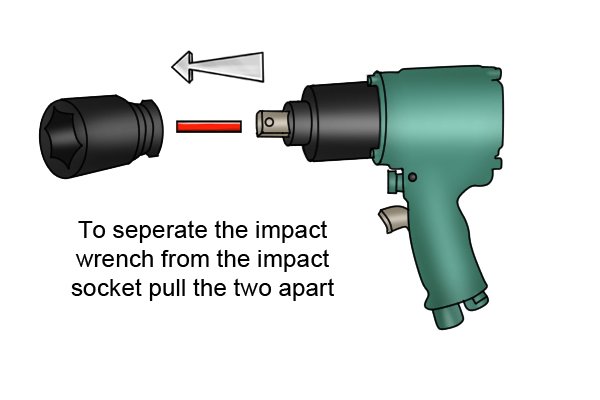
Hold the impact wrench firmly with one hand. Grip the socket with the other hand and pull it straight away from the square drive. If it does not move, rock the socket gently from side to side while keeping the pull in line with the anvil.
Do not squeeze the trigger while trying to remove the socket. The impact action can cause sudden movement and may damage the tool, the socket, or your hand. This basic method solves most cases where people ask how to remove socket from impact wrench.

- ✦ Step 1: Disconnect the tool
Remove the battery, unplug the tool, or shut off and disconnect the air supply. This prevents accidental operation.
- ✦ Step 2: Find the retaining system
Look at the end of the square drive. You may see a small detent ball, a retaining ring, or a cross hole used with a retaining pin.
- ✦ Step 3: Grip the socket
Hold the socket firmly. Keep your fingers clear of the drive opening and any moving parts.
- ✦ Step 4: Pull straight
Pull the socket away from the anvil. A straight pull usually works better than twisting the socket hard.
- ✦ Step 5: Rock it gently if needed
If the socket is tight, move it slightly from side to side while pulling. Use small movements rather than sudden jerks.
Why pulling straight matters
The square drive is designed to transfer high torque. It is not designed to be forced sideways with a large lever. A hard side load can wear the anvil or damage the socket opening.
A straight pull keeps the force in line with the drive. This is often the easiest answer when learning how to remove socket from impact wrench without causing damage.
What to do if the socket has a detent ball
A detent ball sits in the square drive and snaps into a recess in the socket. It holds the socket in place during use. Some sockets release easily, while others need a firm pull because the ball is under spring pressure.
Grip the socket close to the wrench. Pull it straight out while gently rocking it. Do not pry against the wrench housing.
How to Remove a Socket From an Impact Wrench With a Retaining Ring
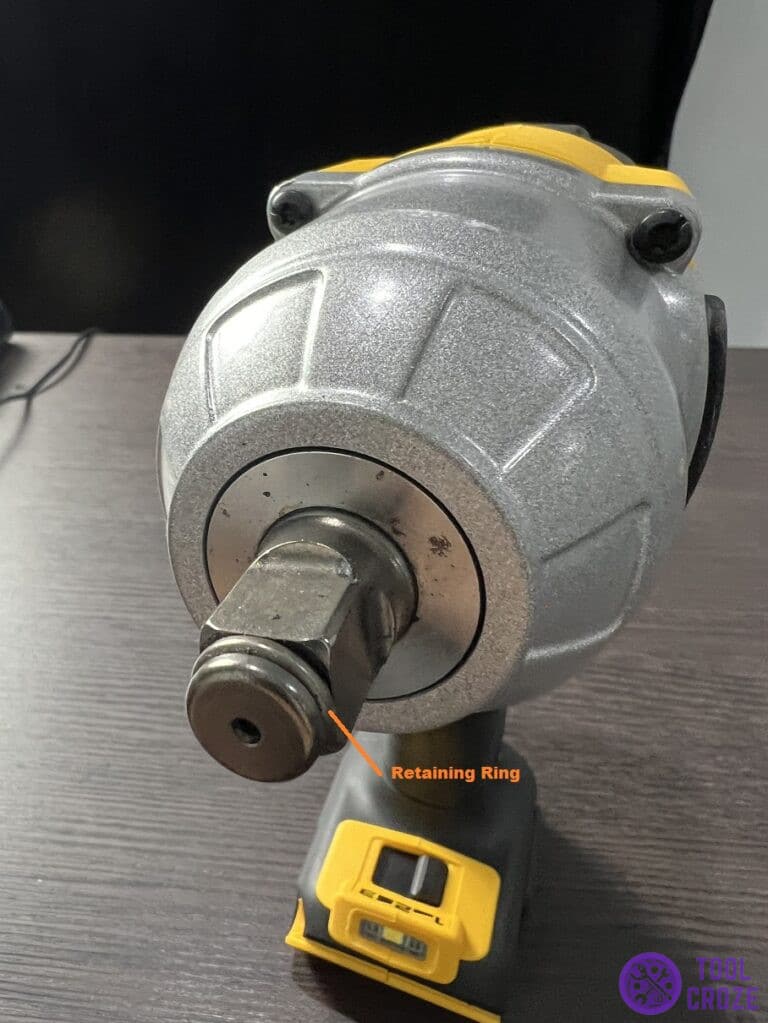
Many professional impact wrenches use a friction ring, often called a hog ring, to hold the socket. The ring sits around the square drive and grips the inside of the socket. This design makes socket changes quick, but a new or dirty ring can hold the socket very tightly.
When figuring out how to remove socket from impact wrench with a friction ring, first disconnect the tool. Then pull the socket straight off while gently rocking it. If the ring is very tight, a small amount of penetrating oil around the joint can help loosen dirt and light corrosion.
Wipe away excess oil before using the wrench again. Do not soak the tool. Oil should not be allowed to reach electrical parts, the motor, battery contacts, or other areas where it can cause problems.
- ✦ Use a firm grip
Hold the socket close to the wrench. A close grip gives you better control and reduces side pressure on the anvil.
- ✦ Use gentle rocking
Rock the socket a small amount while pulling outward. This can help the friction ring move through the socket opening.
- ✦ Clean the joint
Brush away dirt and rust around the socket and square drive after removal. A clean connection is easier to use next time.
Friction ring versus pin retention
A friction ring holds the socket by spring tension. A pin-retained socket uses a small pin and often an O-ring to secure the socket. The two systems need different removal methods.
If you see a cross hole through the socket and a pin, do not try to force the socket off like a simple friction-fit socket. The retaining pin may need to be removed first.
How to Remove Socket From Impact Wrench With a Retaining Pin
Some impact sockets use a retaining pin and O-ring. This system gives a strong connection and is common on tools used for heavy work. If the socket is pin-retained, the pin must be released before the socket can come off.
Inspect the socket and anvil for the retaining pin. The pin passes through the socket and the drive. An O-ring may sit around the outside to keep the pin in place.
Use the correct punch or tool for the pin. Support the socket so you do not bend the anvil. Once the pin is removed, pull the socket straight off the drive.

- ✦ Find the retaining pin
Look for the small metal pin passing through the socket and square drive. Its position can vary by socket design.
- ✦ Remove the O-ring when required
If an O-ring holds the pin, remove it carefully with a suitable pick or tool. Avoid cutting or stretching it if you plan to reuse it.
- ✦ Drive the pin out
Use a suitable punch and controlled taps. Avoid striking the impact wrench housing.
- ✦ Pull the socket off
After the pin is free, pull the socket away from the anvil. Keep the socket aligned with the drive.
Why you should not force a pin-retained socket
A retaining pin is meant to stop the socket from coming off during hard impact work. Pulling with extreme force can damage the socket, bend the pin, or stress the square drive.
If the pin will not move, clean the area and make sure you are using the correct punch. Check the tool maker’s instructions before using more force.
How to Remove a Stuck Socket From an Impact Wrench
A stuck socket is different from a socket that simply fits tightly. Rust, dirt, a damaged drive, a worn retaining ring, or a socket that has been forced onto the wrong size drive can lock the two parts together.
Start with the least aggressive method. Disconnect the impact wrench, secure it on a stable surface, and try a firm straight pull with gentle rocking. If that fails, clean the joint and apply a small amount of penetrating oil around the connection.
Let the oil work for a short time, then try again. If the socket remains stuck, use controlled mechanical force. Protect the tool from direct blows and avoid striking the plastic housing.

- ✦ Clean first
Remove dirt, metal dust, and loose rust from around the socket and anvil.
- ✦ Try penetrating oil
Apply a small amount around the joint if corrosion may be holding the socket. Keep the oil away from electrical parts.
- ✦ Use controlled force
A firm pull or careful movement with suitable hand tools is safer than sudden, extreme force.
- ✦ Stop if the anvil bends
If the square drive starts to deform or the housing takes heavy stress, stop and have the tool inspected.
Using pliers on a stuck socket
Large pliers can help when you need more grip, but they should be used with care. Grip the socket itself rather than the impact wrench housing. Pad the socket if you want to reduce marks.
Do not clamp so hard that you crush a thin socket wall. Impact sockets are strong, but they can still be damaged by poor clamping.
Using a soft mallet
A soft mallet can help break a light rust bond. Support the tool and tap the socket gently while pulling it away from the anvil. Small, controlled taps are safer than heavy hammer blows.
Never strike the battery, motor housing, trigger, or other sensitive parts. If gentle tapping does not work, stop and use a safer removal method.
Why an Impact Wrench Socket Gets Stuck
Understanding why a socket gets stuck can make removal much easier. In many cases, the problem starts with normal wear, rust, dirt, or a retaining ring that grips more tightly than expected.
A socket can also bind after heavy impact use. Repeated high torque can create a very tight fit between the socket and square drive. A damaged socket opening or worn anvil can make the fit worse.
- ✦ Rust and corrosion
Moisture can cause rust on the socket or square drive. Rust increases friction and can lock the parts together.
- ✦ Dirt and metal dust
Fine debris can collect around the retaining ring and drive. This can make socket removal harder.
- ✦ Tight retaining ring
A strong friction ring can grip the socket firmly, especially when the ring is new.
- ✦ Damaged socket
A distorted socket opening may bind against the square drive instead of sliding off cleanly.
- ✦ Heavy impact use
Repeated high-torque work can create a very tight connection and may worsen wear on the drive system.
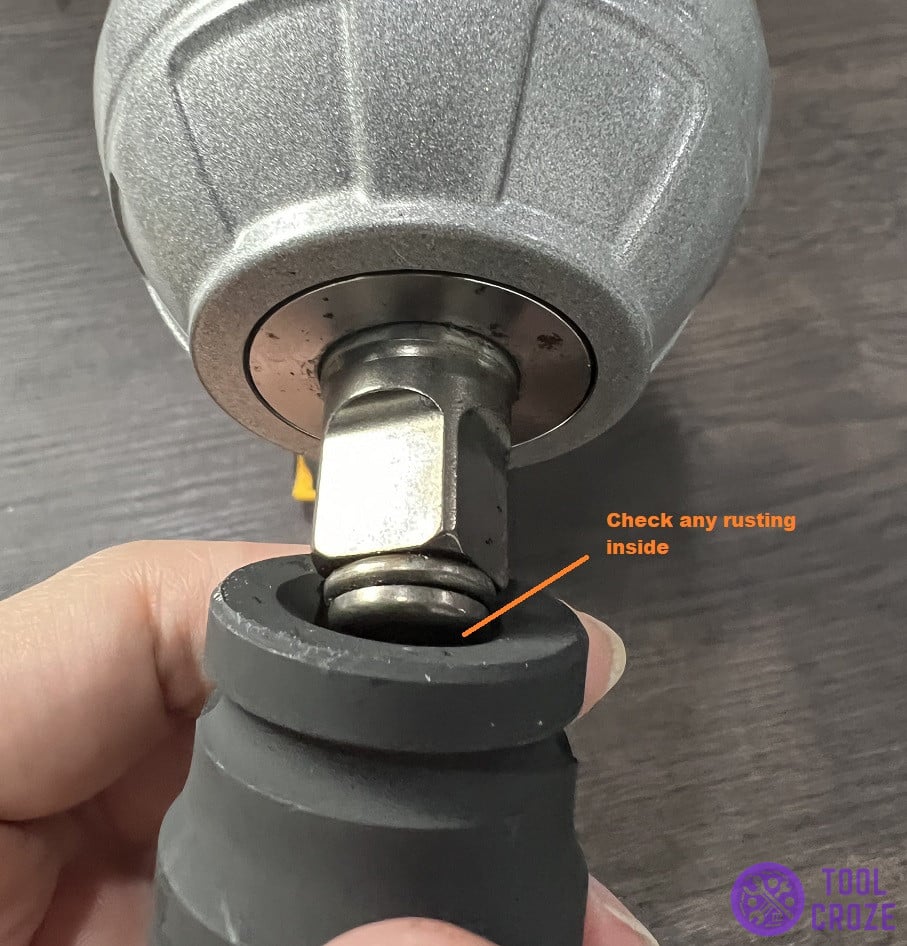
Check for rust before forcing the socket
Rust is a common reason for a socket that will not release. Look around the socket opening and exposed part of the anvil. Orange or dark buildup can point to corrosion.
If corrosion is present, clean the area before trying again. Forcing a rusty joint can turn a simple cleaning job into a damaged tool or socket.
Tools You May Need for a Stuck Impact Socket
Most sockets come off with your hands. A stuck socket may need a few basic shop tools. Keep the first attempt simple and increase force only when you know what is holding the socket.
For U.S. home garages and professional shops, these tools are useful for safe socket removal and basic impact wrench care. Use tools that match the size and design of the socket.
- ✦ Work gloves
Protect your hands from sharp edges, rust, and hot or dirty metal.
- ✦ Wire brush
Remove loose rust and dirt from the socket and square drive.
- ✦ Penetrating oil
Help loosen light corrosion around a stuck metal connection. Use only a small amount.
- ✦ Soft mallet
Provide light controlled taps when corrosion or debris has created a tight bond.
- ✦ Punch
Remove a retaining pin when the socket uses a pin-and-O-ring system.
- ✦ Pliers
Give extra grip on the socket when hand force is not enough. Avoid crushing the socket.
Tools to avoid
Avoid using a torch or open flame to heat a socket that is attached to an impact wrench. Heat can damage seals, grease, electrical parts, plastic components, and finishes. It can also create a fire risk when oil or other flammable material is nearby.
Avoid large pipe wrenches and long cheater bars unless the tool maker specifically supports that method. Excessive leverage can damage the square drive or wrench housing.
Safety Tips When Removing an Impact Wrench Socket
Safety matters even when the job looks simple. An impact wrench stores mechanical energy and can move suddenly if it is powered or handled poorly. Disconnect the power source before you put your hands near the socket.
Wear eye protection when removing a retaining pin or using a punch. Small metal parts can move quickly. Work on a stable surface and keep the tool pointed away from your body.
- ✦ Disconnect power
Remove the battery, unplug the tool, or disconnect the air supply before socket removal.
- ✦ Wear eye protection
Use safety glasses when tapping pins, cleaning rust, or working with a stuck socket.
- ✦ Keep hands clear
Do not place fingers between the socket and tool housing while applying force.
- ✦ Avoid direct housing blows
Never hit the motor housing, battery, trigger, or other sensitive tool parts.
- ✦ Know when to stop
Stop if the socket, anvil, retaining ring, or tool housing begins to deform.
When professional repair makes sense
If the socket will not move after reasonable cleaning and controlled removal attempts, the problem may be inside the retaining system. A damaged detent ball, spring, retaining ring, or anvil may need repair.
Do not sacrifice an expensive impact wrench to save a low-cost socket. If the drive looks bent or badly worn, have the tool checked by the manufacturer or a qualified repair shop.
How to Prevent an Impact Wrench Socket From Getting Stuck
The best way to deal with a stuck socket is to prevent the problem. Clean the square drive and socket after heavy use, especially if you work around road salt, water, mud, or brake dust.
Use impact-rated sockets with your impact wrench. Regular chrome hand-tool sockets may not be designed for repeated impact loading and can fail or crack under the wrong conditions.
Store the tool and sockets in a dry place. A small amount of suitable maintenance product on exposed metal can help protect against corrosion, but always follow the tool maker’s care instructions.
- ✦ Use impact-rated sockets
Choose sockets made for impact tools. They are designed for the shock loads produced by an impact wrench.
- ✦ Keep the drive clean
Brush away dirt and metal dust before installing a socket.
- ✦ Check the retaining system
Inspect the friction ring, detent ball, pin, and O-ring for obvious wear or damage.
- ✦ Control moisture
Dry wet sockets and the exposed drive before storage to reduce corrosion.
- ✦ Replace damaged sockets
A socket with a damaged or distorted drive opening can bind and should not be kept in service.
Use the right socket size
A socket should fit the fastener correctly. A poor fit can cause extra movement and stress during impact use. It can also damage the socket and make removal harder later.
For wheel work, suspension repairs, and other vehicle jobs, confirm the socket size before applying impact power. The right fit helps protect both the fastener and the tool.
Common Mistakes When Removing an Impact Wrench Socket
Many stuck-socket problems become worse because the wrong removal method is used. The goal is not to use the most force possible. The goal is to release the socket while protecting the anvil, retaining system, and socket.
Knowing these common mistakes makes it easier to solve the problem without turning a simple maintenance task into a repair.
- ✦ Leaving the battery installed
A cordless impact wrench can run unexpectedly if the trigger is pressed. Remove the battery before working on the socket.
- ✦ Twisting too hard
A large twisting force can put unnecessary side load on the square drive. Try a straight pull with gentle rocking first.
- ✦ Hammering the tool housing
Direct blows can damage the housing or internal parts. If tapping is needed, strike only the socket with controlled force.
- ✦ Using heat
Open flame can damage the impact wrench and create a fire hazard. It is not a safe first-line removal method.
- ✦ Ignoring the retaining system
A pin-retained socket may not come off until its pin and O-ring are removed. Identify the retention method before applying force.