How Much Does an Impact Wrench Cost: Important Facts Explained
An impact wrench typically costs $50 to $150 for a basic cordless or corded model, $150 to $300 for a dependable midrange tool, and $300 to $700 or more for professional equipment. You may also need to budget for batteries, a charger, impact sockets, and an air compressor if you choose a pneumatic model. This article explains the reasons behind those price differences and the practical details that affect the real cost.
The unexpected expense is often not the wrench itself. A low-priced cordless tool can become a poor value when its battery platform is unfamiliar, while a bargain pneumatic wrench may require a compressor, hose, fittings, and maintenance before it can perform properly.
Price should therefore match the work, power source, torque requirements, duty cycle, and included accessories. The following guide compares cordless, corded, and air-powered options, explains what performance claims mean, identifies the accessories that change the purchase price, and shows how to choose a capable tool without paying for features you will not use.
Typical Impact Wrench Prices by Type
The largest factor in the purchase price is the wrench’s power source. Cordless, pneumatic, and corded tools can all loosen and tighten fasteners, but they involve different equipment costs and suit different working environments.
Cordless impact wrenches
A basic cordless impact wrench generally costs about $50 to $150. These models may be adequate for occasional tire rotations, light automotive repairs, furniture assembly, and simple maintenance, but their advertised torque and durability can vary widely.
Midrange cordless models commonly sell for $150 to $300, often without a battery or charger. They usually provide better controls, stronger motors, more consistent output, and a battery platform that can support other tools from the same brand.
Heavy-duty professional cordless impact wrenches can cost $300 to $700 or more as a bare tool. A complete kit with one or two batteries and a charger may push the total above $500, especially when it includes a high-capacity battery or advanced electronic controls.
Pneumatic impact wrenches
Air-powered impact wrenches often cost $75 to $250 for common automotive sizes. Professional or specialized models may cost $300 to $600, although the tool itself can be less expensive than an equivalent cordless model.
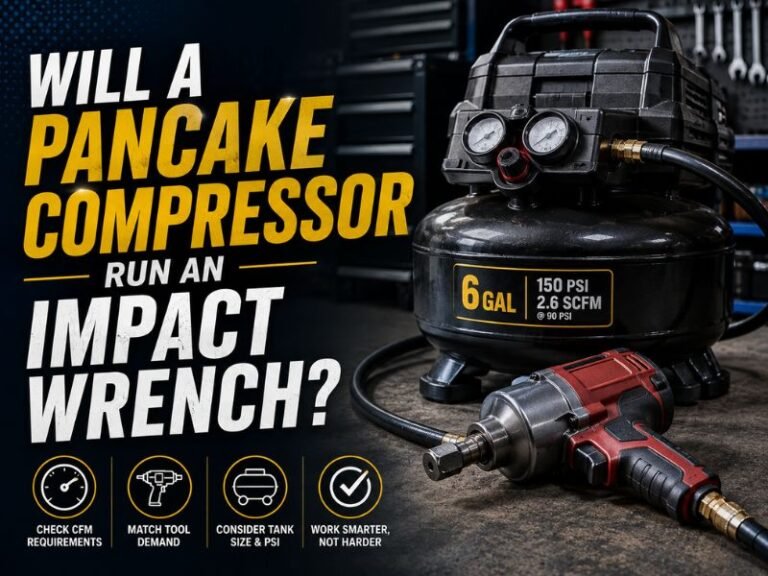
The apparent savings can be misleading if you do not already own compressed-air equipment. A suitable compressor may cost $150 to $800 or more, depending on its tank size, airflow, motor, and duty cycle. You may also need an air hose, regulator, couplers, fittings, and an in-line oiler.
Corded electric models
Corded impact wrenches usually cost about $60 to $180. They can be practical for garage work where an electrical outlet is nearby, and they avoid battery replacement costs.
The tradeoff is reduced mobility. An extension cord may be necessary, and corded tools are less convenient around vehicles, construction sites, or equipment located far from a reliable power source.
What Determines the Price of an Impact Wrench?
Two tools with similar-looking housings can have very different prices because of their motor design, internal components, controls, and intended duty cycle. Understanding these attributes helps separate useful performance from marketing language.
Torque and fastening capacity
Torque rating is one of the most visible price factors. A compact tool designed for small fasteners may offer enough power for basic vehicle work, while a heavy-duty model designed for truck lug nuts or industrial fasteners requires a stronger motor, gearbox, and anvil.
Manufacturers may list breakaway torque, fastening torque, nut-busting torque, or maximum torque. These figures are not always measured under identical conditions, so a higher number does not automatically mean a better tool for every task.
For passenger-car lug nuts, a midrange impact wrench is often more useful than the most powerful model available. Excessive torque can damage studs, stretch fasteners, or make it difficult to tighten hardware accurately unless a torque wrench is used afterward.
Voltage and battery system
In cordless tools, voltage is a rough indicator of the platform rather than a complete measure of performance. Compact 12-volt models are smaller and easier to handle, while 18-volt and 20-volt systems typically offer more power for automotive and construction applications.
Battery capacity, commonly expressed in amp-hours, affects runtime, weight, and price. A larger battery usually costs more and may provide more sustained work, but it can make a compact wrench tiring to hold in confined areas.
Some manufacturers sell a bare tool at an attractive price because the battery and charger are separate. Check the package contents before comparing prices. If you are entering a new battery ecosystem, the complete kit price is the more meaningful number.
Motor, gearbox, and durability
Brushless motors generally cost more than brushed motors, but they can offer better efficiency, longer service life, and improved electronic control. A reinforced gearbox, metal housing components, and a quality impact mechanism also contribute to a higher price.
Professional tools are built for frequent use and may tolerate repeated high-load cycles better than homeowner models. That durability matters when the wrench is used every day, but it may not justify the added cost for a person who performs occasional maintenance.
Speed and control features
Variable-speed triggers, selectable power modes, automatic shutoff, forward and reverse controls, and work lights can increase the price. These features are particularly useful when working around delicate fasteners or in poorly lit spaces.
A tool with multiple modes may reduce the chance of overtightening during installation. However, electronic control does not replace a calibrated torque wrench when a manufacturer specifies a precise fastener torque.
The Hidden Cost of Accessories and Setup
The advertised wrench price may represent only the tool body. A realistic budget should include everything needed to use it safely and effectively on the intended job.
- Cordless setup: Add the battery and charger if they are not included. A second battery can be useful for extended work but increases the initial cost.
- Pneumatic setup: Include a compressor with adequate airflow, an air hose, fittings, a regulator, and suitable lubrication equipment.
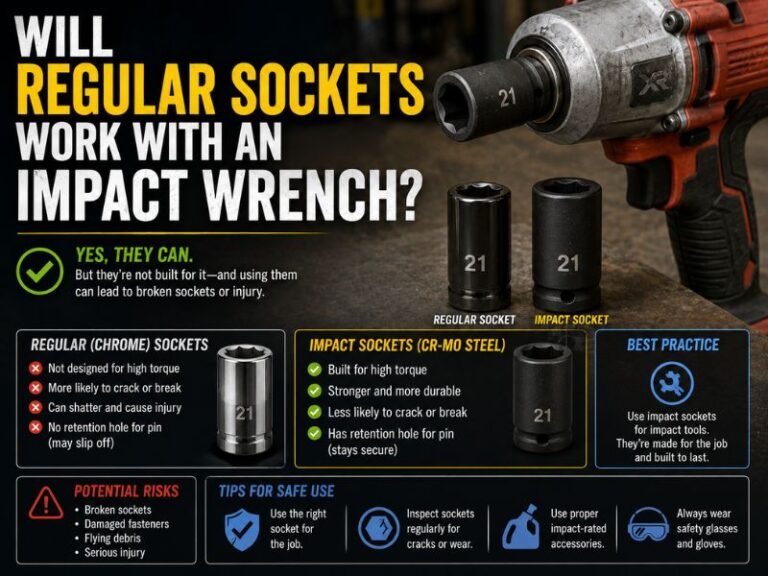
- Impact sockets: Standard chrome sockets are not designed for repeated impact loading. Use impact-rated sockets in the correct drive size.
- Storage and protection: A case, tool bag, or socket organizer may be worthwhile, particularly for mobile work.
- Maintenance: Air tools may need oil and moisture control, while cordless tools eventually require battery replacement.
Socket size also affects the total budget. A 1/2-inch drive is a common choice for automotive repairs, while 3/8-inch models suit lighter fasteners and 3/4-inch or larger drives are intended for substantially heavier work.
Which Impact Wrench Is Appropriate for Your Work?
The best price depends on how often the tool will be used and what fasteners it must handle. Buying based only on the maximum torque number can lead to an unnecessarily heavy, expensive, or difficult-to-control tool.
Occasional home and vehicle maintenance
A $75 to $180 cordless or corded model may be sufficient for occasional tire changes, brake work, and general repairs. A compact cordless wrench is convenient if you do not already own a compressor, while a corded model can offer dependable operation in a home garage.
For routine passenger-car work, prioritize manageable weight, a comfortable grip, a usable battery, and controlled power. The wrench should remove stubborn fasteners, but final tightening should be performed with a hand torque wrench when the vehicle’s specifications require it.
Frequent automotive work
Someone who regularly services vehicles may benefit from a $150 to $350 cordless model or a quality pneumatic wrench paired with an existing compressor. A midrange tool typically offers a stronger balance of output, runtime, control, and durability than the cheapest options.
Before choosing pneumatic equipment, verify the compressor’s delivered airflow rather than relying only on its tank size. A large tank can provide a temporary reserve, but a compressor with inadequate continuous airflow may cause the tool to lose power during repeated use.
Professional shop or heavy equipment work
High-use applications can justify a $300 to $700-plus cordless tool or a professional pneumatic model. At this level, consistent performance, repair support, battery availability, vibration control, and warranty terms may matter more than the initial purchase price.
Heavy equipment and commercial vehicles may require a larger drive size and substantially greater torque than passenger cars. Confirm the fastener specifications and tool requirements before purchasing; an oversized wrench can damage components, while an undersized one may encourage unsafe extensions or improvised methods.
How to Compare Impact Wrench Value
Start by identifying the largest fastener you expect to remove and the setting in which you will work. Then compare complete operating costs rather than bare-tool prices.
- Choose the power source that fits the workspace. Cordless tools maximize mobility, pneumatic tools suit equipped shops, and corded tools work where outlets are convenient.
- Compare the actual package contents. Confirm whether the battery, charger, case, and sockets are included.
- Review both fastening and breakaway torque. Treat extreme maximum figures cautiously and look for operating modes that improve control.
- Check the tool’s weight with its battery installed. A powerful wrench that is uncomfortable to hold may be less productive in real use.
- Consider the manufacturer’s battery platform, replacement battery cost, warranty, and local service options.
- Match the drive size and socket set to the fasteners rather than choosing the largest tool automatically.
A lower-priced tool can be the better value when it meets the task and avoids unnecessary accessories. Conversely, paying more may be sensible when downtime, repeated high-load use, or battery compatibility has a significant practical cost.
Safety and Torque Limitations
An impact wrench is a power tool, not a substitute for every hand tool. Its high rotational force can damage threads, break fasteners, or injure the operator if the socket slips or the tool reacts unexpectedly.
- Wear eye protection and keep hands clear of the socket and rotating parts.
- Use only sockets, adapters, and extensions rated for impact use.
- Inspect sockets, the anvil, battery, cord, hose, and fittings before operation.
- Secure the workpiece and keep bystanders away from the immediate area.
- Do not use an impact wrench to apply final torque to safety-critical fasteners unless the procedure specifically permits it.
- Use a calibrated torque wrench for wheel lugs and other fasteners with required torque specifications.
For pneumatic tools, drain moisture from the compressor system as appropriate, use the correct pressure and airflow, and avoid directing compressed air at skin. For cordless tools, remove the battery before changing sockets or performing adjustments.
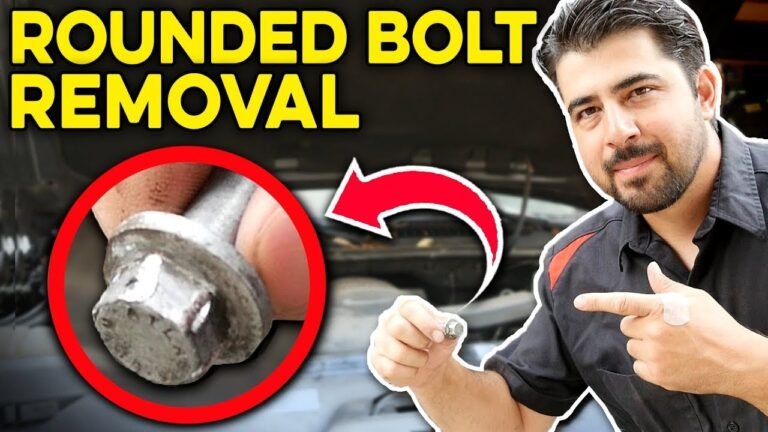
Get professional help when a fastener is seized, damaged, inaccessible, or connected to a critical steering, suspension, brake, or structural component and you are uncertain about the correct procedure. The cost of a suitable repair is usually lower than the consequences of a broken stud or improperly secured component.
Frequently Asked Questions About Impact Wrench Cost
How much does an impact wrench cost for basic home
A basic home-use impact wrench usually costs $50 to $150. A cordless kit may cost more once the battery and charger are included, while a pneumatic model may require a compressor that substantially increases the total investment.
How much does an impact wrench cost for professional use?
Professional models commonly cost $300 to $700 or more. The price reflects stronger components, higher sustained output, better control systems, and support for frequent use, although a quality midrange tool may be sufficient for some professional tasks.
Is a cordless or pneumatic impact wrench cheaper?
The wrench itself is often cheaper when it is pneumatic, but the complete setup may not be. If you already own a compressor with adequate airflow, an air tool can be economical; otherwise, a cordless kit may cost less and provide greater convenience.
Do impact wrenches come with batteries and chargers?
Some are sold as complete kits, but many cordless models are bare tools. Check the product package carefully and add the cost of a compatible battery and charger before comparing it with another brand or model.
What size impact wrench is best for changing car tires?
A 1/2-inch-drive impact wrench is a common choice for passenger-car lug nuts. Compact 3/8-inch models may work for lighter applications, while the correct choice depends on the vehicle, fastener condition, available torque, and the manufacturer’s service requirements.
Can a cheap impact wrench remove lug nuts?
A low-cost model may remove ordinary lug nuts, but performance is not guaranteed in every situation. Corrosion, over-tightening, battery condition, extension use, and compressor airflow can all reduce available torque.
Do I still need a torque wrench with an impact
Yes, a torque wrench is still recommended when a fastener has a specified final torque. Use the impact wrench for removal or controlled initial tightening, then verify final tightness with the appropriate torque procedure.
Conclusion: Choose the Complete Tool Cost
Most impact wrenches cost between $50 and $300, while professional cordless and heavy-duty models can exceed $700. The major limitation is that advertised torque and bare-tool prices do not reveal the full operating cost or guarantee suitability for a particular fastener.
Choose the power source, drive size, control features, and durability level according to the work you actually perform. Before buying, calculate the complete setup—including batteries, charger, compressor, hose, and impact sockets—and plan to use a torque wrench for final tightening where specifications require it.