Will a Leaf Blower Move Snow? What You Need to Know
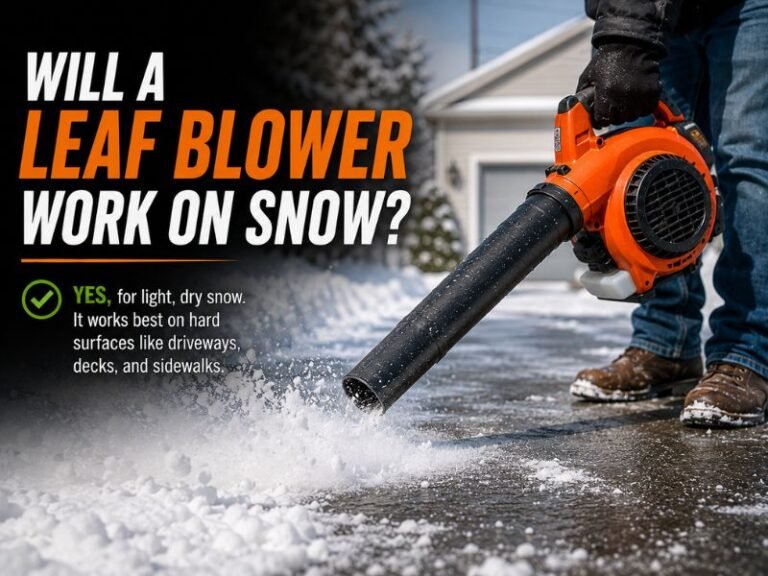
Yes, a leaf blower can move snow effectively when the snow is fresh, dry, powdery, and relatively shallow. It becomes much less effective once the snow turns wet, heavy, packed, or frozen to the surface.
A leaf blower does not melt snow. It uses high-speed airflow to lift and push loose material. That makes fresh powder an excellent match, especially on driveways, sidewalks, decks, steps, and other small areas. Snow condition matters more than many people expect, however. A blower that clears light powder in seconds may barely move the same depth of wet snow.
Knowing when a leaf blower works—and when it is time to switch to a shovel or snow blower—can save a lot of unnecessary effort.
Will a Leaf Blower Move Snow?
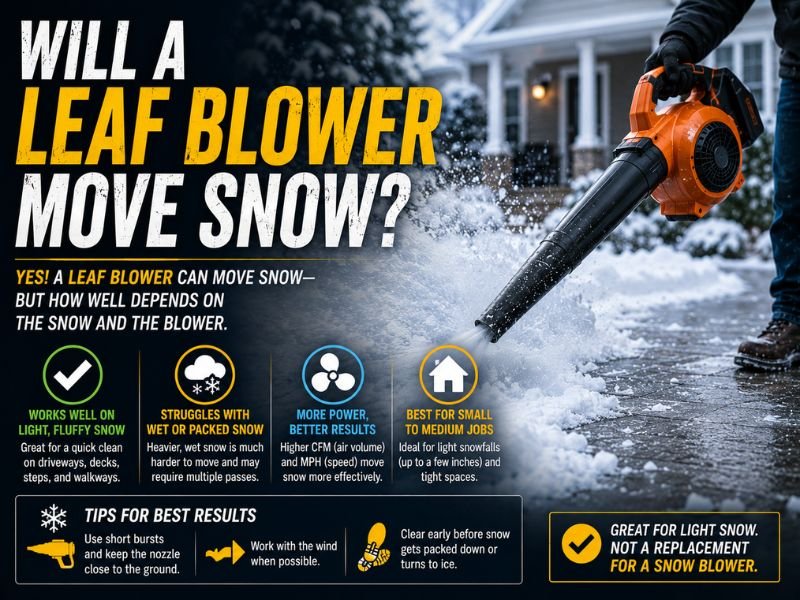
Yes, under the right conditions.
A leaf blower generally works well on:
- Fresh powdery snow
- Light snowfall
- Shallow accumulation
- Loose snow on smooth surfaces
- Steps and walkways
- Decks and patios
- Loose snow on vehicles
It becomes less effective on:
- Wet snow
- Heavy accumulation
- Packed snow
- Snow driven over by vehicles
- Refrozen snow
- Ice bonded to a surface
The best time to use a leaf blower is shortly after light snow falls, before traffic, sunlight, melting, or refreezing changes its consistency.
Why Can a Leaf Blower Move Snow?
Fresh snow can be surprisingly light.
A leaf blower creates a fast-moving stream of air that pushes against the snow particles. When those particles are loose and dry, they can be lifted and carried away from the surface.
This is similar to blowing dry leaves across a driveway.
The blower works because the material has relatively little weight and does not strongly adhere to the surface.
Once snow absorbs more moisture or becomes compressed, significantly more force is required to move it. At that point, airflow becomes less effective.
It is also important to remember that a leaf blower is moving snow mechanically.
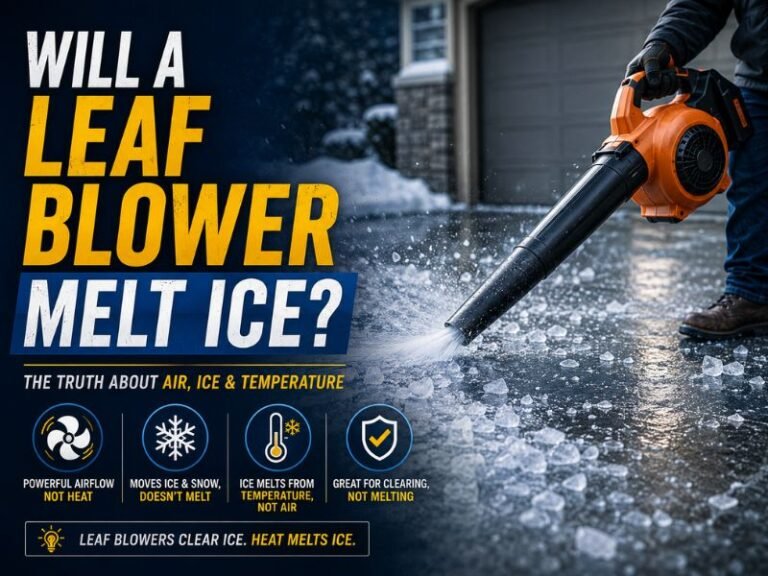
Air speed moves snow; it does not melt it.
What Type of Snow Can a Leaf Blower Handle Best?
Dry, powdery snow is the ideal condition.
Fresh Powder
Fresh powder is:
- Loose
- Lightweight
- Easy to lift
- Less likely to stick to pavement
A good blower can quickly clear light powder from a walkway or driveway.
Shallow Snow
A leaf blower is also more effective when the snow layer is relatively thin.
There is no universal maximum depth because snow density and blower performance vary considerably.
A few inches of extremely dry powder may sometimes be easier to move than a thinner layer of wet, heavy snow.
Snow Before It Is Compacted
Timing matters.
Snow is easier to blow before:
- People walk across it
- Vehicles drive over it
- Sunlight partially melts it
- Temperatures cause melting and refreezing
Clearing early can make a major difference.
Will a Leaf Blower Move Wet Snow?
Usually not very well.
Wet snow contains more water and tends to stick together.
Compared with powder, it is:
- Heavier
- More cohesive
- More likely to stick to pavement
- Harder for airflow to lift
A powerful leaf blower may still move some lightly wet snow, particularly if the layer is thin.
However, performance can drop quickly as moisture increases.
If the snow forms heavy clumps instead of blowing freely, a shovel or snow blower is generally more practical.
Will a Leaf Blower Move Deep Snow?
Its effectiveness becomes limited as snow depth increases.
With deeper accumulation, the blower may remove the loose upper layer while leaving much of the lower snow behind.
You may also find that snow begins piling up instead of moving completely out of the area.
Multiple passes can help with moderate accumulation, but eventually the process becomes inefficient.
For substantial snowfall, use a tool designed to move larger quantities of snow.
That may include:
- Snow shovel
- Snow pusher
- Snow blower
A leaf blower is better treated as a light-snow tool than a replacement for dedicated snow-removal equipment.
Can a Leaf Blower Clear Snow From a Driveway?
Yes, especially when the driveway has a light layer of fresh powder.
Smooth pavement makes the job easier because the snow can move across the surface without becoming trapped in irregular areas.
The blower works best when:
- Snow is fresh
- Snow is dry
- Accumulation is light
- Vehicles have not driven over it
Once tires compress snow against the driveway, airflow usually becomes much less effective.
For this reason, clearing the driveway early can be useful during a light snowfall.
If heavy snow is expected, however, a snow blower or shovel is the more reliable choice.
Can a Leaf Blower Clear Sidewalks and Walkways?
Yes.
Sidewalks are one of the better places to use a leaf blower for snow because the area is narrow and easy to clear toward one side.
A blower can move light snow from:
- Front walkways
- Garden paths
- Sidewalk sections
- Entry areas
Start at one end and work toward an open edge.
Be cautious after the snow is removed because ice may be hidden underneath.
A walkway that looks clean can still be slippery.
Can You Use a Leaf Blower on Steps?
Yes, a blower can work particularly well on steps covered with light powder.
The concentrated airflow can clear:
- Individual treads
- Corners
- Edges
- Areas that are awkward for a shovel
The limitation is the same as elsewhere.
Wet snow, packed material, or bonded ice will be much harder to remove.
Also keep your footing in mind. Standing on icy steps while operating a powerful blower can be more hazardous than the actual snow-removal task.
Can a Leaf Blower Remove Snow From a Deck?
Often, yes.
A deck covered with a thin layer of dry snow can be a good application for a leaf blower.
The blower may help remove snow without repeatedly shoveling across a large surface.
It can be especially useful for:
- Light powder
- Fresh snowfall
- Corners
- Rail areas
- Small patios
The blower will not remove ice frozen to the deck.
Also follow the manufacturer’s instructions regarding operation around moisture and snow, especially with electrical equipment.
Can You Use a Leaf Blower to Remove Snow From a Car?
A leaf blower can help remove loose powder from a vehicle.
It may work on:
- Roof
- Hood
- Windows
- Trunk
- Bed of a pickup
This works best when the snow is fresh and not frozen to the vehicle.
Be careful about what the airflow picks up.
Gravel, grit, or other debris around the vehicle can be blown toward:
- Paint
- Glass
- Lights
Keep the blower tube away from direct contact with painted surfaces.
For windshield ice, use the vehicle’s defroster and an appropriate ice scraper rather than relying on airflow.
Cordless vs. Gas vs. Corded Leaf Blowers for Snow
All three types can potentially move light snow, but each has different practical considerations.
Cordless Leaf Blower
Cordless models provide excellent mobility.
Advantages include:
- No extension cord
- Easy movement around vehicles and steps
- Fast setup
The main limitation is battery runtime.
Cold weather can also temporarily affect battery performance, depending on the battery and operating temperature.
Gas Leaf Blower
Gas blowers can be useful for longer outdoor work.
Depending on the model, they may provide substantial airflow and avoid battery-runtime limitations.
However, they also involve:
- Fuel
- Engine maintenance
- Exhaust
- Additional weight and noise
Corded Leaf Blower
Corded models provide continuous electrical power.
The major limitation is managing an extension cord around snow and potentially wet surfaces.
Always follow the tool’s instructions for weather and electrical use.
Does MPH Matter for Moving Snow?
Yes, but it is not the only number that matters.
Leaf blowers are often rated using both MPH and CFM.
MPH
MPH describes air velocity.
Higher velocity can help break loose lightweight material and get it moving.
CFM
CFM describes the volume of air being moved.
Higher airflow volume can help push a broader or larger amount of material.
For snow removal, both can matter.
A blower should not be judged by MPH alone.
Snow condition is also extremely important. Even a strong blower may struggle with wet snow that a less powerful machine easily moved when it was dry.
Can a Leaf Blower Move Packed Snow?
Usually not effectively.
Snow becomes much harder to blow after being compressed by:
- Shoes
- Vehicle tires
- Snow equipment
- Repeated thawing and freezing
Packed snow has a stronger bond to the surface.
The airflow may remove loose material around it, but the compacted layer often remains.
A scraper, shovel, or other mechanical method is more appropriate.
Can a Leaf Blower Remove Frozen Snow?
It depends on what “frozen snow” means.
Loose frozen granules or small chunks may be blown away.
A crust or layer frozen firmly to pavement usually will not move.
That distinction is important:
Loose frozen material can move; bonded ice or frozen crust usually cannot.
If you loosen the material first, the blower can then be useful for cleanup.
Leaf Blower vs. Snow Blower
Both tools move material, but they are designed for different workloads.
| Situation | Better Choice |
| Light powdery snow | Leaf blower |
| Thin fresh accumulation | Leaf blower |
| Steps and small walkways | Leaf blower can work well |
| Deep snow | Snow blower |
| Wet heavy snow | Snow blower |
| Large driveway after substantial snowfall | Snow blower |
| Packed or icy layer | Scraping or de-icing method |
A leaf blower is fast and convenient for light snow.
A snow blower is better when the volume and weight of snow become significant.
Leaf Blower vs. Snow Shovel
A shovel remains useful because it does not depend on the snow being light enough to blow.
Leaf Blower
Best for:
- Dry powder
- Shallow snow
- Quick cleanup
- Steps and decks
Snow Shovel
Better for:
- Wet snow
- Heavy snow
- Deeper accumulation
- Material that sticks to the surface
During some storms, both tools can be useful.
You might use a leaf blower for the first light accumulation and a shovel later if conditions become wetter or deeper.
How to Use a Leaf Blower for Snow
Start Early
Do not wait until a light snowfall becomes deep, packed, or partially frozen.
Fresh snow is much easier to move.
Inspect the Surface
Before blowing, look for:
- Gravel
- Loose stones
- Ice
- Toys
- Tools
- Other debris
High-speed airflow can turn loose objects into projectiles.
Work With the Wind
When possible, direct the snow in the same general direction as the natural wind.
Working directly against strong wind can send snow back toward you.
Start at an Edge
Give the snow somewhere to go.
Work progressively toward the clearing edge instead of moving the same snow repeatedly.
Use Controlled Passes
Do not try to push a large pile all at once.
Move smaller amounts in several passes.
Check for Ice
After the loose snow is gone, inspect the surface for ice.
A clean-looking driveway or step can remain slippery.
Can Cold Weather Affect a Cordless Leaf Blower?
Yes.
Lithium-ion batteries can deliver reduced performance in very cold conditions.
You may notice:
- Shorter runtime
- Reduced performance
- Temporary power limitations
Battery-storage and charging temperature recommendations vary by manufacturer.
Follow the instructions for your specific battery system, particularly before charging a battery that has been exposed to very cold temperatures.
Can Snow Damage a Leaf Blower?
Potentially, depending on the tool and conditions.
Snow introduces moisture, and not every blower is intended for the same weather exposure.
Possible concerns include:
- Moisture entering electrical components
- Snow entering openings
- Wet extension-cord connections
- Contact with hidden ice or debris
Before using a blower in snowy conditions, check the operating instructions for your specific model.
This is particularly important for corded electrical equipment.
Safety Tips for Using a Leaf Blower on Snow
Winter conditions create hazards that may not be present during normal leaf cleanup.
Keep these precautions in mind:
- Wear eye protection
- Wear footwear with good traction
- Maintain stable footing
- Keep people away from the discharge path
- Watch for gravel hidden beneath snow
- Avoid blowing debris toward vehicles or windows
- Be careful around electrical connections
- Follow manufacturer weather-use instructions
- Stop if footing becomes unsafe
The blower may clear snow quickly, but it can also expose ice underneath.
Common Mistakes
Avoid these common mistakes:
- Waiting until snow becomes packed
- Expecting wet snow to behave like powder
- Trying to remove bonded ice with airflow
- Blowing gravel toward vehicles
- Ignoring slippery ice beneath the snow
- Working directly against strong wind
- Judging blower performance only by MPH
- Using unsuitable electrical equipment in wet conditions
- Assuming every leaf blower is approved for snow exposure
Frequently Asked Questions
Will a Leaf Blower Move Snow?
Yes, especially when the snow is fresh, dry, loose, and relatively shallow.
How Much Snow Can a Leaf Blower Move?
There is no universal depth. Snow density, moisture, blower airflow, and surface conditions all affect performance.
Can a Leaf Blower Move Wet Snow?
It may move a small amount, but wet snow is much heavier and more difficult than dry powder.
Can a Leaf Blower Clear a Driveway?
Yes, when the accumulation is light and has not been packed down by vehicles.
Can You Use a Leaf Blower on Snow-Covered Steps?
Yes. Light powder on steps can often be removed effectively.
Can a Leaf Blower Remove Snow From a Car?
It can remove loose powder, but it will not reliably remove ice bonded to the vehicle.
Can a Leaf Blower Clear Snow From a Deck?
Yes, light dry snow can often be blown from a deck efficiently.
Will a Leaf Blower Move Packed Snow?
Usually not very well. Packed snow generally requires mechanical removal.
Can a Leaf Blower Remove Frozen Snow?
It may move loose frozen pieces, but not material firmly frozen to the surface.
Is CFM or MPH More Important for Blowing Snow?
Both matter. MPH describes air speed, while CFM represents airflow volume. Snow condition is just as important as either specification.
Is a Leaf Blower Better Than a Snow Blower for Light Snow?
For very light powder and small areas, a leaf blower can be faster and easier to use. A snow blower becomes more useful as depth and weight increase.
Can Cold Weather Affect a Cordless Leaf Blower?
Yes. Cold temperatures can temporarily reduce lithium-ion battery performance and runtime.
Conclusion
If you’re asking “will a leaf blower move snow,” the answer is yes when the snow is fresh, light, dry, and loose. Once it becomes wet, deep, packed, or frozen to the surface, a leaf blower becomes much less effective.
A leaf blower can be an excellent winter cleanup tool for light snowfall on driveways, sidewalks, decks, steps, and vehicles. The key is using it early, before foot traffic, tires, melting, or refreezing compact the snow.
Both airflow volume and air speed contribute to performance, but neither can overcome every snow condition. Wet or heavily packed snow may require a shovel, while larger accumulations are better handled with a snow blower.
Also pay attention to safety. Hidden gravel can become airborne, snow removal may expose slippery ice, and cold or wet conditions can affect batteries and electrical equipment.
A leaf blower can be one of the quickest ways to clear fresh powder and shallow snow, but it is not a substitute for a shovel or snow blower when winter conditions become heavier, wetter, or more compacted.