Do You Need to Find a Stud for Drywall Anchors: Explained Clearly
No, you do not always need to find a stud for drywall anchors. A suitable anchor can hold many wall-mounted items directly in drywall, but a stud is usually the safest choice for heavy, valuable, or frequently used objects.
The uncertainty is usually not whether an anchor exists, but whether the chosen anchor matches the load and the wall. A rushed decision can overlook the difference between a light picture and a deep shelf, the condition of the drywall, or the pulling force created when an item is used.
This guide explains when a stud is necessary, how drywall anchors work, which anchor types fit different loads, and what warning signs mean a mounting plan is unsafe. After reading, you can check for hidden framing, compare anchor options, estimate the real stress on the fastener, and decide when a stud, multiple anchors, or professional help is appropriate.
When You Need a Stud and When You
A stud is not required for every drywall installation. For light objects such as small frames, decorative signs, lightweight mirrors, and some small shelves, a properly installed drywall anchor can provide enough support without contacting a stud.
A wall stud is a vertical framing member behind the drywall, commonly made from wood or metal. Screwing directly into a wood stud generally gives a stronger, more reliable connection than fastening only to the gypsum board because the screw threads engage solid framing rather than the relatively brittle drywall core.
Find a stud whenever the mounted item is heavy, expensive, safety-sensitive, or likely to be pulled away from the wall. Cabinets, large shelves loaded with books, grab bars, handrails, televisions with extending mounts, and exercise equipment usually need direct attachment to framing or a properly engineered reinforcement system.
The answer also depends on how an object is used. A stationary picture may place mostly downward force on its fastener, while a shelf creates leverage that pulls the top of the anchor outward. A towel bar may seem light, but repeated pulling can loosen a weak anchor over time.
Why Drywall Anchors Can Work Without a Stud
Drywall anchors spread force over a larger area or lock behind the wall surface. This gives a screw more holding power than a bare screw driven into drywall, which can strip out quickly under even moderate weight.
Different anchors work in different ways. Expansion anchors spread behind the screw head, self-drilling anchors cut into the drywall, and toggle-style anchors open behind the panel to create a broad bearing surface. The anchor’s design, size, installation quality, and stated load rating all affect performance.
Even a strong anchor has limits. The published capacity may assume sound, adequately thick drywall, correct installation, and a particular direction of force. It may not account for vibration, repeated use, a cantilevered shelf, damaged drywall, or the combined weight of the object and everything placed on it.
For that reason, an anchor’s label should be treated as a mounting guide rather than a guarantee for every situation. A conservative choice is especially important when failure could cause injury or damage.
How to Check Whether a Stud Is Available
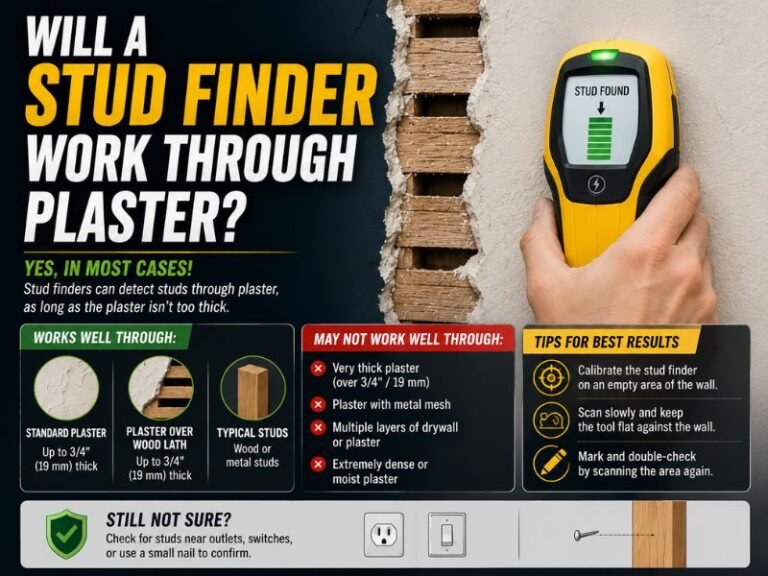
Before choosing an anchor, inspect the wall for framing. A stud finder is useful, but it can give false readings near corners, outlets, plumbing, metal drywall fasteners, or changes in wall thickness.
Electronic stud finders often detect changes in density rather than the stud itself. Move the tool slowly in both directions, mark the apparent edges, and test the center rather than trusting one pass. A magnetic finder can locate drywall screws or nails attached to framing, although it may not identify every stud location.
Wall features can also provide clues. Electrical outlets and switches are commonly installed beside a stud, but construction methods vary, and the box may be attached to either side of the framing. Baseboards, door trim, and visible seams may suggest stud locations but should not be treated as exact measurements.
If the location matters, confirm the finding with a small pilot hole in an inconspicuous spot. Resistance from a short distance of solid wood indicates a wood stud, while a hollow cavity suggests that the mark is between studs. Stop if the drill encounters unusual resistance, wiring, plumbing, or metal that cannot be identified safely.
Choosing the Right Drywall Anchor
Anchor selection should begin with the object’s actual weight and the force placed on it, not with the appearance of the hardware. Read the packaging for the recommended drywall thickness, installation method, and load capacity.
Plastic expansion anchors
Basic plastic expansion anchors are intended for light-duty applications. As the screw enters, the anchor expands inside the hole and presses against the drywall. These anchors are inexpensive and easy to install, but they generally offer less holding strength and less resistance to pullout than larger designs.
They may suit a small picture, lightweight decoration, or other item that will not be handled frequently. They are a poor choice for a shelf, cabinet, or anything that creates substantial outward force.
Self-drilling threaded anchors
Self-drilling anchors have a coarse exterior thread that bites into the drywall. They are convenient because they often do not require a separate large pilot hole, and they can work well for light to moderate loads when installed correctly.
The anchor must remain straight and fully seated without crushing the drywall paper. Over-tightening can strip the anchor, enlarge the hole, or damage the surrounding panel, reducing the holding power that the anchor was meant to provide.
Hollow-wall and toggle anchors
Hollow-wall anchors use a sleeve or metal body that expands behind the drywall. Toggle bolts and strap-style toggles spread the load over a broad area behind the panel, making them more suitable for heavier loads than small plastic anchors in many situations.
These anchors require enough empty space behind the drywall for the toggle to open. They cannot be used where a stud, pipe, electrical cable, insulation, or another obstruction blocks the mechanism. Large installation holes may also make removal and repair more difficult.
Anchors installed into a stud
If the mounting point lines up with a wood stud, a suitable screw driven directly into the stud is often preferable to a drywall anchor. The screw should penetrate far enough into solid wood while avoiding unnecessary length that could reach wiring or plumbing behind the framing.
Metal studs require different fasteners and may not provide the same holding power as wood studs. Heavy items mounted to metal framing may need appropriate self-drilling screws, blocking, backing, or a design that distributes the load across several structural points.
How Much Weight Can a Drywall Anchor Hold?
There is no single safe weight limit for “a drywall anchor.” Capacity varies with the anchor type, drywall thickness, wall condition, load direction, screw size, installation accuracy, and whether the force is static or repeated.
A light object mounted close to the wall places relatively little stress on the fastener. A shelf projects outward, so its weight creates a turning force that tries to rotate the bracket and pull the upper fasteners from the wall. The farther the load sits from the wall, the greater this leverage becomes.
Use the total expected weight, including contents, rather than the empty weight of the item. For shelves, consider the heaviest realistic arrangement instead of an average load. When multiple anchors support one object, do not automatically multiply one anchor’s rating by the number of anchors; uneven installation and load distribution can make one fastener carry more than its share.
Choose a mounting method with a comfortable margin rather than operating close to the listed maximum. If the item will be moved, pulled, bumped, opened, or used for support, select a stronger system or attach it to framing.
Situations Where a Stud Is the Better Choice
Use a stud whenever the consequences of failure are serious. A grab bar, handrail, ladder support, hanging chair, or wall-mounted exercise accessory should not depend on an ordinary drywall anchor unless the product and wall system specifically provide an engineered solution.
Large televisions deserve special attention. A flat, fixed television mount may place less leverage on the wall than an articulating mount, which extends outward and can multiply the pulling force. Follow the mount manufacturer’s fastening requirements and use framing, suitable reinforcement, or a professional installation when necessary.
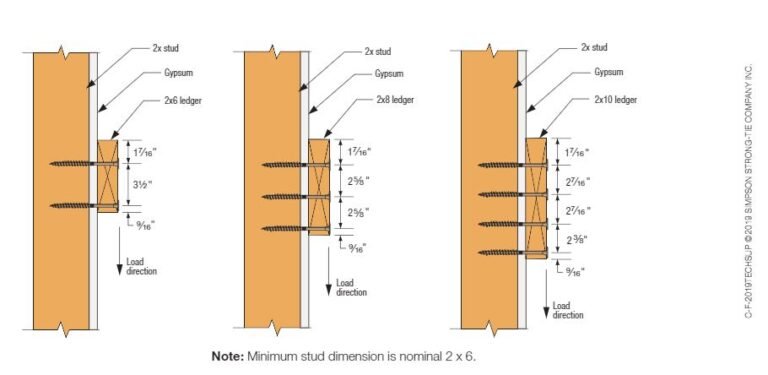
Wall cabinets and long shelves also benefit from framing support. Their weight changes as items are added, and the load may be uneven. A continuous mounting rail secured to multiple studs can distribute force more effectively than several isolated anchors.
Choose a stud or reinforcement if the drywall is cracked, soft, swollen, damp, previously patched, or already enlarged around a mounting hole. Damaged gypsum cannot reliably provide the same grip as a sound, undisturbed panel.
Safe Installation Practices
Once the mounting position is selected, inspect the area before drilling. Wiring and plumbing may run through wall cavities, especially near outlets, switches, sinks, bathrooms, and kitchens. Avoid drilling where the location is uncertain, and use appropriate caution around any suspected utility line.
- Mark the mounting point and confirm that it is level and positioned correctly.
- Check for a stud, pipes, cables, and other obstructions before drilling.
- Select an anchor rated for the object, wall thickness, and expected force.
- Drill the correct-size hole if the anchor requires one; an oversized hole weakens the installation.
- Insert the anchor fully and keep it flush with the drywall surface unless its instructions specify otherwise.
- Drive the screw until the bracket is secure, stopping before crushing the drywall or stripping the anchor.
- Test the mount gently before adding the full load, then inspect for movement, cracking, or pullout.
Do not substitute a random screw for the supplied hardware without checking compatibility. The screw must engage the anchor correctly, and a screw that is too short, too large, or too aggressive can prevent the anchor from expanding as intended.
For a bracket with several mounting holes, keep the fasteners spaced appropriately and use the strongest available points. If one hole lands over a stud and another does not, use the stud connection for the highest-stress position and a suitable anchor for the remaining point when the design permits it.
Signs an Anchor Is Failing
A mount that shifts, tilts, clicks, or pulls away from the wall needs immediate attention. Hairline cracks, torn drywall paper, a widening hole, or a visible gap behind the bracket are signs that the wall or anchor is no longer carrying the load properly.
Remove the object before the damage worsens. Reusing the same hole with a larger screw often fails because the surrounding drywall has already lost strength. Move the fastener to sound material, install an appropriate larger anchor if the wall condition allows it, or open the wall and add solid backing for a more dependable repair.
Do not ignore gradual loosening. Repeated vibration and everyday handling can turn a marginal installation into a sudden failure, particularly with towel bars, curtain hardware, shelves, and articulating mounts.
FAQ: Drywall Anchors and Studs
Do you need to find a stud for drywall anchors?
No, not for every installation. A properly selected anchor can support many light and moderate objects directly in sound drywall. Find a stud for heavy, safety-related, high-leverage, or frequently handled items.
Can a drywall anchor hold more weight than a screw
Usually, a screw in a suitable wood stud provides the stronger connection. A drywall anchor may have a respectable listed capacity, but it depends heavily on the panel’s condition and correct installation. A stud offers solid material for the screw threads to engage.
What is the strongest drywall anchor for a heavy item?
Toggle-style or hollow-wall anchors often provide more capacity than small plastic or self-drilling anchors. However, the strongest choice depends on wall thickness, available cavity space, load direction, and the object’s design. Very heavy or safety-critical items should use framing or engineered backing.
Can a drywall anchor go into a stud?
Some anchors can physically pass into a stud, but that is usually unnecessary. If the location is solid wood, use a suitable screw designed for the stud rather than relying on an anchor meant for hollow drywall. Metal studs may require specialized hardware.
How many drywall anchors are needed for a shelf?
The number depends on the shelf’s weight, depth, bracket design, and expected contents. Multiple anchors can distribute force, but they do not automatically make an unsafe shelf secure. Use studs or a mounting rail whenever possible, especially for deep or heavily loaded shelves.
Why did my drywall anchor pull out?
Common causes include an oversized hole, over-tightening, an unsuitable anchor, damaged drywall, or excessive leverage. Repeated pulling can also loosen an anchor that initially seemed secure. Repair the wall and reassess the mounting method instead of simply reinstalling the same hardware.
Should a TV be mounted with drywall anchors?
A TV mount should normally be secured to studs, structural backing, or a mounting system specifically designed for the wall. A fixed lightweight display may have different requirements from an articulating mount, which creates greater leverage. Follow the mount instructions and verify the wall structure before installation.
Practical Takeaway for Drywall Anchors
You do not need to find a stud for every drywall anchor, but you do need to match the fastening method to the object, its total load, and the forces created during use. Sound drywall and a correctly installed anchor can handle many light-duty applications; studs or reinforcement are the safer choice for heavy, high-leverage, or safety-sensitive mounts.
The major limitation is that anchor ratings cannot predict every wall condition or installation error. Check for framing and hidden utilities, choose a conservative capacity, test the mount gradually, and seek professional help when failure could cause injury or significant damage.