How Much Does a Stud Finder Cost? Prices by Type and Features
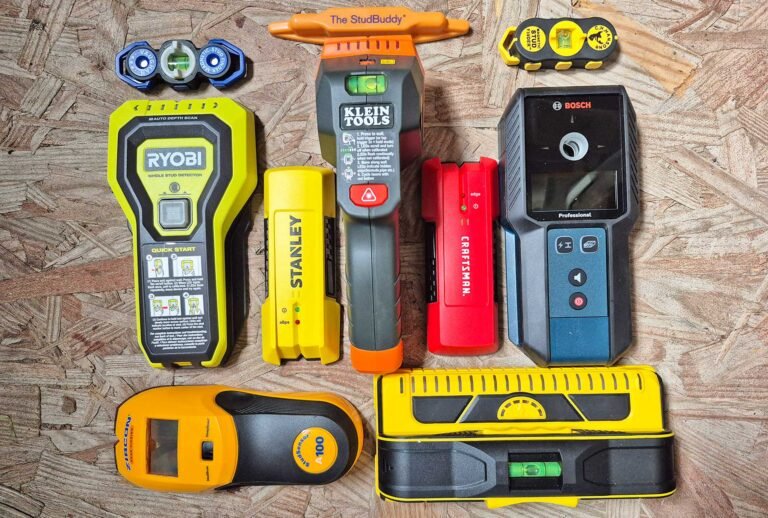
If you are wondering how much does a stud finder cost, most models sold for home use cost about $10 to $70, while advanced wall scanners can cost around $100 to $150 or considerably more. A simple magnetic stud finder may cost about 10–15, basic electronic models often start around 15–30, and better center-finding or multi-sensor models commonly fall in the 30–70 range.
You do not necessarily need an expensive stud finder to hang shelves, pictures, curtain rods, or a TV mount on ordinary drywall. For occasional household projects, an affordable electronic or magnetic model can work perfectly well. Paying more becomes worthwhile when you want easier center detection, deeper scanning, metal detection, live-wire warnings, or reliable performance through thicker wall materials.
Price also depends on what manufacturers call a “stud finder.” A $12 magnetic tool and a $120 digital wall scanner can both help locate framing, but they work very differently and are intended for different levels of work.
In this guide, I’ll explain how much a stud finder costs, what you should expect at each price level, which features increase the price, whether expensive models are worth buying, and how much I recommend spending for typical DIY and professional use.
How Much Does a Stud Finder Cost?

For most U.S. buyers, a realistic stud finder budget is approximately $10 to $70.
Current retail pricing shows simple magnetic models near the lower end of that range, basic electronic scanners in roughly the 15–30 area, and more capable multi-sensor or center-finding models around 30–70.
Advanced wall scanners capable of detecting wood, metal, and electrical wiring through greater depths can move into the 100–150 range. Specialized professional scanning equipment can cost several hundred dollars.
Here is a useful general price breakdown:
| Stud Finder Type | Typical Price Range | Best For |
| Magnetic stud finder | 8–20 | Occasional simple DIY work |
| Basic electronic stud finder | 15–30 | Ordinary drywall and home projects |
| Center-finding electronic model | 25–50 | Shelves, TVs, cabinets, frequent DIY work |
| Multi-sensor stud finder | 40–80 | Wood, metal, deeper scanning, added features |
| Advanced wall scanner | 90–150+ | Thick walls and more complex detection |
| Professional specialty scanner | 150–300+ | Contractors and specialized work |
These ranges are approximate because prices vary with retailers, sales, features, and specific models.
For context, commonly available electronic models can currently be found at around 15–20 on the entry level, while higher-feature center-finding models are often about 40–65. Some deep-scanning units capable of handling thicker materials are around 100–140.
That means you do not have to spend $100 to get a useful stud finder. For ordinary drywall, the sweet spot is often considerably lower.
Key Takeaways:
- Most homeowners can expect to spend roughly 15–50 for a useful stud finder.
- Magnetic models are usually cheapest, while advanced wall scanners cost much more.
- Spending more is worthwhile mainly when you need better detection depth, easier center finding, or multiple scanning modes.
How Much Does a Magnetic Stud Finder Cost?
A magnetic stud finder is normally the least expensive option.
Most simple models cost approximately $8 to $20.
Instead of electronically detecting changes behind the wall, a magnetic stud finder locates steel drywall screws or nails attached to the framing. Once you find several fasteners aligned vertically, you can usually determine where the stud runs.
The biggest advantage is simplicity. A magnetic model has no battery, no calibration process, and very little to go wrong.
For someone who hangs a picture, shelf, curtain rod, or small wall-mounted item occasionally, spending around 10–15 can be enough.
Is a Cheap Magnetic Stud Finder Accurate?
It can be very accurate at finding drywall fasteners.
The limitation is that it does not directly detect the wood stud. It detects metal associated with the stud.
You may need to move the tool around more slowly and search for several fasteners before you can confidently identify the stud line.
Magnetic finders can also react to other metal behind a wall, including steel studs, pipes, electrical boxes, nail plates, and screws unrelated to drywall installation.
For that reason, they are inexpensive but require more interpretation than many electronic models.
Who Should Buy a Magnetic Stud Finder?
I recommend one if you want the lowest-cost tool possible and mainly work on conventional drywall.
It is also useful as a backup to an electronic stud finder. If your electronic scanner says a stud is present, finding drywall screws with a magnet can help confirm the location.
For around 10–15, that makes a magnetic model a surprisingly useful addition to a basic toolbox.
How Much Does a Basic Electronic Stud Finder Cost?
Basic electronic stud finders usually cost around $15 to $30.
This is probably the most common category for homeowners.
A conventional electronic stud finder detects changes behind drywall and warns when it reaches the edge or approximate location of framing.
At the lower end of the price range, you may get relatively simple features such as edge detection and an audible alert.
As the price approaches 25–30, models may add greater scan depth, improved displays, live-wire warning, or the ability to detect both wood and metal framing.
For straightforward work on normal drywall, you may not need anything more expensive.
What Can You Expect From a $20 Stud Finder?
A decent model around $20 should generally be capable of locating ordinary wood framing through standard drywall.
Depending on the specific tool, it may also include a deeper scan mode or electrical-warning function.
However, lower-cost models can require more careful calibration and technique than premium center-finding scanners.
You may need to approach the stud from one side, mark the detected edge, scan from the opposite direction, and calculate the center yourself.
That is not difficult, but it takes more time.
For occasional household use, I consider the 15–30 category a good value.
How Much Does a Center-Finding Stud Finder Cost?
Center-finding stud finders commonly cost approximately $25 to $70, depending on the sensor design and additional features.
Instead of making you identify both stud edges manually, these models are intended to make the stud’s width or center easier to determine.
Some use multiple sensors and illuminate several indicators across the face of the tool. This can show more of the stud at once and reduce the amount of calibration and back-and-forth scanning required.
Current U.S. retail examples in this category range from roughly $20 for simpler multi-sensor designs to about 40–65 for more capable center-and-edge finders.
Why Pay More for Center Detection?
Center detection can save time when accurate fastener placement matters.
Suppose you are installing a wall-mounted television. You do not simply need to know that a stud exists somewhere behind a 2-inch area. Ideally, you want the lag bolt near the center of the framing member.
A tool that clearly shows the stud’s full width can make that task easier.
It is not strictly necessary—you can find the center with a less expensive edge-detecting scanner—but it improves convenience.
For homeowners who do several wall-mounting projects each year, I think the extra cost can be worthwhile.
Key Takeaways:
- Around 15–30 buys a basic electronic stud finder suitable for many drywall projects.
- Spending roughly 30–70 usually adds easier center detection and more scanning capability.
- Higher price does not automatically mean better accuracy on every wall; technique and wall construction still matter.
How Much Does a Multi-Sensor Stud Finder Cost?
A multi-sensor model typically costs around $40 to $80, although some fall outside this range.
These tools are designed to provide more information than simple wood-stud detection.
Depending on the model, you may get detection modes for wood framing, metal framing, deeper objects, and live electrical wiring.
Some models also offer improved LCD displays or multiple sensors that show the approximate width of hidden framing.
This price range is especially useful for homeowners who frequently work on different wall types.
If you only hang pictures on conventional drywall, much of this capability may be unnecessary.
If you install cabinets, shelves, TVs, bathroom accessories, or workshop equipment, having several scanning modes can be more useful.
Does Live-Wire Detection Make a Stud Finder More Expensive?
Usually, yes, although the feature is available on some relatively affordable models.
Live-wire warnings add additional sensing capability and are often found on mid-range electronic stud finders.
However, you should not buy a stud finder believing that the electrical-warning feature guarantees a wall is safe to drill.
Wire detection can be affected by depth, shielding, wall construction, grounding conditions, and whether the conductor is energized.
I consider live-wire detection a useful extra warning rather than the primary reason to spend more.
How Much Does a Professional Wall Scanner Cost?
Professional or advanced wall scanners typically begin around $100 and can climb to $150, $200, $300, or more depending on the technology.
Current retail examples of well-known digital wall scanners capable of detecting wood, metal, and live electrical wiring can cost around 100–120.
More specialized scanners with deep detection, advanced displays, moisture sensing, thermal imaging, or other technologies can cost several hundred dollars.
At that point, you are no longer comparing a simple household stud finder with another stud finder. You are comparing increasingly specialized diagnostic tools.
What Does an Expensive Wall Scanner Do Better?
More expensive scanners may offer greater detection depth, clearer differentiation between materials, more precise displays, or improved operation through difficult surfaces.
They can be valuable when working with:
- Thick wall assemblies
- Multiple drywall layers
- Some plaster construction
- Metal framing
- Tile or other dense surfaces
- Complex remodeling projects
Even expensive wall scanners have limitations, however.
No handheld scanner should be treated as a perfect X-ray view of the wall. Plastic plumbing, unusual wall construction, insulation, moisture, metal mesh, and deeply buried utilities can still complicate results.
Do Homeowners Need a $100+ Stud Finder?
Usually not.
For ordinary drywall projects, I would rather buy a good 25–60 stud finder and use proper scanning technique than pay over $100 for capabilities I rarely need.
An advanced scanner makes more sense if you regularly work on renovations or difficult wall assemblies.
What Makes One Stud Finder Cost More Than Another?
The biggest price difference comes from the technology and number of sensors inside the tool.
A simple magnetic finder needs little more than a strong magnet and a convenient housing. That is why it can sell for around $10.
An electronic scanner requires sensing electronics, power, calibration logic, indicators, and sometimes several detection systems.
As manufacturers add more sensors and more sophisticated processing, prices increase.
Detection Depth
Basic scanners are primarily intended for studs behind standard drywall.
More expensive models may offer deeper scanning that can detect framing through thicker wall assemblies.
Greater depth is useful, but only if you actually need it.
If your entire house uses standard half-inch drywall, paying significantly more solely for extreme detection depth may not improve your everyday experience.
Multiple Sensors
Some center-finding tools use several sensors spread across the tool’s width.
Instead of searching for one edge at a time, the scanner can display multiple points across the stud.
This design can make locating the center quicker and easier.
It also tends to cost more than a simple single-sensor edge detector.
Metal Detection
Dedicated metal scanning can help locate steel studs, copper pipe, metal fasteners, protective plates, and other metallic objects.
That is useful when you need more information about what is behind the wall.
Remember that detecting metal does not necessarily identify exactly what the object is.
Live Electrical Warning
AC-wire detection is a common feature on better electronic models.
It can alert you to the possible presence of energized wiring, but it should never be your only safety check before drilling.
Display Quality
Entry-level models may use one or two LEDs and a simple beep.
More expensive scanners may provide multiple LEDs, an LCD screen, directional information, or a graphical representation of the detected area.
A better display does not change the wall, but it can make the tool easier to interpret correctly.
Is an Expensive Stud Finder Worth It?
For many homeowners, a mid-priced stud finder is the better value than either the cheapest or most expensive option.
I would generally spend around 25–50 for regular home use.
That price range can provide enough capability for typical jobs without moving into professional wall-scanner pricing.
The cheaper 10–20 tools still make sense if you rarely use one.
The expensive $100+ models make sense when your work actually requires their additional detection capability.
When a Cheap Stud Finder Is Enough
A basic model is usually enough when your walls are conventional drywall and your projects are relatively simple.
Typical tasks include hanging shelves, locating studs for pictures, installing curtain rods, or confirming framing before driving a screw.
In those situations, accurate technique matters more than having every available feature.
When Spending More Makes Sense
I would consider spending 40–70 if you frequently mount televisions, cabinets, garage storage, or other items where quick center detection saves time.
The additional price can also make sense if you regularly encounter both wood and metal framing.
For contractors, remodelers, or people working through unusual materials, $100 or more can be justified.
Key Takeaways:
- For most homeowners, roughly 25–50 is the price range I would target.
- A $100+ scanner is usually unnecessary for occasional drywall projects.
- Pay extra for capabilities you will actually use, not simply for the highest number of advertised features.
Cheap vs Expensive Stud Finder: What Is the Real Difference?
The difference is usually convenience and capability rather than a guarantee that the expensive tool will always be accurate.
A $10 magnetic finder can locate a drywall screw extremely reliably, but it may take longer to map the stud.
A $20 electronic edge detector can locate framing quickly, but you may have to mark both edges manually.
A $50 center-finding scanner may make the entire process faster and easier.
A $120 wall scanner can provide more information about metal and other hidden materials.
Each tool solves a slightly different problem.
Price Does Not Eliminate False Readings
Even premium stud finders can produce confusing readings.
Common causes include plaster and lath, multiple drywall layers, metal mesh, plywood sheathing, tile, moisture, pipes, electrical wiring, and unusual framing.
That is why I recommend learning how to verify a stud rather than relying only on the price of the tool.
A second method, such as a magnet, can be useful even when you own an expensive electronic scanner.
How Much Should a Beginner Spend on a Stud Finder?
For a beginner, I recommend budgeting about $20 to $40.
This is enough to buy a capable electronic unit without paying for advanced features that may complicate operation.
Look for a model that is easy to understand.
A beginner benefits more from clear indicators and simple operation than from having five scanning modes that require constant switching.
If your needs are extremely basic, you could spend around 10–15 on a magnetic model instead.
I would choose electronic detection if you expect to use the tool frequently and magnetic detection if you mainly want an inexpensive backup tool for occasional work.
How Much Should You Spend for Mounting a TV?
If you are buying a stud finder specifically for a TV installation, I would generally spend around $25 to $60.
You want a tool that makes it reasonably easy to identify the edges or center of framing.
A television mount can place substantial load on the wall, particularly if it is a full-motion mount that extends away from the surface.
The more important issue is not buying the most expensive scanner. It is confirming the framing before installing the mount.
Scan the location more than once. Approach the stud from both directions and compare neighboring stud spacing.
If you remain unsure, use another verification method.
How Much Should Professionals Spend?
There is no single professional price point because the work varies enormously.
A carpenter working primarily on new drywall construction may be perfectly satisfied with a durable center-finding scanner costing under $70.
A remodeler investigating older walls may benefit from a $100+ multi-material scanner.
Professionals performing specialized inspection work may use equipment costing several hundred dollars or more.
The important question is whether the added capability saves enough time, reduces uncertainty, or supports work that a basic tool cannot handle.
Does a More Expensive Stud Finder Detect Pipes Better?
Sometimes, but not automatically.
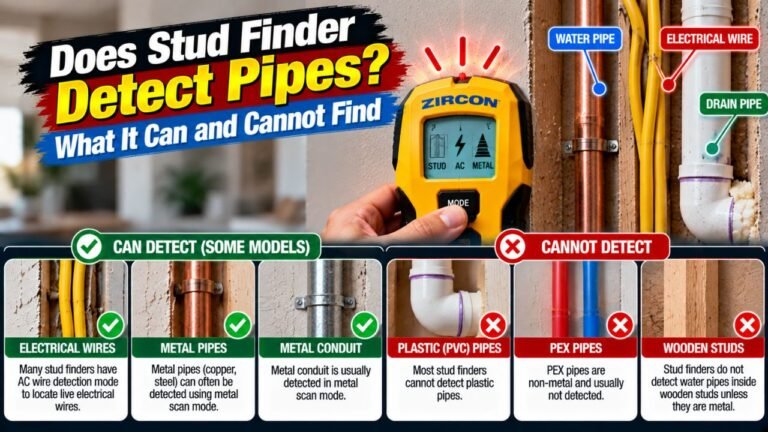
A scanner with dedicated metal detection can often identify copper, steel, or galvanized plumbing better than a basic stud finder.
Plastic PVC, CPVC, and PEX remain much more difficult to detect.
Even a premium scanner should not be used to guarantee that a wall contains no plumbing.
If you are drilling near bathrooms, kitchens, laundry rooms, or other plumbing areas, understand the likely utility paths before making holes.
Does a More Expensive Stud Finder Detect Wires Better?
Higher-end scanners may offer more sophisticated AC detection, but they still have limitations.
Electrical cables can be difficult to detect when they are deep, shielded, not carrying a load, or installed behind certain wall materials.
For that reason, an expensive stud finder should not create false confidence.
Live-wire detection is an additional layer of information, not confirmation that an area without a warning is completely free of electricity.
What Is the Best Stud Finder Price Range for Most People?
For most U.S. homeowners, I consider $20 to $50 the sweet spot.
Below $20, you can still get a useful tool, particularly a magnetic finder or basic electronic model.
Between $20 and $50, you gain access to better electronic detection, improved displays, center-finding designs, and sometimes additional safety features.
Above approximately 60–70, I would make sure the additional capabilities are actually necessary for your projects.
There is nothing wrong with buying a premium scanner, but an occasional DIY user may receive very little practical benefit from spending $120 instead of $40.
Other Costs to Consider
The purchase price is normally almost the entire cost of owning a stud finder.
Magnetic models have essentially no ongoing expense.
Electronic stud finders may need replaceable batteries. Battery cost is minor compared with the tool itself, especially because stud finders are normally used for short periods.
Some rechargeable models eliminate disposable batteries but cost more initially.
A protective case may also be worthwhile for a more expensive scanner, particularly if it will live in a contractor’s toolbox.
For ordinary household use, however, you should not need to budget for significant maintenance.
Can You Find a Stud Without Buying a Stud Finder?
Yes.
A dedicated stud finder is convenient, but it is not the only way to locate framing.
One common alternative is using a strong magnet to find drywall screws, which is essentially what a magnetic stud finder does.
You can also use wall features such as electrical boxes as clues, since boxes are frequently mounted close to framing. However, the side of the stud cannot always be determined without further checking.
Tapping on the wall can sometimes identify a change in sound, but I consider it much less dependable than electronic or magnetic detection.
If you expect to do more than one or two mounting projects, a basic stud finder is inexpensive enough that buying one generally makes sense.
How to Avoid Wasting Money on the Wrong Stud Finder
Start by thinking about the walls rather than the tool.
If your house mainly has conventional drywall over wood framing, you probably do not need an advanced scanner.
A basic or mid-range electronic stud finder should handle most jobs.
If you have plaster, tile, multiple wall layers, or metal framing, make sure the scanner is specifically suitable for those materials before buying it.
Also consider how often you will use it.
Spending $100 on a tool you use once every five years makes little sense when a $20 model performs the required job.
Conversely, a contractor who uses a stud finder several times every workday may save enough time with a better scanner to justify the higher cost quickly.
FAQs about How Much Does a Stud Finder Cost
What is the average price of a stud finder?
Most consumer stud finders cost roughly $10 to $70, with many useful electronic models falling between about $20 and $50.
Advanced scanners can cost $100 or more.
How much is a cheap stud finder?
A basic magnetic stud finder may cost about $8 to $15, while inexpensive electronic models commonly start around $15.
These tools can be perfectly adequate for simple drywall projects.
How much is a good electronic stud finder?
A good electronic stud finder for home use commonly costs about $20 to $50.
Models with center detection, multiple sensors, deep scanning, or additional detection features may cost more.
Are $10 stud finders any good?
Yes, particularly magnetic models.
A $10 magnetic finder can reliably locate steel drywall fasteners, which helps you determine where wood framing is positioned.
It may simply require more time than an electronic scanner.
Is a $20 stud finder good enough?
For standard drywall and occasional DIY projects, yes.
Around $20 can buy a basic electronic scanner capable of locating wood framing, and some models include additional features.
Is a $50 stud finder worth it?
It can be if you frequently mount items to walls.
At around 40–60, you can find models with multiple sensors, center detection, deeper scanning, or live-wire warnings.
These features can make repeated projects easier.
How much does a professional stud finder cost?
Professional-grade wall scanning tools commonly start around $100, while specialized scanners may cost 150–300 or more.
The price depends heavily on scanning depth and the materials the device can detect.
What is the cheapest type of stud finder?
Magnetic stud finders are usually cheapest.
They commonly cost around 10–15 and require no battery.
Are expensive stud finders more accurate?
Not necessarily on every wall.
A more expensive model may provide more sensors, greater scanning depth, or more information, but unusual wall construction can still cause false readings.
Proper technique remains important.
How much should I spend on a stud finder for a TV mount?
Around 25–60 is a reasonable budget.
A good edge- or center-finding electronic scanner should be enough for most TV mounting jobs on standard drywall.
Do stud finders need batteries?
Electronic models usually require either replaceable or rechargeable batteries.
Magnetic stud finders do not require electrical power.
Is a magnetic or electronic stud finder better?
Electronic models are generally faster and easier for locating stud edges or centers.
Magnetic models are cheaper, very simple, and excellent for confirming drywall fastener locations.
For frequent DIY work, I prefer an electronic model with a magnetic finder available as a backup.
Do I need a professional wall scanner?
Most homeowners do not.
Professional scanners become worthwhile when you regularly work with thick or complicated wall assemblies or need more information about hidden metal and other materials.
Can an inexpensive stud finder find metal studs?
Some can, but not every basic model is designed for dedicated metal detection.
Check the tool’s specifications if metal framing is common in your building.
Is it worth paying more for live-wire detection?
It can be useful, but I would not buy a stud finder solely for that feature.
Live-wire warnings have limitations and should be treated as an additional safety alert rather than proof that a location is safe to drill.
Conclusion
So, how much does a stud finder cost? For most homeowners in the United States, expect to spend approximately $10 to $70, depending on the type and features.
A simple magnetic model can cost around 8–20. Basic electronic models generally fall near 15–30, while better center-finding and multi-sensor stud finders often cost roughly 30–70. Advanced wall scanners commonly move into the 100–150+ range, and specialized professional equipment can cost several hundred dollars.
For the average homeowner, I recommend spending about 20–50. That range provides plenty of useful options for locating framing behind ordinary drywall without paying for professional capabilities you may never use.
If you only need a stud finder occasionally, a 10–20 magnetic or basic electronic model may be all you need. If you regularly hang TVs, shelves, cabinets, or garage storage, paying a little more for easier center detection is worthwhile.
The most expensive model is not automatically the best choice. Buy according to your wall type, detection depth, and how often you will use the tool. For ordinary DIY projects, a dependable mid-range stud finder generally provides the best balance between price, convenience, and capability.