Do You Need a Stud Finder to Hang Curtains? Installation Guide
Do you need a stud finder to hang curtains? No, a stud finder is not always necessary. If your curtain rod brackets do not line up with wall studs, you can often install them securely with properly rated drywall anchors. However, locating studs is preferable for heavy curtains, long rods, double rods, or any installation that will place substantial load on the brackets.
Curtain rods are commonly mounted a few inches above and outside a window frame, which means the ideal bracket position does not always fall directly over a stud. Fortunately, that does not automatically mean you have to move the rod. Modern wall anchors can provide secure attachment when they are correctly matched to the wall material, curtain weight, and mounting hardware.
A stud finder is still a useful tool. It can tell you whether solid framing is conveniently available before you drill, and it can help you avoid relying on anchors when a stud is only an inch or two away. Around windows, there is also substantial framing, but you should not assume that every position beside or above a window contains wood exactly where you want the bracket.
In this guide, I’ll explain when you need a stud finder for curtains, when drywall anchors are enough, how to locate studs with or without a stud finder, which mounting method is best for different curtain weights, and how to install a curtain rod securely without creating unnecessary holes in your wall.
Do You Need a Stud Finder to Hang Curtains in Every Situation?

No. There are several ways to hang curtains successfully without using a stud finder.
Whether you need one depends mainly on three things: the mounting location, the weight of the curtain system, and the wall material.
If you are installing a lightweight curtain rod with light fabric panels on standard drywall, suitable anchors can often support the installation without the brackets landing on studs.
If you are installing heavy blackout curtains, a large decorative rod, multiple curtain layers, or an extra-wide rod, anchoring at least some brackets into framing becomes much more desirable.
There are also curtain systems that do not require conventional wall mounting at all. A tension rod installed inside a window opening, for example, normally does not require a stud finder because the rod is supported by pressure against the sides of the opening.
When a Stud Finder Is Helpful
A stud finder is worth using when you want to determine whether a bracket can be screwed directly into framing. It is particularly helpful for heavier installations because a screw driven properly into a wood stud generally provides a more straightforward structural connection than a basic hollow-wall anchor.
It can also save time. Instead of drilling a pilot hole, discovering an empty wall cavity, and then switching to an anchor, you can scan first and plan the mounting method before making any holes.
When You Can Usually Work Without One
You may not need a stud finder if the curtain rod manufacturer provides appropriate anchors and the curtain system is within the anchors’ rated capacity.
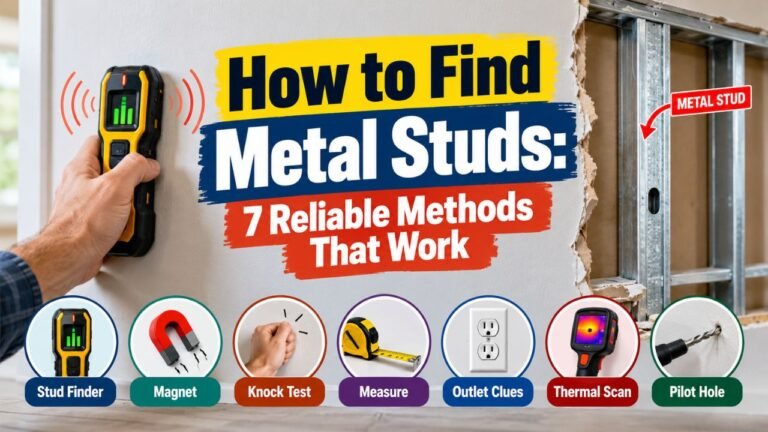
You may also be able to find framing using magnets, nearby electrical boxes, visible fastener patterns, measurements from known framing, or careful pilot-hole verification.
However, I would not make curtain installation unnecessarily complicated just to avoid buying or borrowing a basic stud finder. If you already have one available, using it takes only a few seconds and gives you useful information before drilling.
Key Takeaways:
- A stud finder is helpful but not required for every curtain installation.
- Light and medium curtain systems can often be mounted with appropriate wall anchors when no stud is available.
- Heavy curtains and long rods benefit from direct attachment to framing whenever practical.
Is It Better to Hang Curtain Rods Into Studs?
Yes, when the bracket location and curtain design allow it.
Attaching a bracket directly to a stud gives the screw solid wood to grip rather than relying entirely on drywall and an anchor.
This is particularly valuable because curtain brackets experience more than simple downward weight.
Every time you open or close curtains, you may pull sideways on the rod. Children or pets can also tug on curtains. Long rods flex, and heavy fabric can create leverage against brackets that extend several inches from the wall.
For those reasons, a strong mounting point improves long-term reliability.
However, forcing every bracket to line up with a stud can create another problem: the curtain rod may end up in the wrong position.
Curtains are often installed wider than the window opening so the panels can stack against the wall when open. If the nearest stud is much farther inward or outward than your desired bracket location, changing the entire layout simply to hit the stud may produce an unattractive or impractical result.
In that situation, a properly selected hollow-wall anchor is often the better solution.
Are There Studs Around Windows?
Usually there is framing around window openings, but you should not assume the exact location from the visible trim.
A conventionally framed window opening typically contains multiple framing components, including vertical studs at the sides and a header above the opening.
That makes the area around a window more likely to contain framing than a completely random point on a wall.
But the visible window casing does not show you precisely where each framing member begins and ends.
Between the structural framing and the visible wall surface, there may be:
- Drywall
- Shims
- Extension jambs
- Window framing
- Interior trim
- Insulation
- Other finish materials
Curtain brackets are also commonly placed several inches beyond the outer edges of the window trim. That location may be outside the doubled framing beside the rough opening.
Therefore, the idea that “there are always studs beside windows” is useful as a general construction clue, but it is not accurate enough to replace verification.
What About Above the Window?
There is generally a structural header above a conventionally framed window opening, but its exact position and height depend on how the wall was constructed.
If your curtain rod is mounted only slightly above the window casing, you may encounter framing.
If the rod is mounted high toward the ceiling, you may be above the header and back in a normal wall cavity.
Older houses, remodeling work, masonry walls, steel framing, and non-load-bearing partitions can also differ from typical modern wood framing.
The safest approach is to scan or verify the actual bracket location instead of assuming framing exists.
What Happens If You Hang Curtains Without a Stud?
Nothing is inherently wrong with it if you use the correct anchor.
Drywall by itself does not hold ordinary screws particularly well. If you simply drive a standard screw into an empty drywall cavity without an anchor, the threads have relatively little material to grip.
The bracket may initially seem secure but gradually loosen as the curtains are opened and closed.
Eventually, the screw can pull out and damage the drywall.
A wall anchor changes how the load is transferred to the wall. Depending on the design, the anchor may expand inside the drywall, grip the gypsum, or spread the load across the back side of the wall.
The key is to use an anchor appropriate for the wall and the load.
Never Assume the Included Anchors Are Automatically Ideal
Many curtain rod kits include small plastic anchors.
They can be suitable for some lightweight installations, but the fact that an anchor came in the package does not guarantee it is the best option for every wall or curtain.
A large double rod holding blackout curtains and decorative panels can create far more load than a narrow rod carrying lightweight sheers.
I recommend evaluating the complete curtain system rather than thinking only about the rod itself.
Stud vs Drywall Anchor for Curtains
The following comparison provides a practical starting point.
| Installation | Preferred Mounting Method |
| Lightweight sheers | Stud or suitable drywall anchor |
| Standard curtain panels | Stud where convenient; rated anchors where needed |
| Blackout curtains | Studs preferred, especially at end brackets |
| Double curtain rod | Studs or appropriately rated heavy-duty anchors |
| Extra-wide rod | Strong end mounting plus required center supports |
| Heavy drapes | Direct framing attachment preferred |
| Tension rod | No stud required |
| Ceiling-mounted curtains | Ceiling joist or suitable ceiling anchor |
| Plaster wall | Framing or anchor specifically suitable for the wall assembly |
No table can replace the instructions supplied with the actual rod and anchors. Hardware capacities vary greatly.
How Much Weight Can Drywall Anchors Hold for Curtains?
There is no single answer because drywall anchors come in many designs.
A small basic plastic expansion anchor, a threaded self-drilling anchor, a molly-style anchor, and a toggle anchor do not all provide the same performance.
Capacity also depends on factors such as:
- Drywall thickness and condition
- Anchor size
- Screw size
- Installation quality
- Direction of the load
- Bracket design
- Distance the bracket extends from the wall
For curtain rods, leverage matters. A bracket extending outward from the wall can create a pulling force on the upper mounting screw rather than simply placing the anchor under straight vertical load.
For that reason, I would not choose an anchor merely because a package shows a large maximum weight rating. Use a manufacturer-approved anchor for your wall type and installation, and leave a reasonable safety margin.
Plastic Expansion Anchors
Basic plastic anchors are common with curtain rod kits and can work for lightweight installations.
They expand as the screw enters, increasing their grip in the hole.
I would reserve simple plastic anchors for relatively light loads unless the anchor manufacturer specifically rates the product for more demanding applications.
Self-Drilling Drywall Anchors
These screw directly into drywall and create a larger threaded connection.
They are convenient and can provide a stronger mounting point than many small plastic plugs when properly installed.
Molly Bolts
Molly-style anchors expand behind the wall as they are tightened.
They can create a secure connection and may be useful for heavier wall-mounted items when correctly matched to the drywall thickness.
Toggle Anchors
Toggle-style anchors spread the load behind the drywall over a relatively large area.
They are often a good option for heavier curtain hardware when a stud is unavailable, provided the particular anchor is suitable for the wall and bracket.
Key Takeaways:
- An ordinary screw driven only into drywall is not a good curtain-rod mounting method.
- Anchor capacity varies greatly by design, wall thickness, and installation.
- Heavy curtain systems should use framing or properly rated heavy-duty anchors rather than relying on the smallest included plastic anchors.
How to Use a Stud Finder to Hang Curtains
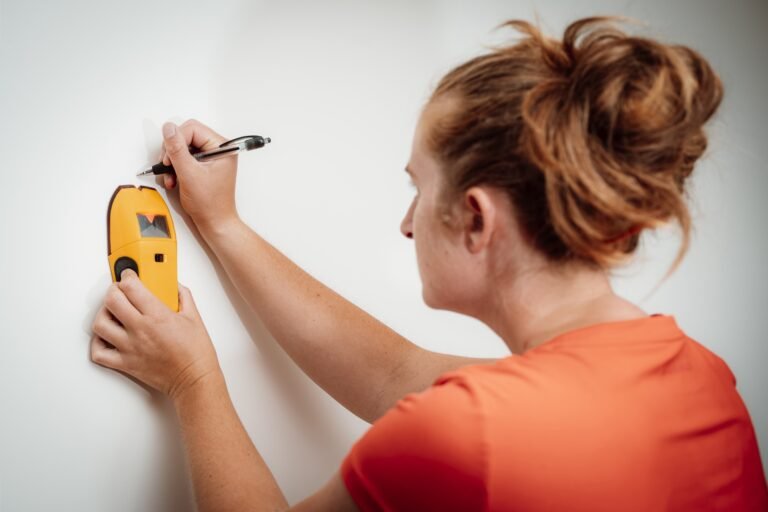
If you have a stud finder, use it before finalizing your bracket positions.
Start by deciding approximately where you want the rod. Curtain rods are commonly positioned above the window and extended beyond the sides, but exact placement depends on the curtain length, rod design, window size, and appearance you want.
Place the stud finder flat on the wall and follow its calibration procedure.
Move it slowly horizontally across the proposed bracket area.
Mark the first stud edge, continue across the stud, and mark the opposite edge if your tool detects edges. The center between those marks is approximately the stud center.
Repeat the scan from the opposite direction.
Do the same on the other side of the window.
What If the Stud Is Close but Not Exactly Where You Want the Bracket?
You have two practical options.
If moving the bracket slightly will not negatively affect the curtain layout, shift it so a mounting screw lands in the stud.
If moving the bracket would make the rod noticeably off-center or too narrow, keep the bracket where it belongs and use the appropriate wall anchor.
A curtain rod should look intentional. There is rarely a good reason to create an obviously uneven installation merely to avoid using an anchor.
Do You Need Every Screw in a Stud?
Not necessarily.
Depending on the bracket design, you may sometimes have one screw entering solid framing while another screw uses an appropriate anchor.
Follow the curtain rod manufacturer’s fastening instructions.
Having at least one strong framing connection at important brackets can be helpful, but do not improvise if the hardware has specific structural requirements.
How to Hang Curtains Without a Stud Finder
You can hang curtains without a stud finder if you plan the installation carefully.
1. Determine the Curtain Rod Position
Install the curtains based on how you want them to cover the window, not based purely on where you hope the framing is located.
Measure carefully from the window and use a level so both end brackets are at the same height.
Before drilling, hold the rod and brackets temporarily in place to make sure the layout looks correct.
2. Check for a Stud With a Magnet
A strong magnet is one of the simplest stud-finding alternatives.
Drywall is normally fastened to framing using steel screws or nails.
Move the magnet slowly across the wall until it is attracted to a fastener.
Then move vertically and look for more fasteners along the same line.
Multiple fasteners in a straight vertical line strongly suggest a stud.
The advantage of this method is that you are locating the screws attached to the framing rather than relying on an electronic density reading.
3. Look for Other Framing Clues
Electrical boxes are frequently attached to the side of a stud, although there are exceptions.
Baseboard fastener patterns can also provide clues.
If you identify one stud reliably, conventional framing may place neighboring studs at regular intervals, commonly 16 or 24 inches on center.
However, never rely solely on spacing measurements around a window. Window framing often contains extra studs and other structural members.
4. Drill an Appropriate Pilot Hole
Once the bracket position is finalized, drill the recommended pilot hole.
If you encounter solid wood after penetrating the drywall, framing may be present.
If the bit enters an empty cavity immediately behind the drywall, you will need a suitable hollow-wall anchor.
Do not repeatedly drill exploratory holes across the finished wall unless necessary.
5. Install the Correct Anchor if Needed
Select an anchor appropriate for your wall material and curtain load.
Follow the anchor manufacturer’s hole-size and installation directions.
Installing an anchor in a hole that is too large can significantly reduce its ability to grip the wall.
6. Mount and Level the Brackets
Secure the first bracket, then confirm the height of the second bracket using measurements and a level.
Do not fully load the rod until the brackets feel solid and show no rotation or movement.
7. Add Center Support When Required
Long rods can sag in the middle even when the end brackets are secure.
Many rod systems require one or more center support brackets once the span reaches a certain length.
Follow the rod manufacturer’s recommendations rather than assuming the two end brackets are enough.
Do Lightweight Curtains Need Studs?
Usually not, provided the wall anchors are appropriate.
Sheer curtains and other lightweight panels place relatively little load on the rod.
For these installations, a pair of correctly installed drywall anchors may be entirely adequate.
The rod itself may weigh almost as much as the curtains.
However, opening and closing the curtains repeatedly still creates movement at the brackets, so the hardware needs to be secure.
Do not skip anchors simply because the fabric feels light.
Do Blackout Curtains Need Studs?
They do not absolutely require studs, but studs become much more desirable.
Blackout curtains can be significantly heavier than sheer decorative panels.
The load increases further when you use:
- Floor-length panels
- Wide windows
- Multiple panels
- Double rods
- Decorative metal rods
- Heavy rings or hardware
If studs are reasonably close to your desired bracket positions, I recommend using them.
If not, choose anchors specifically capable of supporting the complete system.
Do Double Curtain Rods Need Studs?
A double rod holds two layers of window treatments and projects farther from the wall than many single rods.
Both factors increase stress on the brackets.
For that reason, I would strongly prefer stud attachment for a heavy double-rod system whenever the layout makes it possible.
Heavy-duty hollow-wall anchors may still be suitable where no stud exists, but the anchor choice becomes much more important.
Do not mount a substantial double rod using ordinary screws directly into drywall.
Do Long Curtain Rods Need a Center Bracket?
Often, yes.
As the rod span increases, the center can bow under its own weight and the weight of the curtains.
A center support reduces that deflection and distributes the load across another mounting point.
How many brackets you need depends on the rod diameter, material, curtain weight, and manufacturer requirements.
Some rods can span a relatively wide distance with one center support, while very long systems may require additional brackets.
A stud finder can be particularly useful for center brackets because you may have more flexibility in their exact horizontal position than you do with the two end brackets.
Key Takeaways:
- Lightweight curtains often work perfectly well with suitable drywall anchors.
- Blackout curtains, double rods, and long spans place much greater stress on brackets.
- Follow the rod manufacturer’s requirements for center supports rather than judging by appearance alone.
Can You Screw Curtain Rod Brackets Into Window Trim?
Sometimes, but it depends on the trim and the mounting design.
Solid wood casing can sometimes hold small curtain hardware, particularly if screws penetrate through the casing and into structural framing behind it.
However, not every visible window trim piece is thick, solid, or structurally attached in a way that makes it suitable for carrying a large curtain rod.
Some trim is relatively thin and decorative.
If you are mounting directly to trim, understand what the screws are actually entering.
For heavier curtains, I would rather have the mounting screws reach framing than depend solely on decorative casing.
What If You Have Plaster Walls?
Plaster requires more care than modern drywall.
Older plaster may be installed over wood lath, while other systems use different backing materials.
Plaster can crack if you aggressively drive screws or drill without the proper technique.
A normal electronic stud finder may also be less reliable because plaster thickness is often uneven.
A strong magnet can sometimes help locate the nails holding wood lath to studs. Deeper-scanning electronic tools can also help.
If no stud is available, use an anchor designed specifically for the actual plaster wall construction.
Do not automatically use a drywall anchor in every plaster wall.
What If You Have Metal Studs?
A normal stud finder can often locate metal framing, and a scanner with metal mode can help confirm it.
Mounting curtains to metal studs requires fasteners appropriate for thin-gauge steel framing.
Standard wood screws are not automatically suitable simply because the stud finder indicates a stud.
For light curtain rods, suitable hollow-wall anchors may sometimes be easier than fastening to thin metal framing.
For a heavy installation, use a fastening system designed for that wall construction.
Can You Hang Curtains Without Drilling?
Yes, in certain situations.
A tension rod can fit inside the window opening and requires no screws.
This works particularly well for:
- Lightweight curtains
- Café curtains
- Temporary installations
- Rental properties
Adhesive curtain supports also exist, but their reliability depends heavily on wall finish, product rating, surface preparation, rod weight, and curtain weight.
I would not choose adhesive hardware for heavy blackout drapes or a large curtain rod unless the product is specifically designed and rated for that load.
No-drill solutions are primarily about convenience rather than maximum structural strength.
Common Mistakes When Hanging Curtain Rods
One of the most common mistakes is driving screws directly into drywall and assuming they will hold because the bracket initially feels tight.
Another is using the smallest anchors available for a large curtain system.
A third mistake is choosing the bracket locations based entirely on studs and ending up with a rod that is noticeably off-center.
Poor measurements are another problem. Even secure brackets will look wrong if one side is higher than the other.
Long rods are sometimes installed without the center support specified by the manufacturer, causing the rod to sag.
Finally, do not overtighten anchors. Excessive tightening can crush drywall or cause some anchor designs to lose their grip.
How to Make Curtain Rods More Secure
If your current curtain rod feels loose, do not simply keep tightening the existing screws.
Remove the curtains and inspect the brackets.
If a screw has enlarged its hole in the drywall, putting the same screw back into the damaged hole is unlikely to create a durable repair.
Instead, you may need to move the bracket to a stud, use a suitable larger anchor, or repair the wall and reinstall the hardware correctly.
For long rods, confirm that the required center bracket is present.
Also inspect the rod itself. An undersized telescoping rod can flex even when the wall brackets are perfectly secure.
Safety Before Drilling Near a Window
Curtain rod installation is a relatively simple DIY project, but drilling blindly into a wall still deserves caution.
Walls can contain electrical wiring, plumbing, metal protective plates, and other hidden components.
Be cautious if an electrical receptacle, switch, plumbing fixture, or other utility is near the drilling location.
If you encounter unexpected metal while drilling, stop instead of forcing the drill through it. A steel protective plate may have been installed specifically to prevent screws from reaching wiring or plumbing.
Use a drill bit appropriate for the wall material and make only the depth of hole needed for the selected fastener.
Should You Buy a Stud Finder Just to Hang Curtains?
If this is the only wall-mounting project you expect to do, you can probably hang ordinary curtains without buying one.
A magnet and properly rated anchors may be enough.
However, a basic stud finder is useful for many other household jobs, including installing:
- Shelves
- Mirrors
- Cabinets
- Wall-mounted furniture
- TV brackets
- Artwork
- Closet hardware
If you expect to do even occasional DIY wall mounting, I think a stud finder is a useful inexpensive tool to have.
For curtains alone, though, it is helpful rather than mandatory.
FAQs about Do You Need a Stud Finder to Hang Curtains
Can you hang curtains without finding studs?
Yes. Curtain rod brackets can often be mounted to drywall using suitable wall anchors when the desired bracket positions do not align with studs.
Choose anchors appropriate for the curtain weight and wall type.
Do curtain rod brackets have to go into studs?
No. They can be installed with appropriate hollow-wall anchors.
Studs are preferable for heavier curtains and large rod systems, but they are not mandatory for every installation.
Are there studs next to every window?
There is normally structural framing around conventionally framed window openings, but the exact location relative to visible trim varies.
Do not assume your desired bracket screw will automatically hit a stud.
Can I use drywall anchors for curtain rods?
Yes. Properly selected drywall anchors are commonly used for curtain rod brackets when studs are unavailable.
Make sure the anchors are suitable for your drywall thickness and complete curtain-system load.
Do you need anchors if you hit a stud?
Normally, no hollow-wall anchor is required when a suitable screw is properly driven into solid wood framing.
Use the fasteners recommended for the curtain bracket and framing.
Can I hang heavy curtains without studs?
It may be possible using appropriately rated heavy-duty hollow-wall anchors, but direct framing attachment is preferable when practical.
Heavy blackout curtains, double rods, and extra-wide installations deserve stronger mounting than lightweight sheers.
How do I know if I hit a stud?
After passing through the drywall, the drill should continue encountering solid resistance as it enters wood.
A stud finder or magnet can provide better confirmation before drilling.
Can I use a magnet instead of a stud finder?
Yes. A strong magnet can locate steel drywall screws or nails attached to framing.
Finding several fasteners in a vertical line is a useful clue that you have located a stud.
Can I hang curtains using only screws in drywall?
You should not rely on ordinary screws driven into an empty drywall cavity.
Use a suitable drywall anchor if the screw does not enter structural framing.
Do blackout curtains require special anchors?
Their heavier weight often makes stronger mounting hardware advisable.
Use studs where possible or choose anchors rated for the full curtain, rod, and hardware load.
Does a center curtain bracket need a stud?
Not necessarily.
If no stud is available at the correct center position, an appropriately rated anchor can be used if allowed by the rod manufacturer’s instructions.
Can a tension rod replace a mounted curtain rod?
For light curtains and suitable window openings, yes.
Tension rods are convenient because they do not require drilling, anchors, or stud finding.
They are generally less appropriate for large, heavy drapes.
Conclusion
So, do you need a stud finder to hang curtains? No. A stud finder is useful because it helps you locate solid framing before drilling, but many curtain rods can be installed securely without one by using properly selected wall anchors.
For lightweight sheers and normal curtain panels, suitable drywall anchors are often enough when studs do not line up with your ideal bracket locations. For blackout curtains, double rods, extra-wide windows, and other heavy installations, I recommend fastening into studs wherever practical or using a more robust anchoring system specifically rated for the wall and load.
Do not assume framing exists exactly where the visible window trim ends, even though windows normally have substantial framing around them. Confirm the location with a stud finder, strong magnet, or another reliable method if you intend to screw directly into a stud.
The practical approach is to choose the best curtain rod position first, check whether studs are available, and then use either framing or the correct anchors for that exact location. You do not need to distort the curtain layout just to hit every stud, but you also should not rely on ordinary screws driven directly into hollow drywall.
For most homeowners, a stud finder makes curtain installation easier and gives extra confidence, but it is a convenience—not an absolute requirement.