Is an Edge Finder the Same as a Stud Finder? Key Differences
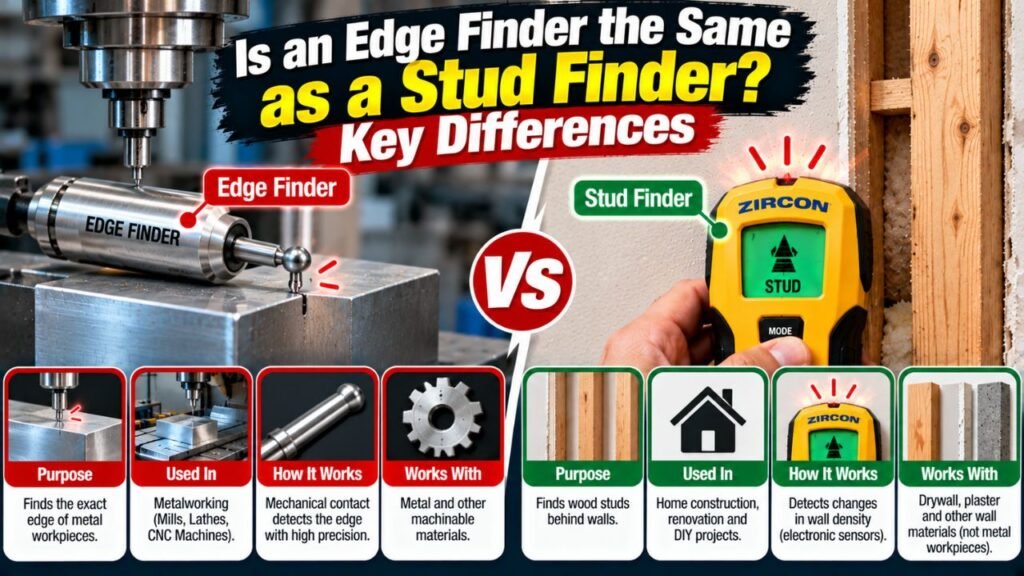
No, an edge finder is not always the same as a stud finder, although the terms are sometimes used together. In wall-scanning tools, an edge-finding stud finder is a type of stud finder that detects the edges of a stud, while a center-finding stud finder tries to locate the stud’s center automatically. The term “edge finder” can also describe tools used in machining, which have nothing to do with finding wall studs.
This distinction matters when you are hanging shelves, mounting a TV, installing cabinets, or driving screws into wall framing. Finding the general area of a stud is useful, but for a strong attachment, you normally want your fastener positioned close to the center of the framing member.
Older and basic electronic stud finders commonly work by detecting one edge at a time. You mark the first edge, scan from the opposite direction to locate the second edge, and then determine the center yourself. More advanced center-finding models perform more of that process automatically.
In this guide, I’ll explain whether an edge finder is the same as a stud finder, how edge-finding and center-finding models differ, how to use each one correctly, why readings sometimes seem inaccurate, and which type I recommend for common home projects.
Is an Edge Finder the Same as a Stud Finder?
An edge-finding wall scanner is a stud finder, but not every tool called an “edge finder” is a stud finder.
When the term appears on packaging for a wall-scanning tool, it normally means the device is designed to locate the edge of a stud or similar change in density behind the wall surface.
A center-finding stud finder, by comparison, attempts to identify the middle of the framing member.
The difference is primarily in how the tool communicates the location of the hidden framing.
With an edge-finding model, you usually need to locate both sides of the stud manually.
With a center-finding model, the tool is designed to indicate the center directly after scanning across the stud.
For most normal wall-mounting jobs, both can work well when used correctly.
Why the Terminology Is Confusing
“Stud finder” is the broad category.
Within that category, you may encounter descriptions such as:
Edge-finding stud finder: Detects a transition associated with the side of a stud.
Center-finding stud finder: Attempts to determine the stud’s midpoint automatically.
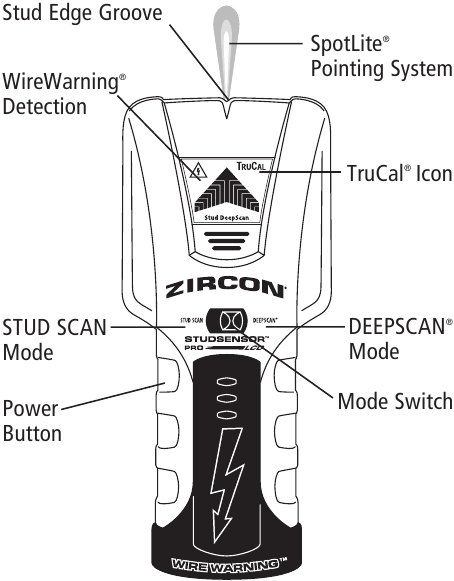
Multi-sensor wall scanner: May detect studs along with metal or electrical wiring.
Magnetic stud finder: Locates metal screws or nails that are usually attached to wall framing.
So when someone calls a wall scanner an “edge finder,” they may simply be describing an edge-detecting type of stud finder.
However, if you see the term “edge finder” in a machine shop, CNC, milling, or metalworking context, it likely refers to an entirely different precision tool.
Key Takeaways:
- An edge-finding wall scanner is a type of stud finder, but “edge finder” is not universally another name for a stud finder.
- Edge-finding models identify stud boundaries, while center-finding models are designed to indicate the stud center.
How an Edge-Finding Stud Finder Works
An electronic edge-finding stud finder does not literally see the piece of wood behind the drywall.
Instead, it senses changes in the characteristics of the wall as the device moves across the surface.
A common wall consists of drywall or another covering attached to framing. The area directly over a stud behaves differently to the sensor than an empty wall cavity.
As you slide the finder horizontally, the device looks for that change.
When it reaches the suspected edge, it provides an indication such as a light, arrow, tone, or display symbol.
You mark that point.
To accurately determine the framing center, you normally continue scanning or approach the same location from the other direction to find the opposite edge.
The midpoint between the two marks is approximately the stud center.
Example of Finding the Center
Suppose your first scan indicates one edge at a particular point.
After approaching from the other direction, you locate the second edge 1 1/2 inches away.
The center is approximately halfway between those marks.
That is where you would generally prefer to place a mounting screw, assuming you have confirmed that the detected object is actually framing and that no wiring or plumbing creates a drilling hazard.
This manual two-edge process is the defining characteristic of many traditional edge-finding stud finders.
How a Center-Finding Stud Finder Is Different
A center-finding stud finder is designed to make the process easier.
Instead of simply alerting you when it first senses a transition, the device analyzes a wider area as you move across the wall and estimates where the middle of the stud is located.
Depending on the model, the tool may use multiple sensors rather than one primary sensing point.
The result is often a direct center indication.
For homeowners who frequently mount shelves, television brackets, cabinets, or other objects, this can save time because you do not have to manually calculate the midpoint every time.
Does Center-Finding Mean Perfect Accuracy?
No.
The word “center” can create the impression that the tool identifies the exact mathematical center of a wooden board every time.
Real walls are more complicated.
A reading can be affected by wall thickness, inconsistent drywall, nearby fasteners, pipes, electrical wires, insulation, multiple studs, framing around openings, or how the tool is operated.
Treat the displayed center as a strong locating indication rather than permission to drill blindly.
For important installations, I recommend verifying the position with another scan or a second locating method.
Edge Finder vs. Center-Finding Stud Finder
The practical differences are easier to understand side by side.
| Feature | Edge-Finding Stud Finder | Center-Finding Stud Finder |
| Main purpose | Detect stud edges | Estimate stud center |
| Number of scans | Often requires scanning both directions | Usually designed to identify center during a scan |
| User calculation | You determine midpoint | Tool indicates midpoint |
| Ease for beginners | Good | Usually easier |
| Cost | Often less expensive | Often somewhat more expensive |
| Accuracy | Good when used correctly | Convenient and often very good |
| Best for | Occasional basic projects | Frequent mounting and faster locating |
Neither design automatically guarantees better results in every wall.
A high-quality edge-finding model used carefully can be more useful than a poorly used center finder.
Technique matters.
Which Is More Accurate: Edge Finder or Center Finder?
There is no universal rule that every center finder is more accurate than every edge finder.
However, center-finding stud finders are generally easier to use because they remove one manual step.
With an edge finder, several small errors can accumulate.
You might mark the first edge slightly too early, mark the second edge slightly too late, or incorrectly estimate the midpoint.
A center-finding tool attempts to perform that interpretation internally.
For occasional picture hanging or small shelving, a basic edge finder may be entirely adequate.
For repetitive work, I prefer a reliable center-finding model because it is faster and reduces the amount of manual marking.
That does not eliminate the need to verify unusual readings.
How to Use an Edge-Finding Stud Finder Correctly
Many inaccurate stud-finder results come from technique rather than the device itself.
The exact operating procedure varies by model, so the manufacturer’s instructions should always take priority. However, the general process is straightforward.
Start in an Area That Is Probably Between Studs
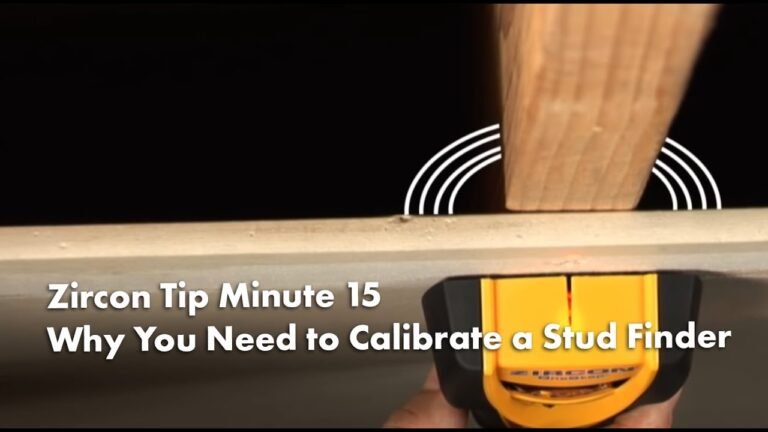
If your model requires calibration, position it flat against the wall before beginning.
Some traditional stud finders can behave incorrectly if they are calibrated directly over a stud.
Activate the finder and allow it to complete its calibration process.
Move Slowly Across the Wall
Slide the tool horizontally while keeping it flat against the wall.
Do not tilt it, lift one side, or move too quickly.
When the device indicates an edge, mark that location lightly with a pencil.
Scan From the Other Direction
Move beyond the suspected stud and scan back toward it.
Mark the point where the opposite edge is indicated.
The space between the marks represents the likely stud width.
Mark the Center
Determine the midpoint between the two detected edges.
That is the preferred location for a screw or other fastener when you need a secure attachment to the framing.
Repeat the Scan
Move several inches higher or lower and repeat the process.
A wall stud normally continues vertically, so a consistent reading at multiple heights increases confidence that you have actually found framing.
Key Takeaways:
- An edge finder normally requires locating both stud edges before you know the center.
- Scan slowly, keep the tool flat, and repeat the reading at another height before drilling.
How to Use a Center-Finding Stud Finder
Using a center finder is usually somewhat simpler.
Place the tool against the wall according to its instructions and activate it.
Move horizontally across the area you want to scan.
The device should indicate when it has identified a stud and where it believes the center is located.
Mark that position.
Then scan the same location from the opposite direction.
If both scans indicate approximately the same centerline, you have much stronger confirmation.
For a heavy mounting project, I would still use a magnet or another verification method if the wall construction is uncertain.
Why Finding the Stud Center Matters
It is possible to locate a stud correctly and still position a screw poorly.
Imagine that the stud finder tells you framing exists somewhere behind a 1 1/2-inch-wide area.
If you drive a large mounting screw near the extreme edge, the screw may only partially engage the framing.
It can even split or break out through the side of the stud.
A screw driven close to the center gives you a better margin on both sides.
This becomes particularly important when mounting heavy or safety-critical objects such as cabinets, large shelves, television brackets, handrails, and grab bars.
Edge Detection Can Actually Be Helpful
Although automatic center finding is more convenient, knowing both edges can be valuable.
It tells you the approximate framing width instead of providing only one center mark.
If the detected area is unusually wide or narrow, that can alert you that you might be detecting something other than an ordinary single wall stud.
For example, framing around a window or doorway may consist of multiple boards located close together.
Is a Magnetic Stud Finder an Edge Finder?
Usually not in the electronic sense.
A magnetic stud finder works differently from both conventional edge-finding and center-finding electronic models.
It detects metal.
The magnet is attracted to screws or nails used to attach drywall or paneling to the wall framing.
Once you locate several fasteners aligned vertically, you can infer that a stud probably runs behind them.
A magnet generally does not identify the left and right edges of a wooden stud.
Instead, it finds an attachment point somewhere on or near the framing.
Why Magnetic Stud Finders Are Useful
Magnetic finders have several advantages.
They do not need electronic calibration, and they do not depend on batteries.
They can also work well on walls where an electronic finder gives inconsistent results.
Their limitation is that you must interpret the fastener location yourself.
A drywall screw is usually driven into framing, but it is not guaranteed to be perfectly centered.
For precise mounting, use the magnetic location as a clue and confirm the stud position before installing large hardware.
What Else Can “Edge Finder” Mean?
This is where the terminology becomes especially important.
An edge finder is also a precision machining tool.
In metalworking, milling, and machining, an edge finder is used to accurately establish the location of the edge of a workpiece relative to a machine spindle.
That type of edge finder has nothing to do with wall studs.
So the answer to “Is an edge finder the same as a stud finder?” depends partly on context.
If you are shopping in the wall-scanning section of a hardware store and see “edge-finding stud finder,” then yes, it is a stud-finding device.
If you are looking at machinist equipment, an edge finder is an entirely different tool.
Why Does an Edge-Finding Stud Finder Sometimes Seem Inaccurate?
Wall construction is rarely perfectly uniform.
Several things can confuse electronic readings.
You Started Directly Over a Stud
Some traditional models need to calibrate over an empty cavity.
If you begin directly over dense material, the tool may calibrate incorrectly.
Moving several inches away and repeating the process can help.
The Wall Is Too Thick
Some stud finders have a limited sensing depth.
Multiple layers of drywall, plaster, tile, wood paneling, or other coverings can make the framing harder to detect.
A tool with an appropriate deep-scan mode may perform better.
There Are Pipes or Metal Behind the Wall
Metal plumbing, conduit, protective plates, and other objects can affect some sensors.
If the result does not continue vertically like normal framing, investigate further before drilling.
Wiring Is Nearby
Electrical wiring can also influence wall-scanner readings.
Some devices include live-wire detection, but that feature should not be treated as absolute proof that drilling is safe.
Studs Are Close Together
Corners, windows, doors, and structural openings often contain multiple framing members.
An edge finder may identify a wider dense region rather than the expected width of one isolated stud.
The Wall Surface Is Uneven
Heavy texture can prevent the finder from moving evenly across the wall.
A thin piece of smooth cardboard can sometimes help a compatible finder slide over textured surfaces, but only use such techniques if they do not interfere with the manufacturer’s sensing instructions.
Can You Use an Edge Finder on Drywall?
Yes. Standard drywall is one of the most common surfaces for electronic stud finders.
Results are usually straightforward when the wall has normal drywall over conventional framing.
Move the tool horizontally rather than vertically because you are trying to cross the stud’s edges.
If the first reading looks strange, repeat the scan from the opposite direction.
Consistent results matter more than one isolated alert.
Can an Edge Finder Work Through Paneling?
Often, but performance depends on the material and thickness.
Thin wood paneling over standard framing may still allow a stud finder to work effectively.
However, decorative seams, adhesives, layered wall materials, or unusual construction can cause confusing readings.
A magnet is a useful secondary method because it can locate the panel fasteners attached to the framing.
Can an Edge Finder Find Metal Studs?
Some electronic stud finders can detect changes associated with metal framing, while others include a separate metal-detection mode.
However, performance and interpretation depend on the specific device.
Metal studs also require different fastening methods than wood studs.
Finding the stud does not automatically mean you can use the same wood screws or mounting technique you would use in timber framing.
If you suspect metal framing, identify the wall construction and choose mounting hardware designed for that application.
Can an Edge Finder Detect Electrical Wires?
An edge-finding stud function and electrical-wire detection are separate capabilities.
Some multifunction stud finders include live AC detection, while basic models may not.
Even when the feature is available, conditions inside the wall can affect detection.
Do not assume an area is safe for drilling simply because the scanner does not show an electrical warning.
Pay particular attention to areas around outlets, switches, fixtures, and other likely electrical routes.
Is an Edge Finder Good Enough for Mounting a TV?
Yes, provided you use it correctly and confirm the framing.
A basic edge-finding stud finder can locate both sides of a stud, allowing you to mark its center accurately.
For a heavy television, I recommend scanning several times and verifying the framing position with another method if possible.
A strong magnet is a simple backup.
If several drywall screws line up vertically through the center of your detected framing area, that provides additional confidence.
Use the mounting hardware and attachment pattern specified for your TV bracket and wall construction.
The stud finder only tells you where framing is likely located; it does not determine the correct lag-bolt size or load capacity of the complete installation.
Edge Finder vs. Magnet: Which Should You Use?
They are most useful together rather than as competitors.
An edge-finding electronic stud finder is better for estimating the actual sides of the framing.
A magnet is excellent for confirming that wall-covering fasteners are present in the same area.
For important mounting jobs, combining both methods can be more dependable than relying entirely on either one.
For example, use the electronic finder to identify both edges.
Mark the center.
Then move a strong magnet vertically through that center region.
If you find several screws or nails along the same vertical line, your confidence in the stud location increases.
Edge Finder vs. Center Finder: Which Should You Buy?
For someone buying a stud finder for occasional light household projects, a basic edge finder can be perfectly adequate.
It is usually straightforward and requires only a little extra marking.
For someone regularly mounting TVs, cabinets, shelves, or other fixtures, I would choose a good center-finding model.
The main advantage is convenience.
You do not need to manually locate both edges and calculate the midpoint for every stud.
Some higher-end scanners can also show a wider portion of the wall or detect multiple studs, which can speed up larger installation projects.
However, I would not choose solely based on whether the package says “center finding.”
Consider ease of use, wall depth capability, metal detection, electrical-warning features, and whether the device suits the wall materials in your home.
Key Takeaways:
- A basic edge-finding stud finder is sufficient for many occasional household jobs.
- Center-finding models are generally more convenient for frequent mounting work, but important locations should still be verified.
Common Mistakes When Using an Edge Finder
One common mistake is marking the first alert and immediately assuming that point is the center of the stud.
With an edge-finding model, the first alert may represent the edge, not the middle.
Driving a screw there can leave your fastener dangerously close to the side of the framing.
Another mistake is moving too quickly.
Electronic wall scanners need a controlled pass across the wall to detect changes accurately.
Tilting the device or allowing it to lose contact with the surface can also cause inconsistent readings.
Users also sometimes assume every signal represents wood.
A wall can contain pipes, metal components, wiring, blocking, and additional framing.
Repeated scans and visual context help distinguish an ordinary stud from other hidden objects.
Finally, do not trust predictable spacing more than the actual scan.
Studs are commonly installed at regular intervals, but construction changes around corners, doors, windows, cabinets, plumbing, and repaired areas.
Measurements are useful for predicting the next stud, not proving that it is there.
How to Confirm a Stud Before Drilling
For a lightweight picture, absolute precision may not matter.
For a large television, cabinet, shelf, or handrail, confirmation is worthwhile.
Start by locating both edges with the stud finder and marking the center.
Repeat the scan from the opposite direction.
Then check several inches higher or lower to make sure the same framing line continues vertically.
If needed, use a strong magnet to look for wall fasteners along that centerline.
For installations where certainty is especially important, a very small test hole may be used in a safe and inconspicuous location after checking for potential electrical or plumbing hazards.
Avoid unnecessary drilling depth.
A wall cavity may contain wiring, pipes, ducting, or other concealed components.
If you encounter a metal plate while drilling, do not force the bit through it. Metal protective plates may be installed specifically to prevent screws or nails from penetrating utilities.
FAQs about Is an Edge Finder the Same as a Stud Finder
Is an edge-finding stud finder a real stud finder?
Yes. An edge-finding stud finder is one type of electronic stud finder. It indicates the edge of hidden framing rather than automatically showing the center.
What is the difference between edge finding and center finding?
Edge finding detects one side of the stud at a time. You normally locate both edges and calculate the midpoint yourself.
Center finding is designed to identify that midpoint automatically.
Which is better, an edge finder or center finder?
For occasional use, either can work well. I prefer a center-finding stud finder for frequent projects because it is faster and easier to interpret.
Are edge-finding stud finders accurate?
They can be quite accurate when used correctly on compatible wall materials.
Repeated scans from both directions improve reliability.
Does an edge finder find the center of the stud?
Not directly. A traditional edge finder identifies the boundaries. You find both edges and mark the midpoint yourself.
Can I mount a TV with an edge-finding stud finder?
Yes. Locate both stud edges, mark the center, and confirm the reading before installing the mounting hardware.
Can an edge finder detect pipes?
A basic edge-finding stud mode is not a dedicated pipe detector. Some multifunction wall scanners can also detect metal, which may help identify certain pipes or other metal objects.
Never assume a detected object is definitely a wooden stud without verification.
Can an edge finder detect electrical wiring?
Only if the particular tool includes an electrical-detection feature. Edge detection itself does not guarantee wire detection.
Is a magnetic stud finder better than an edge finder?
Neither is always better.
A magnetic finder locates metal fasteners, while an electronic edge finder estimates changes associated with the framing itself. Using both together can provide excellent confirmation.
Why does my stud finder show different edges depending on the direction I scan?
Small differences can result from calibration, scanning speed, wall material, sensor design, or nearby objects.
Repeat the scan slowly from both directions and use the midpoint of consistent readings.
Is a machinist edge finder a stud finder?
No. A machinist edge finder is a precision metalworking tool used to establish the position of a workpiece edge on equipment such as a milling machine. It is unrelated to wall-framing detection.
Do I need to find both edges of a stud?
With a traditional edge-finding stud finder, yes, if you want to accurately estimate the stud center.
For secure mounting, finding both edges is much better than driving a screw at the first detected signal.
Conclusion
Is an edge finder the same as a stud finder? In wall-scanning terminology, an edge-finding tool is usually a type of stud finder, but the two terms are not universally interchangeable. An edge-finding stud finder identifies the sides of framing, while a center-finding stud finder is designed to identify the midpoint automatically.
For occasional home projects, an edge finder can work perfectly well. Locate the first edge, scan from the opposite direction to locate the second edge, and place your center mark halfway between them.
For frequent installations, I prefer a center-finding stud finder because it makes the process quicker and reduces manual measuring. Regardless of which type you use, repeat your scan and confirm important mounting locations before drilling.
And remember that “edge finder” can also refer to a completely unrelated machinist tool. If the device is being sold for wall scanning and stud detection, it is part of the stud-finder family; if it is designed for milling or machine-shop work, it is not a stud finder at all.