How to Use an Impact Wrench to Change Tires: A Safe Step-by-Step Guide
Learning how to use an impact wrench to change tires can make a tire swap much faster. The tool is strong and quick, but it must be used with care. A power tool does not replace safe lifting, proper wheel support, or the correct final torque.
For most U.S. drivers, a good setup includes a safe jack, jack stands when appropriate, wheel chocks, the correct impact socket, and a torque wrench. The impact wrench handles the fast work. Your hands and torque wrench handle the careful work.
What an Impact Wrench Does During a Tire Change
An impact wrench uses short hammering blows to turn a fastener. This gives it much more turning force than a normal hand wrench. That makes it useful for removing lug nuts that have been tightened firmly or have become hard to turn.
When learning how to use an impact wrench to change tires, it helps to know its limits. The wrench is excellent for removal and for quick, light installation. It should not be used as the final way to set lug-nut torque unless the vehicle maker and tool maker specifically provide a controlled and approved method.
The final goal is simple: the wheel must sit flat against the hub, and each lug nut must have the correct torque. That is why a torque wrench remains an important part of the job.

- ✦ Removal
Use the impact wrench to spin off lug nuts after you have safely broken them loose.
- ✦ Light installation
Use low power or short bursts to bring lug nuts down until they are snug.
- ✦ Final torque
Use a torque wrench to set the final lug-nut torque to the vehicle maker’s specification.
Impact Wrench vs. Impact Driver
An impact wrench is made for larger fasteners such as automotive lug nuts. An impact driver is a different tool, even though both use impact action. A proper impact wrench with the correct drive size and impact-rated socket is the better choice for routine tire work.
Do not assume that any tool with the word impact in its name is suitable for lug nuts. Check the tool’s drive size, rated torque, and instructions before using it on a vehicle.
- ✦ Impact wrench
Designed for high-torque jobs and commonly used for automotive wheel fasteners.
- ✦ Impact driver
Designed mainly for screws and smaller fasteners and is not the same as an automotive impact wrench.
Tools and Safety Gear You Need
Before you start, gather every tool you need. This avoids leaving a raised vehicle while you search for a missing socket or wrench. Work on a firm, level surface when possible.
Your vehicle owner’s manual is also important. It gives the correct lift points, lug-nut torque, and other wheel service details for your exact vehicle. These values can differ between cars, trucks, SUVs, and wheel types.
- ✦ Impact wrench
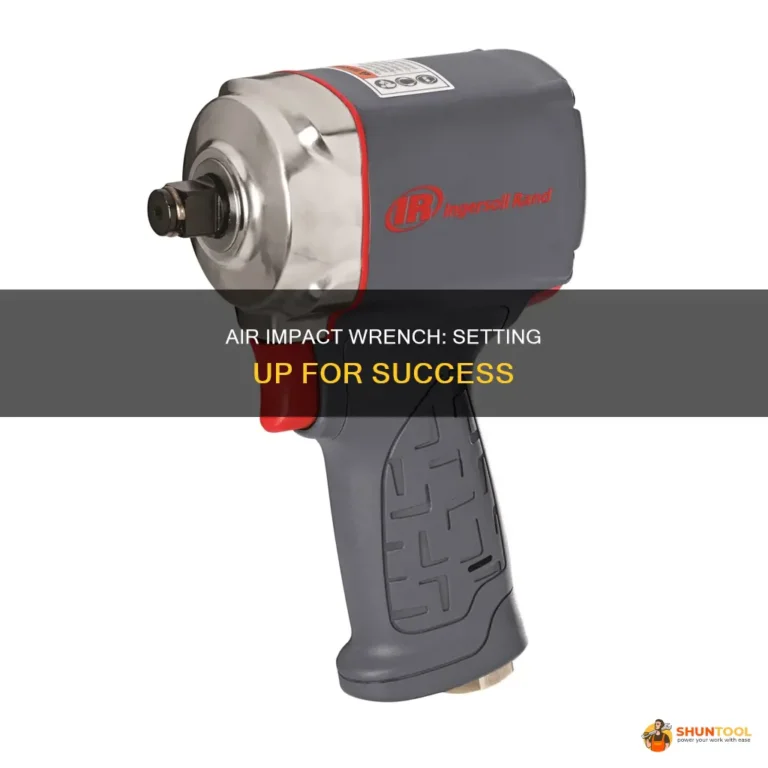
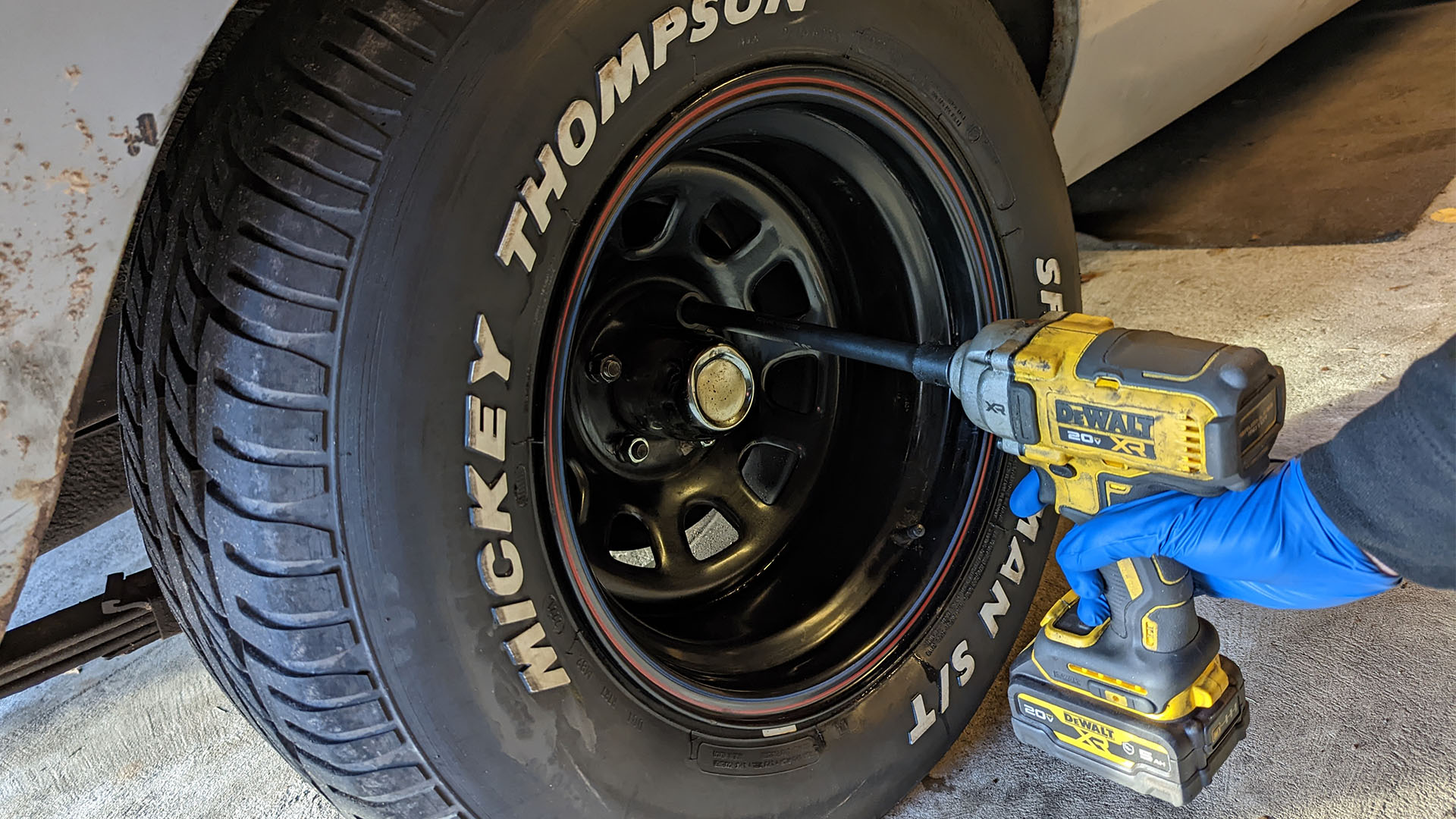
Choose a suitable cordless, corded, or pneumatic impact wrench with enough capacity for your vehicle.
- ✦ Impact-rated socket
Use the correct-size impact socket. Do not use a regular chrome hand-tool socket on an impact wrench.
- ✦ Jack
Use a jack rated for the vehicle and place it only at an approved lift point.
- ✦ Jack stands
Use properly rated stands when the job requires the vehicle to remain raised for more than the lifting step.
- ✦ Wheel chocks
Block wheels that remain on the ground to help prevent vehicle movement.
- ✦ Torque wrench
Use a suitable torque wrench for the final lug-nut tightening step.
- ✦ Safety glasses
Wear eye protection when working around tools, dirt, rust, and metal parts.
Choose the Right Socket
Match the socket to the lug-nut size. The socket must fit fully and squarely on the nut. A loose fit can damage the nut or socket and may make removal harder.
Impact-rated sockets are built for impact tools. They are usually darker and thicker than standard chrome sockets. Use the socket type recommended for your tool.
- ✦ Correct size
The socket should fit the lug nut without play.
- ✦ Impact rated
Use a socket designed for impact tools.
How to Prepare the Vehicle Before Using the Impact Wrench
Park on a firm, level surface. Put the transmission in Park for an automatic transmission or in first gear or reverse for a manual transmission, then apply the parking brake. Turn off the engine and keep the key or key fob away from the controls.
Place wheel chocks where they can help stop the vehicle from rolling. Before raising the vehicle, inspect the tires, wheel area, and ground around the jack point.
Do not crawl under a vehicle supported only by a jack. Follow the vehicle maker’s instructions for lifting and support. If the surface is soft, sloped, or unstable, move to a safer location before starting.

- ✦ Check the owner’s manual
Find the approved jack points and the specified lug-nut torque.
- ✦ Secure the vehicle
Park safely, apply the parking brake, and chock the appropriate wheels.
- ✦ Inspect the jack
Make sure the jack is in good condition and rated for the vehicle.
- ✦ Keep the work area clear
Remove loose items that could trip you or interfere with the jack.
Should You Break the Lug Nuts Loose Before Lifting?
Yes, in most normal tire-change procedures, loosen each lug nut slightly while the tire still touches the ground. The tire’s contact with the ground helps keep the wheel from turning.
Set the impact wrench to a suitable low or medium setting if you use it for this step. If the nut does not move, stop rather than holding the trigger for a long time. A breaker bar can provide controlled extra leverage when needed.
- ✦ Loosen only
Turn each lug nut only enough to break it free. Do not remove the nuts while the vehicle is still on the ground.
- ✦ Do not force stuck nuts
If a lug nut is seized, stop and use a suitable manual method or seek professional help.
How to Use an Impact Wrench to Remove a Tire
Once the lug nuts are loose, raise the vehicle at the approved lift point. Lift it only high enough for the tire to clear the ground. Keep your body clear of pinch points as the vehicle rises.
Place the impact socket fully over the first lug nut. Hold the wrench straight and steady. Pull the trigger in short bursts until the nut spins off, then place the nut somewhere clean.
Repeat the process for the other lug nuts. Support the wheel as you remove the last nut so it does not fall. Once all nuts are removed, pull the wheel straight away from the hub.

- ✦ Seat the socket
Push the impact socket fully onto the lug nut before pulling the trigger.
- ✦ Use short bursts
Short trigger pulls give you better control and reduce needless tool and fastener stress.
- ✦ Hold the tool straight
Keep the socket aligned with the lug nut to reduce the chance of damage.
- ✦ Support the wheel
Keep one hand ready to control the wheel as the final lug nut comes off.
What If the Impact Wrench Will Not Remove the Lug Nut?
Do not keep hammering on a stuck lug nut for a long time. The nut may be cross-threaded, rusted, over-tightened, or damaged. A breaker bar can help with a stubborn fastener, but use care and keep the socket fully seated.
If the nut or stud looks damaged, stop the tire change. A damaged wheel stud or lug nut may need repair before the vehicle is driven.
- ✦ Check socket fit
Make sure you have the exact socket size and that it is fully seated.
- ✦ Check the tool
A low battery, weak air supply, or unsuitable wrench may limit available torque.
- ✦ Inspect the fastener
Look for rust, damaged threads, or signs of previous over-tightening.
How to Use an Impact Wrench to Install the Replacement Tire
Before installing the replacement wheel, inspect the hub and the back of the wheel. Remove loose dirt or rust that could keep the wheel from sitting flat. Do not put grease or anti-seize on wheel studs unless the vehicle or fastener maker specifically calls for it.
Line up the wheel with the hub and place it on the hub. Start every lug nut by hand. Turn each nut several full turns by hand before using the impact wrench. This simple step helps prevent cross-threading.
If you are learning how to use an impact wrench to change tires, this is one of the most important habits to build: never use the impact wrench to start a lug nut from zero. Hand-start the nut first.

- ✦ Clean the mating surfaces
Make sure the wheel can sit flat against the hub without loose debris between the surfaces.
- ✦ Start nuts by hand
Thread each lug nut by hand before using power.
- ✦ Use low power
If your impact wrench has adjustable power, use a low setting for the snugging stage.
- ✦ Do not fully torque with impact
Use a torque wrench for the final specified torque.
Tighten Lug Nuts in a Star Pattern
Tighten lug nuts in a crisscross or star pattern when the wheel has multiple lug nuts. This helps seat the wheel evenly against the hub. Follow the wheel and vehicle maker’s recommended sequence if one is provided.
Use only enough impact power to bring each nut to a light, even snug point. Then lower the vehicle enough to keep the wheel from turning and use the torque wrench for the final setting.
- ✦ Five-lug wheel
Move across the wheel rather than tightening adjacent nuts in a circle.
- ✦ Four-lug wheel
Use a diagonal sequence so opposite nuts are tightened in turn.
- ✦ Final torque
Apply the exact torque listed by the vehicle maker.
Why You Need a Torque Wrench After Using an Impact Wrench
An impact wrench can apply a wide range of force. The actual torque can change with battery level, air pressure, tool setting, socket condition, fastener condition, and how long you hold the trigger. Because of this, the impact wrench should not be treated as a precise final torque tool unless it is specifically designed and verified for that job.
The vehicle maker’s lug-nut torque is the number that matters. Find it in the owner’s manual or an official service source for your exact vehicle. Do not copy the torque value from another car simply because the lug nuts look similar.
After the wheel is installed, use a suitable torque wrench and tighten the lug nuts in the correct pattern. This final step is central to learning how to use an impact wrench to change tires safely.

- ✦ Use the specified value
Set the torque wrench to the exact lug-nut torque specified for your vehicle.
- ✦ Use the correct pattern
Tighten in the recommended crisscross pattern.
- ✦ Check every lug nut
Make sure each lug nut receives the final torque check.
- ✦ Avoid guesswork
Do not estimate torque by feel or by the sound of an impact wrench.
Why Over-Tightening Is a Problem
Too much torque can make later wheel removal difficult. It can also damage studs, nuts, wheel parts, or threads. Some vehicles also use wheel hardware that requires special care.
Too little torque can also be unsafe. The goal is not maximum tightness. The goal is the correct torque for the specific vehicle and wheel setup.
- ✦ Too tight
May damage wheel hardware and make future removal harder.
- ✦ Too loose
May allow unwanted movement between the wheel and hub.
Lower the Vehicle and Complete the Tire Change
Once the lug nuts have been brought to the correct final torque, lower the vehicle according to the jack instructions. Keep your hands and feet away from the tire and jack contact areas during lowering.
Remove the jack and wheel chocks when it is safe to do so. Check the tire pressure with a reliable gauge and adjust it to the pressure listed for the vehicle. The pressure printed on the tire sidewall is not usually the same as the vehicle’s recommended cold inflation pressure.
If the tire change involved a spare tire, remember that many temporary spares have limits on speed, distance, and use. Check the markings on the spare and the vehicle owner’s manual before driving.

- ✦ Lower carefully
Follow the jack instructions and keep clear of pinch points.
- ✦ Check torque
Make sure the lug nuts received their final torque before normal driving.
- ✦ Check tire pressure
Set pressure to the vehicle maker’s recommended cold pressure.
- ✦ Check the spare
Follow the spare tire’s speed and distance limits if a temporary spare is installed.
Common Mistakes to Avoid When Using an Impact Wrench on Tires
The most common errors are simple ones. People may use the wrong socket, start a lug nut with the impact wrench, or skip the final torque step. These mistakes can turn a fast tire change into a damaged fastener or a safety problem.
Knowing what not to do is just as useful as knowing how to use an impact wrench to change tires. Slow down for the steps that affect wheel fit and final torque.

- ✦ Using a regular socket
Regular chrome sockets may not be intended for impact-tool loads. Use an impact-rated socket.
- ✦ Starting lug nuts with power
Cross-threading can happen when a nut is driven onto a stud before the threads are properly engaged by hand.
- ✦ Using full power for installation
High power can over-tighten the lug nut before you reach the controlled final torque step.
- ✦ Skipping the torque wrench
An impact wrench is not a substitute for the vehicle’s specified final lug-nut torque.
- ✦ Working on an unsafe surface
A soft or sloped surface can make lifting a vehicle much more dangerous.
- ✦ Ignoring damaged hardware
Stop if you find cracked, stripped, badly rusted, or otherwise damaged wheel hardware.
- ✦ Forgetting tire pressure
A tire can be installed correctly and still need an immediate pressure check.
How Much Torque Should an Impact Wrench Have for Tires?
There is no single torque rating that fits every tire job. Passenger cars, SUVs, pickup trucks, and commercial vehicles can use different wheel hardware and torque requirements.
For that reason, choose an impact wrench based on the vehicle and the work you plan to do. More advertised torque is not a reason to use full power on wheel installation. The tool should have enough capacity for removal while still allowing controlled use during installation.
- ✦ Passenger vehicles
A suitable automotive impact wrench can handle many common passenger-car lug nuts, but check the tool and vehicle specifications.
- ✦ Larger vehicles
Trucks and heavy vehicles may require a higher-capacity wrench and different service procedures.
- ✦ Final tightening
Use the vehicle’s specified torque rather than relying on the wrench’s maximum torque rating.
Cordless, Corded, or Pneumatic Impact Wrench for Tire Changes
A cordless impact wrench is often convenient for home tire work because it does not need an air hose or electrical outlet. A corded model can work well where power is available, while a pneumatic wrench can be useful in a shop with a suitable air compressor.
The best choice depends on your workspace and vehicle needs. For a driver who changes seasonal tires at home, portability may matter more than shop-style air power. For frequent shop use, air tools or high-capacity cordless tools may fit the workflow better.
- ✦ Cordless
Portable and convenient for driveways, garages, and roadside use when the battery is charged.
- ✦ Corded
Can provide steady power but needs access to a suitable electrical outlet and a safe cord setup.
- ✦ Pneumatic
Common in professional shops but requires an air compressor, hose, fittings, and enough air capacity.
A Simple Home Tire-Change Setup
For many home users, a compact cordless impact wrench, impact-rated socket, quality torque wrench, jack, and wheel chocks make a practical setup. Keep the battery charged and inspect the tools before each job.
Store the torque wrench according to its maker’s instructions. Some adjustable click-style torque wrenches should be returned to their storage setting after use, but always follow the specific tool manual.
- ✦ Keep batteries charged
A weak battery can reduce tool performance when you need it.
- ✦ Protect the tools
Keep sockets and tools clean, dry, and free from damage.
- ✦ Inspect before use
Check the wrench, socket, jack, and torque wrench before starting the job.