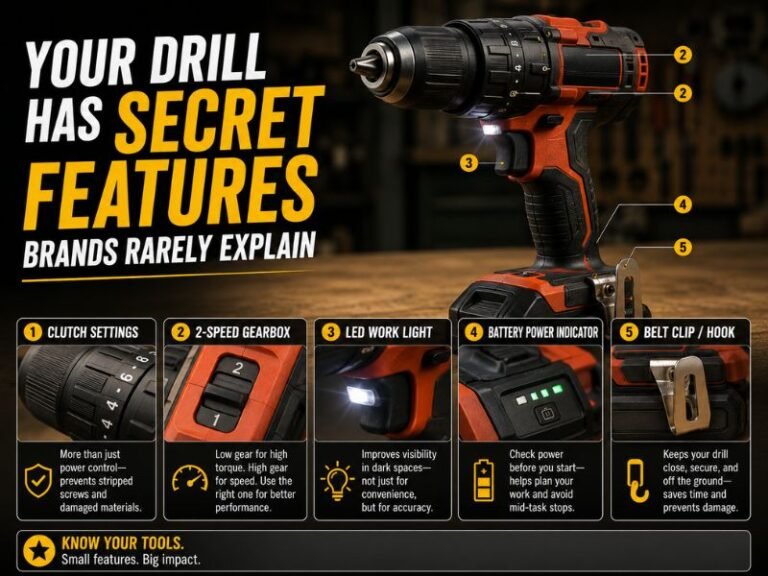
Can You Use a Cordless Drill in the Rain: Overview and Key Facts
No, a cordless drill should not be used in the rain unless the manufacturer specifically rates that model for wet conditions. Most consumer cordless drills are designed for dry work, and rain can damage the motor, electronics, battery contacts, and chuck while increasing the chance of losing control.
The absence of a power cord reduces one major electrical hazard, but it does not make the tool waterproof. Water entering through ventilation slots, trigger openings, battery connections, or the chuck can create immediate problems or cause corrosion that appears days later. A light sprinkle is less serious than a downpour, yet neither should be treated as harmless without checking the tool’s instructions and environmental rating.
This article separates manageable exposure from situations that call for stopping work. You will learn how rain affects a cordless drill, which labels and conditions matter, what to do if the tool gets wet, and when a damp job can be completed more safely with preparation or a different tool. The goal is to help you decide whether to proceed, postpone the task, or replace a wet drill before using it again.
Why Rain Is a Problem for a Cordless
A cordless drill runs on a rechargeable battery that supplies power to an electric motor and electronic controls. Although the battery voltage is typically far lower than household outlet voltage, the tool still contains energized contacts, circuit boards, switches, and wiring that can be affected by water.
Rain can enter through the drill’s ventilation openings, trigger area, battery slot, or seams in the housing. Once inside, moisture may cause a short circuit, interrupt electronic controls, or create a path for current between components that are not meant to connect.
Even when the drill keeps running, water can wash away lubrication, promote rust on internal metal parts, and damage bearings. Corrosion is especially deceptive because the tool may seem normal immediately after exposure and then develop intermittent operation, reduced power, or charging problems later.
Wet exterior surfaces also affect handling. A slick grip, wet gloves, or a drill bit that binds in the workpiece can increase the chance of twisting the tool, dropping it, stripping a screw, or injuring a hand.
Does Cordless Mean Safe in Wet Weather?
A cordless drill eliminates the extension cord and plug connection that can become dangerous in rain. That is an important advantage over a corded tool, but it addresses only part of the risk.
The drill itself remains an electrical device. Its rechargeable battery can deliver substantial current through a damaged circuit, and water can also compromise the battery terminals. A wet battery pack may develop corrosion, fail to charge correctly, or become unsafe if its casing or contacts are damaged.
Cordless does not mean waterproof, water-resistant, or approved for outdoor precipitation. Those terms have different meanings, and many ordinary drills carry no recognized water-ingress rating at all. A rubberized grip or sealed-looking housing is not proof that the tool can tolerate rain.
There is also a practical distinction between electrical shock risk and equipment damage. A user may avoid a severe shock from a low-voltage drill yet still face a ruined tool, a hot battery, a loss of control, or a fire risk from a compromised battery pack.
Check the Drill’s Instructions and Water-Resistance Rating
The most reliable answer comes from the manufacturer’s manual, technical specifications, or safety markings for the exact model. Do not assume that two drills from the same brand have identical protection simply because they look similar or use the same battery platform.
Look for explicit language about rain, wet locations, water exposure, or an IP rating. An IP code describes protection against solid particles and water under defined test conditions. For example, a rating that includes water resistance does not automatically mean the tool can be operated in heavy rain, sprayed with a hose, or submerged.
If the manual says to keep the drill dry, that instruction controls the decision. If no wet-weather guidance is provided, the cautious interpretation is that the drill is intended for dry conditions. Marketing terms such as “rugged,” “jobsite ready,” or “all-weather” should not replace a specific operating instruction.
Battery packs require their own check. A drill may have some environmental protection while its battery or charger has stricter limitations. Charging a wet or damp battery is particularly inappropriate because the charger introduces a sustained electrical connection and can worsen damage at contaminated contacts.
Light Drizzle Versus Heavy Rain
Not all weather exposure creates the same level of risk, but there is no universal amount of rain that makes an unrated drill safe. A brief drizzle may leave only a few droplets on the housing, while heavy rain can drive water into openings within seconds.
Use these conditions as practical warning signs rather than official safety thresholds:
- Light mist: The tool may receive minimal surface moisture, but it should still be protected and dried promptly.
- Steady rain: Stop using an unrated drill and move the work under cover.
- Heavy rain or wind-driven rain: Do not operate the drill outdoors, even for a short task.
- Puddles, wet ground, or standing water: Keep the drill and battery away from them entirely.
- Thunderstorms: Postpone outdoor work because lightning, slippery surfaces, poor visibility, and sudden weather changes create hazards beyond the drill itself.
A covered area is helpful only if it keeps the workpiece, operator, and tool genuinely dry. A roof that allows wind-blown rain to reach the drill does not provide dependable protection.
What to Do Before Drilling Outdoors
The safest solution is usually to delay the task or move it indoors. If the project must be completed outside, create a dry, stable workspace instead of trying to make the drill tolerate open rain.
- Check the manufacturer’s instructions for the drill, battery, and charger.
- Move the work beneath a secure roof or weatherproof shelter with adequate lighting and ventilation.
- Keep the drill, spare batteries, and charger off wet ground and away from dripping surfaces.
- Inspect the battery and tool for cracks, damaged seals, loose parts, or exposed contacts.
- Dry your hands, wear gloves that maintain grip, and secure the workpiece before drilling.
- Use the correct bit and speed so the tool is less likely to bind or require excessive force.
- Stop immediately if rain reaches the tool, your footing becomes unstable, or visibility declines.
Do not cover a running drill with a plastic bag or similar material. That can trap heat, block ventilation, interfere with the trigger, and create a new handling hazard. A proper shelter should protect the entire work area without restricting the tool’s cooling airflow.
What If the Drill Gets Wet?
If a few drops land on the outside, stop the tool, remove the battery, and wipe the surfaces dry. Do not immediately resume drilling simply because the housing appears clean; inspect the battery slot, contacts, trigger, vents, and chuck area for moisture.
If rain entered the housing, the drill was soaked, or it fell into water, keep the battery removed. Do not squeeze the trigger to test it, connect the battery to a charger, or use compressed air in a way that drives water farther inside.
Place the tool in a dry, ventilated location and allow it to dry thoroughly. External warmth can help, but avoid high heat, ovens, open flames, and hair dryers held close to plastic parts or battery components. Drying time depends on how much water entered and the tool’s construction; visible dryness does not prove that internal moisture is gone.
Examine the battery separately. If the pack is swollen, cracked, hot, leaking, smells unusual, or shows damaged terminals, do not use or charge it. Keep a questionable lithium-ion battery away from combustible materials and ask the manufacturer or a qualified service provider how to handle it.
After significant exposure, professional inspection is the prudent choice. Warning signs that justify service or replacement include a burning smell, sparking, unusual noise, erratic speed, failure to stop, a hot battery, intermittent power, visible corrosion, or a charger that reports an error.
Can You Use a Cordless Drill on a Wet Workpiece?
A wet workpiece is not the same as rain falling directly on the drill, but it can still create problems. Water may reach the chuck or bit, make the material slippery, and obscure the surface so the bit walks away from the intended mark.
Dry the drilling location whenever possible and clamp the material securely. If the material cannot be dried, consider whether the drill, bit, and work process are approved for that environment rather than assuming that only the surface moisture matters.
Concrete, masonry, and treated outdoor materials may hold water inside pores or seams. Drilling can release slurry, reduce visibility, and cause the bit to bind. Keep the drill elevated and prevent runoff from traveling toward the battery connection.
Never drill into a wet area without considering hidden electrical wiring, plumbing, or other services. Moisture can make an already dangerous mistake more consequential, particularly when drilling into walls, decks, siding, or exterior structures.
When a Different Tool or Setup Is Better
For occasional outdoor work, postponing the task is usually better than risking an expensive drill and battery. A sheltered work zone often solves the problem without requiring specialized equipment.
For repeated work in damp environments, choose equipment specifically described by its manufacturer for that setting. The relevant specification must apply to the complete tool and its battery, not merely to a marketing claim about a sealed switch or durable housing.
Some wet construction processes use tools designed for controlled water delivery, such as equipment intended for wet cutting. That does not make a standard cordless drill suitable for rain. Purpose-built tools have different guarding, cooling, and water-management features.
A corded drill is not automatically a safer substitute outdoors. Rain and extension cords create additional electrical hazards, and outdoor power equipment must be appropriate for the location and protected by suitable ground-fault protection. Switching from cordless to corded should never be treated as a simple way to continue working in bad weather.
FAQ: Using a Cordless Drill in the Rain
Can you use a cordless drill in the rain
It is not recommended unless the exact tool is approved for rain or wet conditions. A short exposure can still allow water into vents, the trigger, or the battery connection, especially during heavy or wind-driven rain.
Can a cordless drill get wet without being ruined?
It may survive minor surface moisture, but survival is not guaranteed. Remove the battery, dry the tool thoroughly, and inspect it before any further use. Internal moisture and delayed corrosion can cause problems after the tool appears dry.
Should I remove the battery if my drill gets rained
Yes, remove the battery as soon as it is safe to do so. Disconnecting the battery reduces the chance of an energized short circuit. Keep the battery out of the charger until both the battery and its contacts are completely dry and free of damage.
Can I charge a cordless drill battery that got wet?
No, do not charge a wet or questionable battery. Moisture, corrosion, cracks, swelling, heat, or unusual odor are reasons to stop using the pack and seek manufacturer or qualified service guidance.
Is a waterproof cordless drill safe to use during
No, water resistance does not make outdoor work safe during a thunderstorm. Lightning, slippery footing, wind, poor visibility, and falling debris remain serious hazards even if the tool has a wet-weather rating.
Can I dry a wet cordless drill with a hair
Avoid high heat and do not force air into the tool. Let the drill dry in a warm, dry, ventilated place, and use professional inspection after soaking or any abnormal operation.
Conclusion: Keep an Unrated Cordless Drill Dry
For ordinary consumer equipment, the practical answer is to avoid using a cordless drill in the rain. A cordless design removes the extension cord but does not protect the motor, electronics, battery, or operator from water-related damage and loss of control.
Check the exact manufacturer guidance, move the job under a genuinely dry shelter, and stop if moisture reaches the tool. If the drill is soaked, remove the battery, do not charge or test it, allow careful drying, and arrange qualified evaluation before putting it back into service.