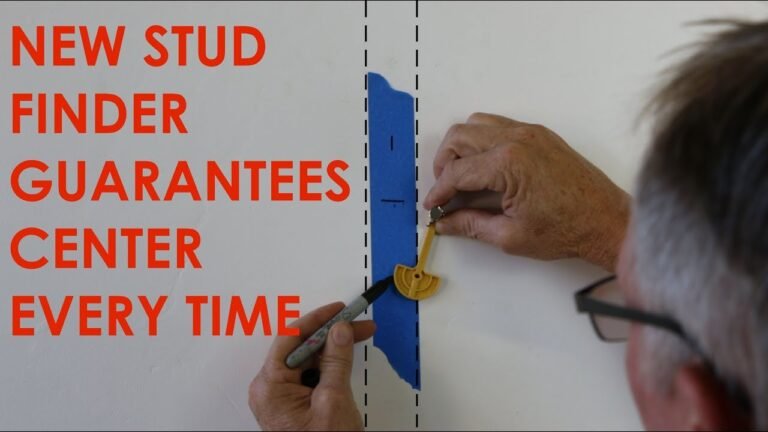
How to Use a Magnetic Stud Finder: A Simple Step-by-Step Guide
Learning how to use a magnetic stud finder is simple once you know what the tool is actually looking for. Unlike an electronic stud finder, a basic magnetic model does not sense wood. It finds the metal screws or nails used to attach drywall to the wall framing.
For common DIY jobs in a U.S. home, this can be a fast way to find a stud before you hang a shelf, mirror, TV bracket, cabinet, or other item. The key is to move slowly, use more than one fastener when possible, and confirm the stud before drilling.

What Is a Magnetic Stud Finder?
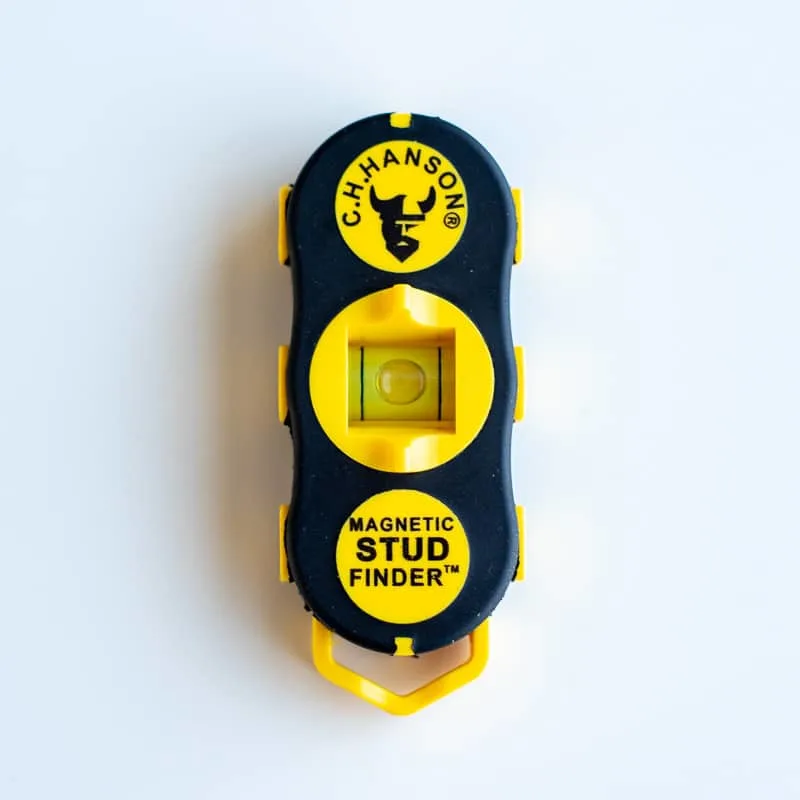
A magnetic stud finder is a small hand tool that contains a strong magnet. It reacts to ferrous metal, such as steel screws or nails hidden under drywall. When the magnet gets close to one of these fasteners, it pulls toward the wall or stays in place.
This makes the tool useful for finding the points where drywall meets the wood or metal framing behind it. The tool does not see through the wall. Instead, it uses the fasteners as clues that help you map the framing.

- ✦ It detects metal
The magnet responds to steel screws, nails, and other magnetic metal objects behind the wall surface.
- ✦ It does not detect wood
A magnet cannot sense a wooden stud by itself. You locate the fasteners first and use their pattern to identify the stud.
- ✦ It needs no batteries
A basic magnetic finder works without batteries, screens, calibration, or electronic settings.
- ✦ It is easy to carry
Most magnetic stud finders are small enough to keep in a toolbox, drawer, or pocket during a DIY project.
How Does a Magnetic Stud Finder Work?
Drywall is often fastened to wall framing with screws. Those screws sit behind the drywall surface. When you move a magnet near one, the magnetic force attracts the tool to the screw.
If several screws appear in a straight vertical line, they can reveal the location of the framing member behind the drywall. This is the basic principle behind how to use a magnetic stud finder.
- ✦ Magnet finds the fastener
The magnet detects a nearby steel screw or nail through the drywall.
- ✦ Fastener shows the framing
A line of fasteners often follows the center of a stud or other framing member.
How to Use a Magnetic Stud Finder Step by Step
The best way to learn how to use a magnetic stud finder is to practice on a clear section of drywall. Keep the tool flat against the wall and move it slowly. A quick sweep can make a weak magnetic pull easy to miss.
You can usually locate a stud by finding one fastener, then checking for more fasteners above or below it. Several points in a straight line give you much stronger evidence than one magnetic spot.

- ✦ 1. Pick the area
Choose the wall area where you plan to mount your item. Remove loose objects that may get in the way.
- ✦ 2. Hold the finder flat
Place the magnetic face or magnetic body against the wall. Keep it close to the surface.
- ✦ 3. Move slowly
Slide the finder from side to side in small movements. Use light, steady pressure.
- ✦ 4. Watch for a pull
When the magnet reaches a steel screw or nail, it may pull toward the wall or stick to the surface.
- ✦ 5. Mark the spot
Use a pencil or removable tape to mark the fastener location. Avoid making a permanent mark until you confirm the stud.
- ✦ 6. Find more fasteners
Move up or down from the first spot and look for more fasteners. A vertical pattern is a useful sign of a stud.
- ✦ 7. Confirm the line
Check several points and mark the center of the likely stud before you drill or drive a screw.
Step 1: Start With a Slow Sweep
Start a few inches to one side of the place you want to mount your item. Slowly slide the magnet across the wall. Keep the path straight and repeat the sweep if you do not feel a response.
A slow sweep matters because the magnetic pull may be subtle. Let the magnet do the work instead of pressing hard or moving fast.
- ✦ Use short passes
Short passes make it easier to notice a small change in magnetic pull.
- ✦ Keep the tool close
Extra space between the magnet and wall can reduce the pull you feel from a buried fastener.
Step 2: Mark the First Fastener
When the magnet sticks or pulls toward the wall, mark that point. Do not assume that one magnetic response proves you found a stud. Metal corner bead, drywall accessories, pipes, and other metal parts can also attract a magnet.
Use the first point as a starting clue. Then search above and below it for more fasteners.
- ✦ Make a small mark
A small pencil mark is enough for most drywall projects.
- ✦ Do not drill yet
Confirm the stud location with several fasteners before making a hole.
Step 3: Trace the Fastener Pattern
Move the magnet vertically from the first point. If you find more fasteners that line up, you may be following the same stud. Continue checking until the pattern makes sense for the wall.
This is one of the most important parts of how to use a magnetic stud finder. You are not really finding the wood with the magnet. You are mapping the fasteners that point to the framing.
- ✦ Look for a straight line
Several fasteners in a vertical line can indicate the center of a wall stud.
- ✦ Check both directions
Finding fasteners above and below the first point gives you more evidence than checking only one area.
How to Tell Where the Stud Center Is
Finding a screw tells you that metal is behind the wall, but your mounting screw often needs to enter the stud itself. For this reason, you should identify the framing pattern rather than relying on one magnetic response.
On many framed walls, drywall fasteners form a line along a stud. Once you locate several matching points, use that line as your guide. The exact position can vary with the wall system, so confirm before drilling into an important or heavy mounting point.

- ✦ Mark several points
Use multiple fasteners to create a clear line instead of relying on one location.
- ✦ Check the pattern
A consistent vertical pattern is more useful than a single isolated magnetic attraction.
- ✦ Consider framing layout
Many U.S. wood-framed walls use studs at regular spacing, but openings, corners, plumbing areas, and special framing can change the pattern.
- ✦ Confirm before heavy mounting
For shelves, cabinets, TVs, and other heavy loads, use additional checks and the mounting hardware recommended for the wall and load.
Finding a Stud From One Known Point
Once you find one reliable stud, you can search for other studs by moving the magnet sideways. Look for another vertical line of fasteners. This can help you map the wall before choosing your final mounting location.
Do not treat standard stud spacing as proof. Builders may add framing around doors, windows, corners, cabinets, and other openings.
- ✦ Use spacing as a clue
Regular spacing can help guide your search, but it should not replace direct confirmation.
Where a Magnetic Stud Finder Works Best
A magnetic stud finder works best when the wall covering is relatively thin and the framing is attached with magnetic metal fasteners. Standard drywall over wood framing is a common example.
It can also be useful on some other wall surfaces, but the results depend on the material, thickness, fastener type, and tool strength. Always test the tool on a known fastener when possible.

- ✦ Drywall over wood framing
This is one of the most common uses because drywall screws provide clear magnetic targets.
- ✦ Drywall over metal framing
The magnet may react strongly to metal framing, but the pattern can differ from wood-stud construction.
- ✦ Light wall coverings
Thin surfaces can allow a strong magnet to detect nearby steel fasteners more easily.
- ✦ DIY mounting jobs
The tool can help with picture frames, shelves, hardware, trim, and other projects where locating framing matters.
When It May Not Work Well
A magnetic finder cannot locate a wood stud if there is no magnetic metal close enough to detect. Some walls may have fasteners that are too deep, too few, or made from a metal that does not attract the magnet well.
Thick plaster, masonry, tile, and other dense materials can also make magnetic detection less useful. In those cases, another method may be needed.
- ✦ Deep fasteners
A screw buried deep behind thick material may create a weak or undetectable magnetic response.
- ✦ Nonmagnetic fasteners
Some fasteners do not respond strongly to ordinary magnets.
- ✦ Thick wall finishes
Extra material between the magnet and fastener can reduce the magnetic pull.
Magnetic vs. Electronic Stud Finders
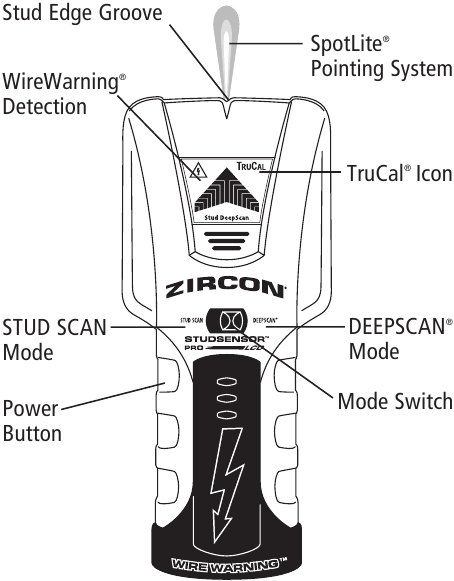
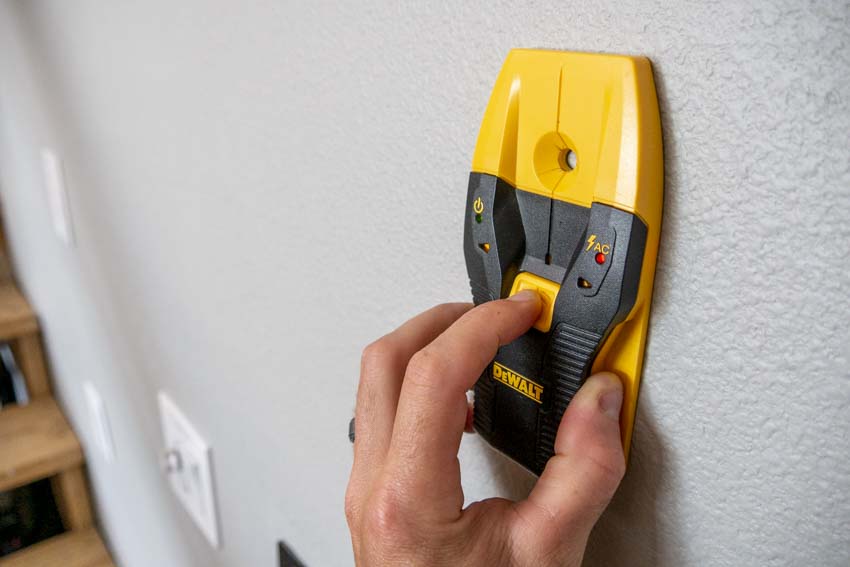
A magnetic stud finder and an electronic stud finder use different methods. A magnetic model looks for metal, while an electronic model may sense changes in wall density and can often estimate where a stud begins and ends.
For a simple drywall project, a magnetic tool can be quick and easy. An electronic scanner may offer more information when the wall has unusual construction or when you need to scan a larger area.

- ✦ Magnetic finder
Simple, battery-free, and focused on finding magnetic fasteners behind the wall.
- ✦ Electronic finder
Uses sensors to detect changes behind the wall and may offer stud-edge or center indications.
- ✦ Magnetic finder advantage
It has few controls and does not need calibration or batteries.
- ✦ Electronic finder advantage
It may work better when you need to detect framing that does not have an easy-to-find magnetic fastener pattern.
Which Tool Should You Use?
Choose based on the wall and the job. If you have ordinary drywall and need to find a few studs for a light or medium project, a magnetic tool may be all you need.
For complex walls, thick finishes, or critical mounting work, consider using a second method to confirm what is behind the surface. No stud finder should be treated as a guarantee that a wall is clear of pipes or wires.
- ✦ Simple drywall job
A magnetic finder can provide a quick and low-cost way to trace drywall fasteners.
- ✦ Complex wall
Use an appropriate electronic scanner or other inspection method when the wall construction makes magnetic detection uncertain.
Common Mistakes When Using a Magnetic Stud Finder
Most problems come from moving too fast or assuming that every magnetic response marks a stud. A careful search takes only a little longer and can save you from a misplaced hole.
Knowing the common mistakes is an important part of learning how to use a magnetic stud finder correctly. Use the magnet as a clue, then confirm the pattern before you mount anything.
- ✦ Moving too fast
A fast sweep can pass over a weak magnetic response without giving you time to notice it.
- ✦ Using one point only
One magnetic spot does not prove that you found the center of a stud.
- ✦ Ignoring metal objects
Corner bead, metal plates, pipes, and other objects can attract a magnet without marking a normal stud location.
- ✦ Assuming every stud has the same layout
Framing can change around windows, doors, corners, and wall openings.
- ✦ Drilling after the first hit
Finding one fastener is only the first step. Confirm the pattern before drilling.
How to Improve Accuracy
Use a slow, repeatable search pattern. Mark each reliable magnetic response, then step back and look at the overall pattern.
For an important mounting job, confirm the suspected stud with another method when practical. This is especially useful when the wall surface is thick, the construction is unknown, or the load is heavy.
- ✦ Scan twice
Repeat the sweep from the opposite direction to make sure you can reproduce the magnetic response.
- ✦ Mark lightly
Use removable marks until you are confident about the framing location.
- ✦ Use more than one clue
Combine fastener patterns, wall layout, and another detection method when the project calls for greater confidence.
Safety Tips Before You Drill Into a Wall
Finding a stud does not mean the space is safe to drill. Electrical wires, plumbing, and other hidden items may run through or near wall framing. A magnetic stud finder is not designed to detect every hazard behind a wall.
Use extra care near outlets, switches, plumbing fixtures, radiators, and other areas where utilities may be present. For high-risk work or uncertain walls, stop and use an appropriate inspection method or contact a qualified professional.
- ✦ Do not rely on the magnet for utility detection
A magnetic finder cannot reliably tell you whether electrical wires or pipes are behind the drilling point.
- ✦ Watch for warning signs
Avoid careless drilling near outlets, switches, plumbing fixtures, and other utility locations.
- ✦ Use proper mounting hardware
Select screws, anchors, brackets, and other hardware that match the wall type and the weight of the item.
- ✦ Stop if the wall seems unusual
Unknown construction, very thick walls, metal surfaces, or unexpected resistance are reasons to reassess before continuing.
Can a Magnetic Stud Finder Detect Wires?
A basic magnetic stud finder is not a reliable wire detector. It may react to some metal parts, but it cannot tell you whether an energized electrical cable is safely out of the drilling path.
Never assume that a clear magnetic scan means a wall is free of wires or pipes. Treat utility detection as a separate safety task.
- ✦ Use a proper detector
If you need to check for hidden electrical wires or other utilities, use a tool designed for that purpose.
Tips for Using a Magnetic Stud Finder for Common DIY Jobs
Once you know how to use a magnetic stud finder, the same basic method works for many home projects. The goal is always the same: find several reliable fasteners, trace the framing, and then choose the right mounting point.
For light objects, a wall anchor may be suitable when no stud is available. For heavier loads, attaching directly to suitable framing is often important, but the correct hardware and installation method depend on the item and wall construction.

- ✦ Hanging a picture
Use the magnet to find a nearby fastener and map the stud before choosing the hanger location.
- ✦ Mounting a shelf
Locate the framing points first, then place brackets where the wall structure and shelf design allow.
- ✦ Installing a TV mount
Map the studs carefully and follow the mount manufacturer’s instructions for stud spacing, screw size, and load limits.
- ✦ Mounting cabinets
Find and confirm the framing before fastening cabinets. Heavy cabinets need secure attachment and proper hardware.
- ✦ Installing hooks
For heavier hooks, finding framing can provide a stronger attachment than relying on a drywall-only anchor.
A Simple Mounting Workflow
Start by deciding where the item should go. Scan the area with the magnet and mark several fasteners. Then trace the likely stud line and compare it with the mounting holes on your hardware.
If the holes do not line up with suitable framing, do not force the installation. Adjust the location or choose hardware designed for the actual wall type and load.
- ✦ Plan first
Know where the item should sit before you begin marking the wall.
- ✦ Confirm the framing
Use several magnetic points to build confidence in the stud location.
- ✦ Match the hardware
Use mounting hardware that fits both the wall and the weight of the item.