How to Remove a Stuck Mower Blade Bolt Without an Impact Wrench
A stuck mower blade bolt can feel impossible when you do not have an impact wrench. In most cases, you can remove it with common hand tools. The key is to control the mower, use the right socket, and increase force in small steps.
When working on lawn mowers, I have found that brute force is often the wrong first move. Rust, dried grass, dirt, and old thread-locking compound can make a blade bolt very tight. A good setup and a long-handled ratchet or breaker bar can often do the job without power tools.
This guide explains **how to remove stuck mower blade bolt without impact wrench** in a safe, simple order. It also covers stripped bolts, heat, penetrating oil, common mistakes, and what to do when the bolt still will not move.
Why a Mower Blade Bolt Gets Stuck
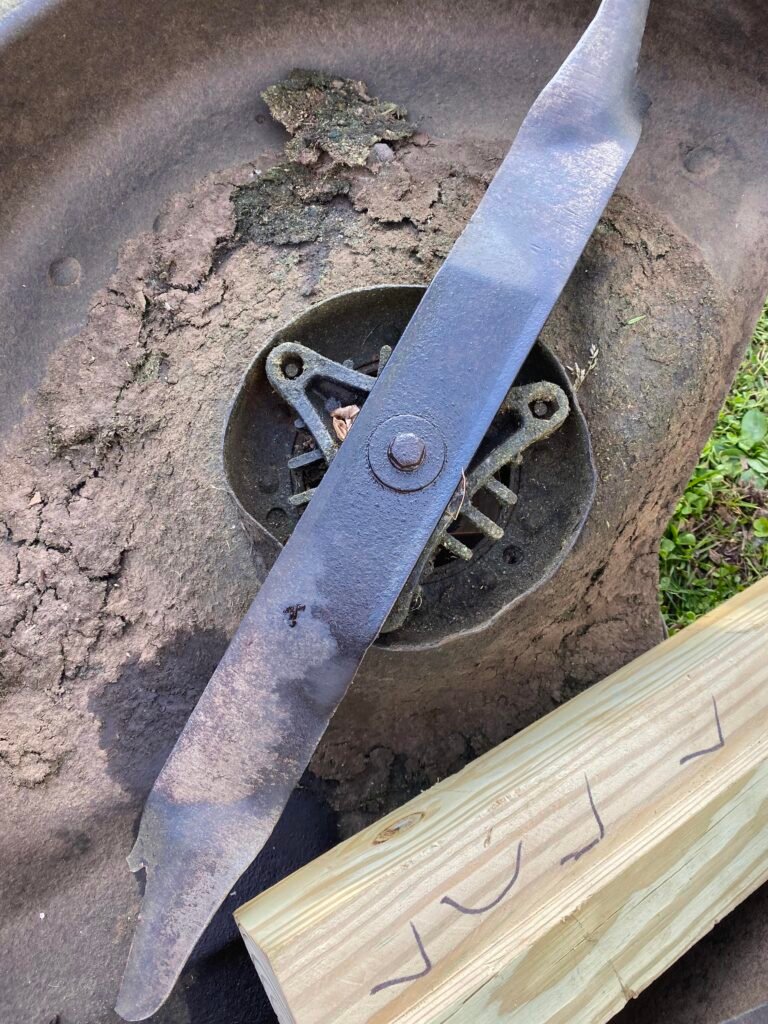
Before learning how to remove stuck mower blade bolt without impact wrench, it helps to know why the bolt will not turn. Blade bolts sit below the mower deck. They often face wet grass, soil, moisture, and fine debris. Over time, these conditions can cause rust and corrosion.
A bolt can also become tight from repeated use. Dirt may pack around the threads. Old grease can turn hard. Some mower designs also use a locking washer or other hardware that adds resistance.
The bolt may feel even tighter because the blade turns as you pull on the wrench. That is why blade control is just as important as wrench size.
- ✦ Rust
Rust can bond the bolt threads to the blade adapter or crankshaft.
- ✦ Debris
Grass, soil, and moisture can collect around the bolt and promote corrosion.
- ✦ Over-tightening
A bolt installed with too much force can be very hard to remove by hand.
- ✦ Old thread locker
Thread-locking compound may add resistance, especially after years of use.
Check the Bolt Before Applying Force
Look closely at the bolt head before you start. Make sure the socket fits all the way onto the head. Do not use a socket that feels loose. A poor fit can round the corners and turn a simple job into a much harder repair.
- ✦ Clean the area
Brush away packed grass, dirt, and rust so the socket can sit fully on the bolt.
- ✦ Confirm the socket
Use the exact size called for by your mower manual and prefer a six-point socket for a tight bolt.
Safety Steps Before You Remove the Blade Bolt
Safety comes first when working under a mower deck. A mower blade is sharp and can move if the machine is not secured. Never rely on the blade brake, transmission, or your hand to hold the blade in place.
For a gas mower, turn the engine off and disconnect the spark plug wire before working near the blade. Keep the wire away from the plug so the engine cannot start by accident. For an electric or battery mower, remove the battery or disconnect the power source according to the manufacturer’s instructions.
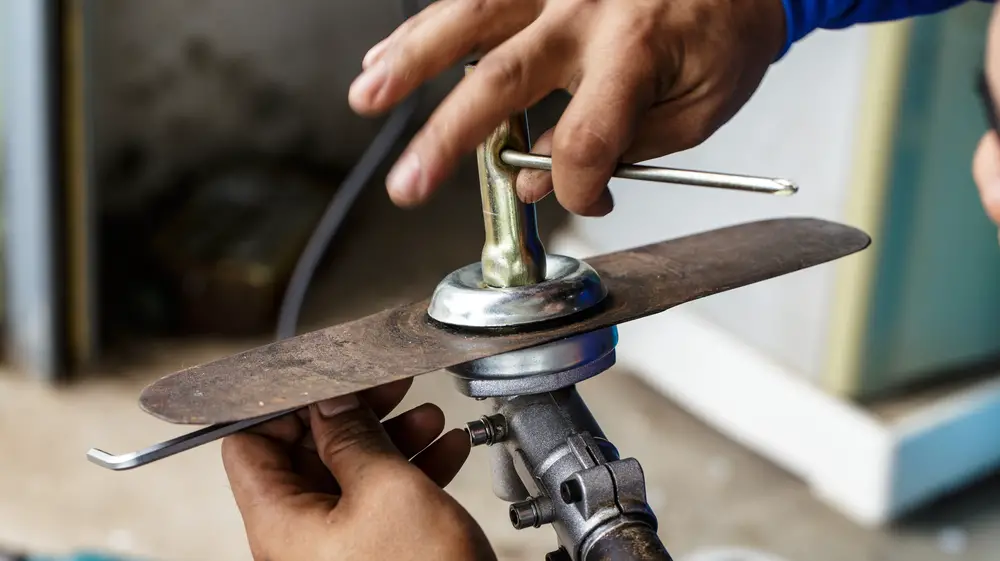
Wear work gloves and eye protection. Keep your hands away from the blade edge, and use a proper blade-holding tool or a solid block of wood placed in a safe position to stop blade movement.
- ✦ Disconnect power
Remove the spark plug connection on a gas mower or remove the battery and follow the mower’s service instructions on an electric model.
- ✦ Secure the mower
Park it on a stable, level surface and prevent it from moving while you work.
- ✦ Protect your hands
Wear sturdy gloves and avoid touching the sharp cutting edge.
- ✦ Use eye protection
Eye protection helps guard against rust flakes, dirt, and debris.
- ✦ Follow the manual
Check the mower’s service instructions for the correct lifting position, blade direction, and removal procedure.
Do Not Work Under an Unsafe Mower
Do not crawl under a mower that can fall or roll. On riding mowers, use the correct lifting equipment and approved support points. Never place your body under a raised machine that is held up only by a jack.
- ✦ Stable support
Use equipment rated for the mower and support it as the manufacturer directs.
Tools You Need Without an Impact Wrench
You do not need an impact wrench to remove most stuck mower blade bolts. A quality hand tool setup gives you good control. The goal is to place force on the bolt without damaging the bolt head or mower parts.
A breaker bar is useful because its long handle gives you more leverage than a short ratchet. If you do not have one, a long-handled ratchet may work. Use a socket that fits the bolt exactly.
Avoid using an adjustable wrench on a very tight blade bolt. It can slip and damage the bolt head. A six-point socket usually gives a better grip than a twelve-point socket.

- ✦ Six-point socket
Use the correct size so the socket grips the flat sides of the bolt head.
- ✦ Breaker bar
A long handle gives you more turning force with less effort.
- ✦ Penetrating oil
Use a penetrating oil made for loosening corroded fasteners.
- ✦ Wire brush
Brush away rust and packed debris around the bolt.
- ✦ Rubber mallet or small hammer
Light taps can help disturb rust without striking the bolt hard.
- ✦ Blade holder
A proper blade-holding tool can keep the blade from moving while you turn the bolt.
Breaker Bar Versus Ratchet
A breaker bar is often the simplest substitute for an impact wrench. It lets you apply slow, steady force. If you use a ratchet, avoid sudden jerks that may damage the tool or cause your hand to slip.
- ✦ Use steady force
Increase pressure slowly rather than jumping on the handle.
- ✦ Keep the socket straight
A straight socket connection reduces the chance of rounding the bolt.
How to Remove a Stuck Mower Blade Bolt Without an Impact Wrench
The safest approach is to work from mild methods toward stronger ones. This is the core process for **how to remove stuck mower blade bolt without impact wrench**. Stop as soon as the bolt begins to move, then remove it with steady pressure.
First, clean the bolt and the area around it. Push the socket fully onto the bolt head. Make sure the blade is secure and that the wrench has a clear path to move.
Next, apply penetrating oil around the bolt. Give it time to work. Follow the product label for use and wait time. Then fit the breaker bar and apply slow pressure in the correct loosening direction for your mower.
If the bolt does not move, tap the bolt head or nearby metal lightly with a suitable hammer. The small vibration can help break loose rust. Apply more penetrating oil and try again rather than using extreme force at once.
If your mower maker allows heat in that area, controlled heat can be another option. Keep heat away from fuel, oil, plastic parts, electrical parts, and other materials that can burn or melt. Never use an open flame near gasoline or fuel vapors.

- ✦ Step 1: Disconnect power
Make sure the mower cannot start while you work.
- ✦ Step 2: Secure the blade
Use a blade holder or another manufacturer-approved method to stop blade movement.
- ✦ Step 3: Clean the bolt
Remove grass, dirt, and loose rust from the bolt and nearby area.
- ✦ Step 4: Apply penetrating oil
Apply the oil around the fastener and allow it to work according to its label.
- ✦ Step 5: Fit a six-point socket
Push the correct socket fully onto the bolt head.
- ✦ Step 6: Add leverage
Use a breaker bar or long-handled ratchet and apply slow, controlled force.
- ✦ Step 7: Use light tapping if needed
Tap the tool or bolt area lightly to help disturb corrosion, then try again.
- ✦ Step 8: Escalate carefully
If the bolt still will not move, consider controlled heat or a specialist fastener-removal method that suits the mower.
Use Leverage Instead of Sudden Force
Longer handles create more torque. This is why a breaker bar can work well when a short ratchet cannot. Keep your body balanced and use controlled pressure so the tool does not slip.
A common mistake is adding a long pipe to a ratchet that was not designed for high loads. That can damage the ratchet. A purpose-built breaker bar is the safer choice when high hand force is needed.
- ✦ Stay aligned
Keep the socket square on the bolt while you apply force.
- ✦ Pull safely
Use a controlled motion that keeps your hands and body away from the blade and possible slip path.
Try Tightening Slightly First
In some cases, a tiny movement in the tightening direction can help break a seized fastener loose. Use very little force. Then return to the loosening direction.
Do not keep cycling a badly damaged bolt. If the head starts to deform, stop and choose a removal method made for damaged fasteners.
- ✦ Use a small movement
The goal is to disturb the bond, not tighten the bolt further.
What to Do When Penetrating Oil Does Not Work
Penetrating oil is helpful, but it is not magic. Heavy rust can take time to loosen. Oil may also have trouble reaching the deepest part of the threaded joint.
Clean the area again and give the oil more time if the bolt is heavily corroded. Light tapping can help. You can also repeat the oil-and-wait cycle before moving to a stronger method.
If you use heat, follow the mower maker’s service guidance. A heated fastener can expand and sometimes help break a rust bond, but a mower contains fuel, oil, wiring, paint, plastic, and other parts that can be damaged by heat.
- ✦ Repeat the treatment
A second application of penetrating oil may help when corrosion is severe.
- ✦ Tap lightly
Gentle vibration can help disturb rust around the fastener.
- ✦ Use heat with caution
Only use controlled heat when it is safe for the mower and the manufacturer’s instructions allow it.
- ✦ Know when to stop
If the bolt head is deforming or the mower structure may be damaged, stop before applying more force.
Why Heat Can Help
Metal expands when heated. Controlled heating can sometimes break the bond between rusted metal surfaces. However, this method needs care because heat can ignite fuel vapors and damage nearby parts.
For that reason, do not treat a mower like a bare steel machine. If there is any fuel, oil, or combustible material near the work area, use another method or have a qualified mower technician handle the fastener.
- ✦ Avoid open flames
Never use a torch near gasoline, fuel vapors, or other flammable materials.
How to Remove a Stripped Mower Blade Bolt
A stripped bolt needs a different approach. Once the corners are rounded, a normal socket may no longer grip well. Continuing to pull harder can make the damage worse.
Start with a socket designed for damaged fasteners if the bolt head still allows it. Such sockets can bite into rounded metal. Use the smallest suitable size that fits firmly, and keep the tool straight.
If the bolt remains stuck, a professional may need to use a bolt extractor, cut a slot, drill the fastener, or replace damaged parts. The right method depends on the bolt design and how much access you have.

- ✦ Stop using a loose socket
A loose fit can quickly round the remaining corners.
- ✦ Try a damaged-fastener socket
A dedicated extractor socket may grip a rounded bolt head.
- ✦ Protect the adapter
Avoid methods that could damage the blade adapter, spindle, or crankshaft.
- ✦ Consider professional help
If extraction requires drilling or cutting near important mower parts, a repair shop may be the safer option.
Do Not Weld or Cut Without a Clear Plan
Welding a nut onto a damaged bolt can work on some machines, but it requires skill and creates heat near mower components. Cutting or drilling also creates metal chips and can damage the spindle if you go too far.
These methods make sense only when you understand the fastener and the parts around it. If you do not, stop before the repair becomes more expensive than the original problem.
- ✦ Protect critical parts
The goal is to remove the bolt without damaging the spindle, shaft, adapter, or deck.
Common Mistakes to Avoid
Many damaged blade bolts come from using the wrong tool or too much force too soon. The most common mistake is putting a loose socket on a tight bolt and pulling as hard as possible.
Another mistake is forgetting how sharp and heavy a mower blade can be. A slipping wrench can send your hand toward the blade or cause the mower to shift.
When learning **how to remove stuck mower blade bolt without impact wrench**, patience is a tool. Clean the fastener, secure the blade, use penetrating oil, and increase force one step at a time.
- ✦ Using the wrong socket
The wrong size can slip and round the bolt.
- ✦ Using a twelve-point socket first
A six-point socket often gives better contact on a stubborn hex bolt.
- ✦ Pulling at an angle
An angled socket can slip and damage the fastener.
- ✦ Holding the blade by hand
Use a proper holding method instead of putting your hand near the blade.
- ✦ Using a torch near fuel
Open flames create a serious fire risk around fuel and vapors.
- ✦ Forcing a damaged bolt
Stop when the bolt head begins to round and change methods.
Why More Force Is Not Always Better
More torque can help a sound bolt, but it can also break a bolt or damage the part it is holding. A damaged bolt can turn a routine blade change into an extraction job.
Use the smallest amount of force that works. If the fastener does not respond, change the conditions around it instead of simply pulling harder.
- ✦ Change the method
Try cleaning, penetrating oil, light tapping, or a suitable extractor before escalating.
How to Prevent a Mower Blade Bolt From Sticking Again
Once you remove the blade, prevention can make the next blade change much easier. Clean the bolt, inspect the threads, and check the blade adapter for damage. Replace worn or damaged hardware rather than putting it back into service.
Use the fastener type and tightening method specified by the mower maker. Do not guess at torque when the manual provides a value. Over-tightening can make future removal difficult and may damage parts.
Keep the underside of the mower as clean and dry as practical. Regular maintenance helps limit the rust and debris that make blade bolts hard to remove.
- ✦ Inspect the threads
Replace a damaged or badly corroded bolt instead of reusing it.
- ✦ Use the specified hardware
Match the replacement bolt and washers to the mower manufacturer’s requirements.
- ✦ Follow the torque specification
Use the mower manual’s tightening value when one is provided.
- ✦ Clean the blade area
Remove packed grass and dirt during routine service.
- ✦ Store the mower properly
Keep the machine protected from unnecessary moisture when possible.
Should You Add Anti-Seize?
Do not assume anti-seize is suitable for every mower blade bolt. It can change the friction of a threaded joint and may affect the torque needed to reach the correct clamping force.
Use only products and procedures that match the mower manufacturer’s service guidance. If the manual does not call for anti-seize, follow the manufacturer’s stated installation method.
- ✦ Follow the manual
The mower maker’s instructions should take priority over a general fastener tip.