How Much Torque Do I Need for Impact Wrench: Essential Guide
For most automotive work, an impact wrench with 300–500 ft-lb of nut-busting torque is enough for wheel lug nuts, brake work, and routine repairs. Choose more—roughly 700 ft-lb or greater—when dealing with heavily rusted fasteners, trucks, trailers, or frequent heavy-duty work.
This article explains why the number on an impact wrench can be misleading, how fastening torque differs from breakaway torque, and how to match tool power to the job instead of simply buying the strongest model available. The right choice depends on the fastener size, corrosion, vehicle type, access, and whether the wrench is cordless, corded, or pneumatic.
A common assumption is that extra torque is always safer because it makes difficult fasteners come off sooner. That can lead to unnecessary cost, damaged studs, rounded hardware, over-tightened bolts, and poor control during installation. By the end, you will be able to compare torque ratings, estimate the power needed for automotive and heavier work, recognize when an impact wrench is too powerful, and decide what final tightening method to use.
Understanding the Torque Ratings on an Impact Wrench
Impact wrench specifications usually list at least two torque figures: fastening torque and breakaway torque. Fastening torque describes the force the tool can apply while tightening a fastener, while breakaway torque—sometimes called nut-busting torque—describes the tool’s ability to loosen a stubborn fastener.
Breakaway torque is often the larger number and the one most prominently advertised. It is useful for comparing removal capability, but it does not mean the wrench should be used to tighten every bolt to that value. A tool rated at 1,000 ft-lb of nut-busting torque may provide substantially less controlled tightening torque.
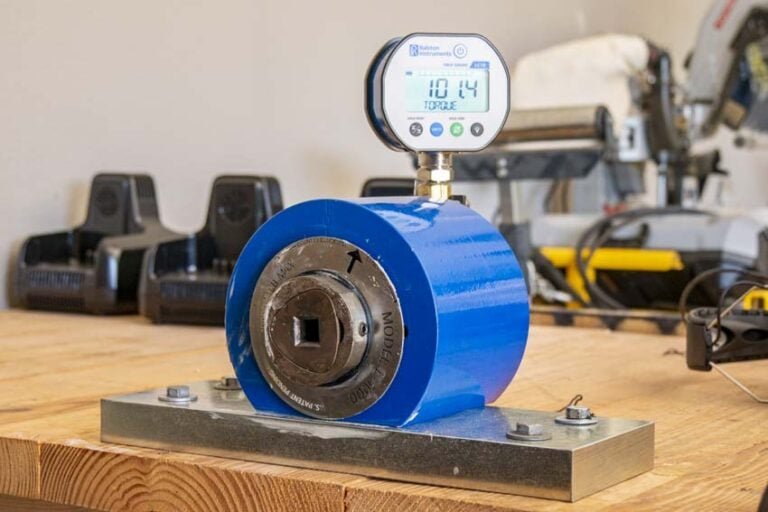
Manufacturers may test these figures under different conditions, so ratings are not always directly comparable. Battery charge, air pressure, hose size, socket quality, fastener condition, and test equipment all affect real-world performance.
For that reason, treat a published rating as a general performance class rather than a guaranteed result on every vehicle. A compact cordless wrench may handle clean lug nuts easily but struggle with rusted suspension bolts, even if its advertised number appears close to that of a larger model.
How Much Torque Is Enough for Common Automotive Work?
For a typical car or light SUV, a mid-range impact wrench producing about 300–500 ft-lb of breakaway torque is usually a practical choice. This range provides enough reserve for most wheel lug nuts, brake caliper hardware, suspension components, and general maintenance.
A tool in this class is generally more versatile than a small driver-style impact wrench. It can remove properly installed lug nuts and many moderately tight bolts without being excessively heavy or difficult to control.
Use the following ranges as starting points rather than exact requirements:
- 150–250 ft-lb breakaway torque: light-duty repairs, small cars, motorcycles, lawn equipment, and clean fasteners.
- 300–500 ft-lb: most passenger cars, crossovers, light SUVs, wheel removal, brake work, and routine garage repairs.
- 500–800 ft-lb: larger SUVs, pickup trucks, trailers, frequent suspension work, and fasteners exposed to corrosion.
- 800 ft-lb or more: heavy-duty trucks, commercial equipment, large axle hardware, and severely seized fasteners.
These figures refer primarily to loosening capability. For tightening, a lower and more controlled setting is normally appropriate because the vehicle manufacturer’s torque specification—not the wrench’s maximum output—determines the correct result.
Torque Needs for Lug Nuts and Wheel Installation
Most passenger-vehicle lug nuts require approximately 80–150 ft-lb of final tightening torque, although the exact specification varies by vehicle, wheel, and fastener. Many pickups, heavy SUVs, and commercial vehicles use higher values.
Because lug nuts are commonly installed within this range, a wrench capable of 300–500 ft-lb of breakaway torque is usually sufficient for removal. It also gives useful margin when a shop or previous owner has over-tightened the nuts slightly.
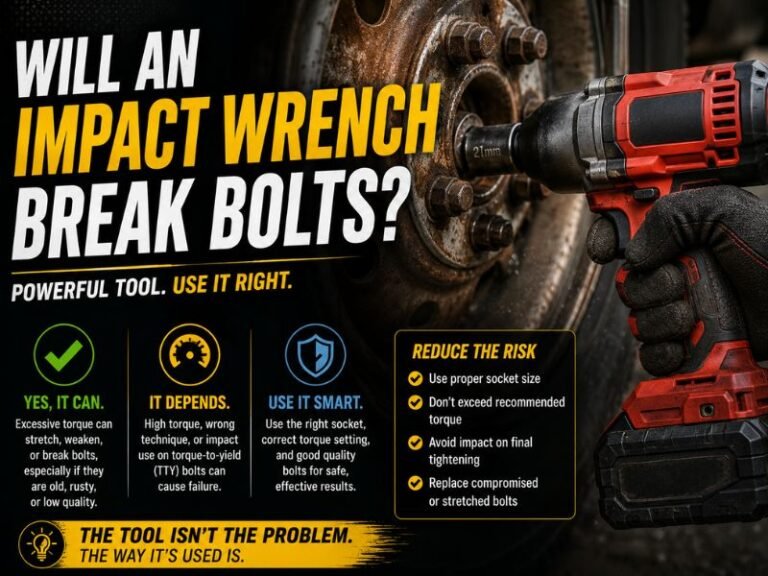
Do not use the maximum setting of a powerful impact wrench to install lug nuts. Even a brief burst from a high-torque tool can exceed the specification, especially with an impact-rated socket and a fully charged battery.
The correct process is to run the lug nuts down gently, then tighten them with a calibrated torque wrench. Tighten in the vehicle manufacturer’s specified sequence, commonly a crisscross or star pattern, and verify the specification for the exact vehicle.
Never assume that “tight enough” is acceptable. Over-tightening can stretch wheel studs, distort brake rotors or wheels, damage threads, and make roadside removal difficult. Under-tightening can allow wheel movement and create a serious safety hazard.
Choosing Torque for Rusted or Seized Fasteners
Rust changes the calculation because corrosion can create far more resistance than the original tightening torque. A bolt that was installed at 100 ft-lb may require several times that amount to break loose after years of rust, heat cycles, dirt, or thread damage.
For occasional rusted automotive fasteners, a wrench rated around 500–700 ft-lb of breakaway torque offers useful reserve. A high-output tool in the 700–1,000 ft-lb class may be justified for older trucks, suspension components, trailer hardware, or regular repair work in areas where road salt is common.
More power is not always the best first response. Penetrating fluid, a correctly sized impact socket, heat applied with appropriate caution, manual torque from a breaker bar, or controlled vibration may loosen a fastener with less risk of snapping a bolt or damaging the surrounding component.
Use extra care with aged suspension bolts and exhaust hardware. A fastener may be difficult to remove not because it needs more torque, but because corrosion has weakened it. Applying increasingly high impact force can shear the bolt inside the part and turn a simple repair into an extraction or replacement job.
Battery, Air, and Socket Choices Affect Real Torque
The wrench’s power source strongly affects performance. A cordless impact wrench may deliver its rated output only with a fully charged battery, the correct high-output battery pack, and a tool setting that permits maximum power.
Cold temperatures, an aging battery, electronic protection, and repeated use can reduce output. A compact 12-volt model is convenient and may be ideal for light work, but an 18- or 20-volt high-torque model is generally better for stubborn automotive fasteners.
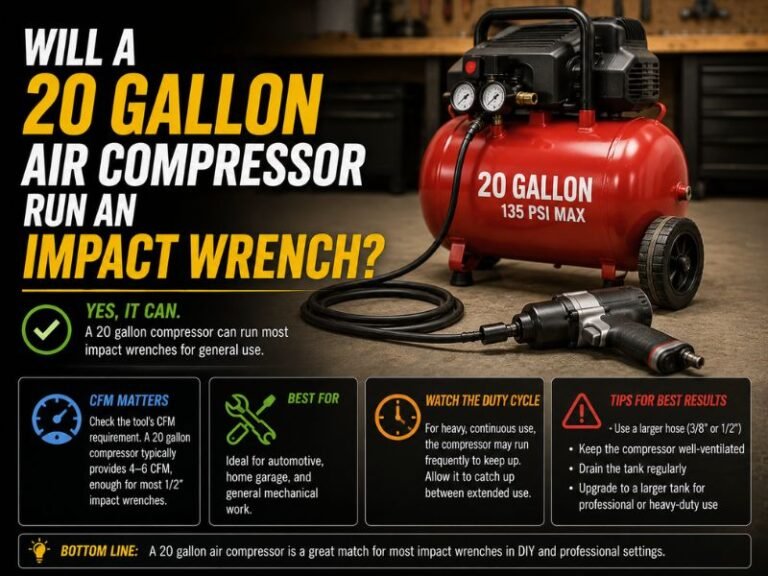
Pneumatic impact wrenches depend on the air compressor, regulator, hose, and fittings. A compressor that cannot maintain the manufacturer’s required airflow and pressure will cause the wrench to slow down or lose impact strength, even if the tool itself has a high rating.
Long, narrow hoses and restrictive fittings can also reduce available air at the tool. For professional or frequent use, compare the wrench’s air consumption with the compressor’s delivered airflow rather than looking only at tank size.
The socket matters as well. Use impact-rated sockets designed to withstand repeated shock loads. Standard chrome hand-tool sockets can crack or shatter when used with an impact wrench, creating a risk of flying fragments.
A six-point socket is usually preferable because it contacts the flat sides of the fastener and reduces the chance of rounding. Remove dirt, paint, and rust from the fastener before engagement, and make certain the socket is fully seated.
Matching the Wrench to Fastener Size and Job Type
Fastener size is a useful guide, but it does not determine torque by itself. Material, thread pitch, lubrication, corrosion, joint design, and the specified tightening value all affect the force required.
A 1/4-inch or 3/8-inch impact wrench is suitable for small engine components, interior hardware, clamps, and light mechanical work. It is not normally the right tool for full-size wheel lug nuts or large suspension fasteners.
A 1/2-inch impact wrench is the most versatile size for automotive work. It offers a useful balance of power, socket availability, physical size, and control for cars, SUVs, pickups, and trailers.
A 3/4-inch or 1-inch impact wrench is intended for larger fasteners and heavy equipment. These tools are heavier, louder, and more expensive, and they can damage smaller hardware if used without careful control.
For a homeowner maintaining one passenger vehicle, buying a 1,000 ft-lb wrench may provide little practical advantage over a quality 400–600 ft-lb model. For a mechanic servicing commercial trucks every day, that additional capacity may reduce downtime and avoid repeated use of a breaker bar.
When Too Much Torque Becomes a Problem
High torque can break fasteners, but it can also break the parts around them. Common consequences include twisted studs, stripped threads, cracked sockets, damaged wheel locks, sheared bolts, and distorted aluminum components.
Impact tools also provide less feedback than a hand torque wrench. The sound and duration of hammering do not reliably tell you the final clamp load, because friction and lubrication vary from one fastener to another.
Use the lowest effective power setting for installation and reserve maximum power for removal when necessary. If the tool has adjustable speed or torque modes, begin at a low setting and increase gradually.
Be especially cautious with small bolts, aluminum threads, spark plugs, drain plugs, wheel locks, and fasteners with published torque limits. These parts may require hand tools or a torque wrench rather than an impact wrench.
Wear eye protection and hearing protection, keep hands clear of the socket, and inspect sockets and extensions for cracks. Do not hold a rotating socket by hand, and disconnect pneumatic equipment before servicing or changing parts.
A Practical Way to Select Your Impact Wrench
Start with the hardest job you expect to perform regularly, not the most extreme repair you might encounter once. Then select enough breakaway torque to provide a reasonable margin without making the tool unnecessarily heavy or aggressive.
- Identify the vehicles and equipment you will service.
- Check the largest common fasteners and the manufacturer’s tightening specifications.
- Choose a 1/2-inch drive for general automotive versatility.
- Look for about 300–500 ft-lb of breakaway torque for ordinary car and SUV work.
- Move toward 500–800 ft-lb for pickups, trailers, rust-prone repairs, or frequent suspension work.
- Confirm that your battery system or air compressor can support the tool.
- Buy impact-rated sockets and use a torque wrench for final tightening.
Consider weight and balance before choosing a high-output model. A wrench that is powerful enough but comfortable to position may be more useful than a heavier tool that is difficult to hold in confined spaces.
Also check whether the advertised figure is fastening torque, breakaway torque, or both. Comparing a model’s 500 ft-lb fastening rating with another model’s 1,000 ft-lb breakaway rating can create a misleading impression of performance.
Frequently Asked Questions About Impact Wrench Torque
How much torque do I need for impact wrench use
About 300–500 ft-lb of breakaway torque is usually enough for passenger-car lug nuts. The exact removal requirement depends on the vehicle, previous tightening, corrosion, and wheel hardware, while final installation must follow the vehicle’s specified torque with a torque wrench.
Is 200 ft-lb enough for an impact wrench?
It can be enough for light-duty work and clean fasteners. A 200 ft-lb tool may remove lug nuts that were correctly installed, but it can struggle with over-tightened, rusted, or larger fasteners.
Is 500 ft-lb enough for a truck?
Five hundred ft-lb is often adequate for light-duty pickups, but it may be limiting for heavy trucks or severely corroded hardware. Choose closer to 700–1,000 ft-lb when working regularly on large suspension, axle, or commercial-vehicle fasteners.
Can an impact wrench over-tighten lug nuts?
Yes, an impact wrench can easily over-tighten lug nuts. Use a low setting to seat them, avoid extended hammering, and finish with a torque wrench set to the vehicle manufacturer’s specification.
Do I need a high-torque impact wrench for basic home
Most home mechanics do not need the highest-output model available. A quality 1/2-inch wrench with roughly 300–500 ft-lb of breakaway torque covers routine wheel, brake, and general automotive work.
Does a larger battery make an impact wrench stronger?
A compatible high-output battery can help a cordless wrench maintain performance under load. It cannot transform a low-torque tool into a high-torque model, and the tool’s motor, impact mechanism, electronics, and design still set the primary limit.
When should I use a breaker bar instead?
Use a breaker bar when you need controlled leverage or when an impact wrench risks damaging the fastener. It is useful for evaluating resistance, loosening delicate hardware, and applying steady force before using an impact tool for faster removal.
Conclusion: Choose Enough Torque, Then Tighten Precisely
For most automotive owners, a 1/2-inch impact wrench with 300–500 ft-lb of breakaway torque is the best starting point. Step up to roughly 500–800 ft-lb for trucks, trailers, rust-prone repairs, and frequent heavy work, while reserving larger tools for genuinely large or commercial fasteners.
The major limitation is that torque ratings do not guarantee a specific result, and an impact wrench is not a substitute for a torque wrench during installation. Match the tool to the job, use impact-rated sockets, and verify every critical fastener with the manufacturer’s specified final torque.