Are Bauer Impact Wrenches Any Good: Clear Answers and Key Facts
Yes, Bauer impact wrenches can be good for the money, especially for home mechanics, tire changes, brake work, construction, and occasional equipment repairs. They are not usually the best choice for nonstop professional use, extreme fastening jobs, or buyers who need the most refined trigger control and longest service life.
The deciding detail is often not the advertised torque number. A wrench may look powerful on the box yet feel less useful if the battery is small, the tool is bulky, the fastener is badly seized, or the user expects it to replace a calibrated torque wrench. Bauer’s cordless tools offer accessible performance through Harbor Freight’s ecosystem, but value depends on the specific model, battery, workload, and warranty expectations.
This article explains where these impact wrenches perform well, where they fall short, and how to judge one before buying. You will learn what the torque ratings really mean, whether Bauer is suitable for automotive work, how its battery platform affects ownership cost, which limitations matter in professional settings, and what safety steps prevent damaged fasteners or improperly tightened wheels.
What Bauer Impact Wrenches Do Well
Bauer impact wrenches are designed to deliver high rotational force in a portable cordless package. That makes them far more convenient than a hand ratchet for repetitive work such as removing lug nuts, loosening suspension hardware, assembling structural fasteners, or taking apart machinery.
The strongest reason to consider Bauer is value. The initial tool price is often lower than premium professional brands, while the performance is sufficient for many household and light-to-moderate automotive tasks. A buyer who uses an impact wrench a few times each month may not benefit enough from an expensive professional model to justify the difference.
Bauer tools also appeal to people who already own compatible Bauer batteries and chargers. Adding a bare tool can be less expensive than starting a new battery platform, although the total cost should include the battery if one is not already available.
For common jobs, the advantages are practical:
- Fast removal of many nuts and bolts
- Less hand fatigue than using a long ratchet
- Cordless mobility around a vehicle or jobsite
- Useful power for lug nuts and general mechanical repairs
- Simple ownership for occasional users
That does not mean every Bauer impact wrench performs identically. Compact models emphasize maneuverability, while larger high-torque models provide more loosening force but add weight and can be harder to control in confined spaces.
Understanding Bauer Torque Ratings
Torque is the most frequently misunderstood part of impact-wrench shopping. A listed rating may describe maximum fastening torque, breakaway torque, or another test condition. Those figures are useful for comparing models within a brand, but they do not guarantee that the tool will remove every bolt marked with a similar number.
Breakaway torque is not a promise that a wrench will loosen a rusted fastener in real conditions. Results change with battery charge, temperature, socket fit, bolt corrosion, thread damage, extension bars, and how long the tool is allowed to hammer.
An impact wrench also produces short bursts of force rather than the smooth leverage of a breaker bar. A stuck bolt may need penetrating oil, heat applied by a trained person, a manual breaker bar, or professional service. Continuing to hammer a weak or damaged fastener can round the head, break the bolt, or damage the tool.
Choose torque with the job in mind rather than buying the largest number available. A compact 3/8-inch model may be easier to use on engine-bay fasteners, while a 1/2-inch model is generally more appropriate for wheel lugs, suspension work, and larger hardware. Very high-output models can be unnecessarily heavy for routine maintenance.
Socket choice matters as well. Use impact-rated sockets, not ordinary chrome hand-tool sockets. Impact sockets are made to tolerate repeated shock loading; standard sockets can crack or shatter when used with a powered impact tool.
Are Bauer Impact Wrenches Good for Automotive Work?
For home automotive work, Bauer is often a reasonable choice. Removing lug nuts, changing brakes, replacing suspension components, servicing trailers, and disassembling older vehicles are all tasks where cordless impact power can save time.
A Bauer wrench is especially practical when the alternative is relying on a small hand ratchet or an underpowered drill. It can quickly spin off a nut after the initial breakaway and run fasteners down during assembly without requiring constant manual effort.
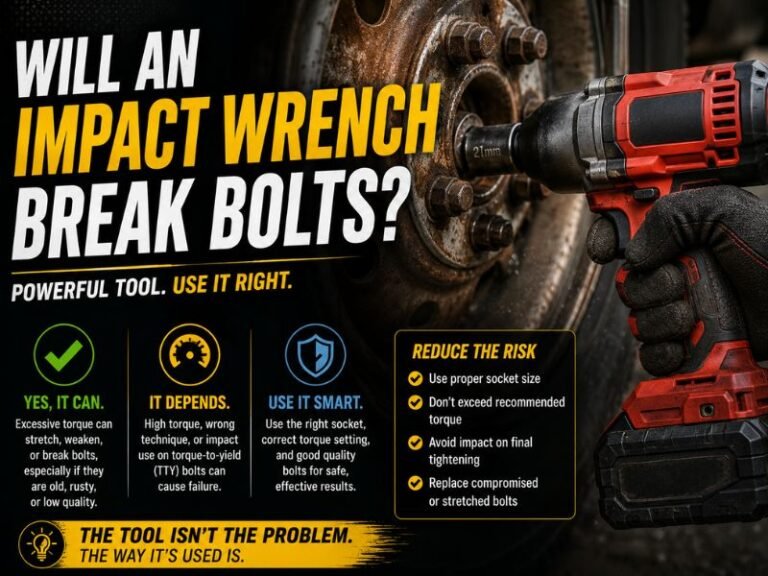
Still, the tool should not be treated as the final authority on tightening torque. An impact wrench can install a lug nut unevenly or tighten it beyond the vehicle manufacturer’s specification, particularly when used with a fully charged battery and no control of speed or impact duration.
The correct process for wheels is straightforward:
- Start each lug nut by hand to avoid cross-threading.
- Use the impact wrench only to run the nut down, preferably at a low setting or with short trigger pulls.
- Lower the vehicle according to the vehicle manufacturer’s procedure.
- Finish tightening with a properly set torque wrench.
- Recheck the lug torque as required after installation or wheel service.
Never use the impact wrench alone to determine whether a wheel is safely tightened. The tool is excellent for speed, but a torque wrench is the appropriate instrument for final, measured tightening.
Important Limitations to Consider
The biggest limitation is consistency under demanding use. A Bauer impact wrench may handle occasional repairs well but can show more noticeable heat buildup, battery drain, or wear when used continuously in a busy shop or on a commercial jobsite.
Premium tools often provide smoother variable-speed control, better ergonomics, more durable switches, stronger impact mechanisms, and broader service support. Those differences matter more when the wrench is used every day, dropped frequently, exposed to harsh conditions, or depended on for income.
Battery runtime is another practical constraint. High-torque impacts consume power quickly, especially when loosening large or rusted fasteners. A larger-capacity battery may extend working time, but it also increases weight and can make the tool tiring during overhead or awkward work.
Other possible drawbacks include:
- Greater weight than compact professional alternatives
- Less refined speed control on some models
- More vibration during extended impact use
- Reduced performance as the battery charge falls
- Limited usefulness in very tight spaces
- Potentially higher long-term cost if batteries need replacement
Warranty terms and replacement support should also be checked before purchase. Policies can vary by product and may change, so confirm the current coverage, return period, battery warranty, and availability of replacement components rather than assuming every Bauer item has identical support.
Choosing the Right Bauer Impact Wrench
The best Bauer model depends on the fasteners, access, and frequency of use. Start with the drive size because it influences socket availability, tool dimensions, and the kind of work the wrench can comfortably handle.
3/8-inch models
A 3/8-inch impact wrench is suited to smaller automotive and mechanical fasteners. Its compact head can be valuable around brackets, engine components, and suspension areas where a larger 1/2-inch tool will not fit.
It is not the ideal primary choice for stubborn wheel lugs or heavy structural bolts. Buyers who want one tool for general vehicle maintenance should consider whether the smaller drive gives up too much capacity.
1/2-inch models
A 1/2-inch Bauer impact wrench is the more versatile choice for many vehicle owners. It works with common impact sockets for lug nuts and larger fasteners, making it suitable for tire work, brakes, suspension, trailers, and general repair.
The tradeoff is size and weight. A high-torque 1/2-inch wrench can be cumbersome for small fasteners, and excess power raises the risk of overtightening or damaging threads.
Compact versus high-torque designs
Compact tools make sense when access and comfort matter more than maximum force. High-torque tools are preferable for larger fasteners and difficult removal, but they are not automatically better for every job.
Consider these questions before buying:
- Will the wrench mainly remove wheel lugs or smaller machine fasteners?
- Do you already own a Bauer battery and charger?
- Can you comfortably hold the tool at its expected weight?
- Do you need access inside tight spaces?
- Will the tool be used occasionally or throughout a workday?
- Do you have a torque wrench for final tightening?
How Bauer Compares With Premium Brands
Bauer generally competes on affordability rather than maximum refinement. A premium impact wrench may offer better balance, longer expected service under heavy use, more precise electronic controls, and a deeper professional support network.
That difference is not always visible during a short home repair. If both tools remove the same lug nuts and the Bauer costs substantially less, the lower-priced option may deliver better value for an occasional user.
For a professional technician, fleet mechanic, contractor, or anyone who cannot afford downtime, the calculation changes. Reliability per working hour, battery availability, repair access, and ergonomic comfort may be worth more than the initial purchase price.
The fair comparison is not simply Bauer versus an expensive brand. Compare the complete ownership package: tool, batteries, charger, socket compatibility, warranty, replacement cost, expected workload, and the consequences if the tool fails during an important job.
Safe and Effective Use
Impact wrenches are powerful tools, and safe operation requires more than selecting the right socket. Read the model’s instructions, inspect the tool and battery, and keep the work area stable before applying force.
Use the following precautions:
- Wear eye protection and appropriate hearing protection.
- Use only impact-rated sockets and accessories.
- Keep hands, clothing, and cords away from the rotating anvil.
- Inspect sockets for cracks, distortion, or excessive wear.
- Remove the battery before changing accessories or servicing the tool.
- Do not use a damaged, swollen, overheated, or leaking battery.
- Support the vehicle with properly rated jack stands; never rely on a jack alone.
- Use short trigger pulls near the final tightening point.
When a fastener will not move, stop and diagnose the problem. A seized bolt may require a different method, and forcing it with maximum impact can cause a broken stud, stripped thread, or injury from a slipping socket.
FAQ About Bauer Impact Wrenches
Are Bauer impact wrenches any good for home mechanics?
Yes, Bauer impact wrenches are generally suitable for home mechanics and occasional repairs. They offer useful cordless power for lug nuts, brake work, suspension repairs, and general maintenance, provided the user chooses an appropriate model and does not expect professional-shop durability.
Can a Bauer impact wrench remove lug nuts?
Most appropriately sized Bauer models can remove ordinary vehicle lug nuts. Success depends on the battery charge, socket fit, corrosion, prior tightening, and the specific wrench. Extremely tight or rusted lug nuts may still require a breaker bar or another removal method.
Can a Bauer impact wrench tighten lug nuts safely?
It can run lug nuts into place, but it should not be used for final torque. Finish wheel installation with a torque wrench set to the vehicle manufacturer’s specification to reduce the risk of loose, overtightened, or unevenly tightened wheel fasteners.
Is Bauer good enough for professional mechanic work?
It may handle occasional professional tasks, but heavy daily use favors a professional-grade tool. Frequent users should weigh durability, heat management, ergonomics, battery rotation, repair support, and downtime against the lower purchase price.
Which Bauer impact wrench size is best for automotive repairs?
A 1/2-inch model is usually the most versatile single choice for vehicle work. A 3/8-inch model can be better for compact access and smaller fasteners, while a larger high-torque tool makes more sense for unusually demanding jobs.
Do Bauer impact wrenches need special sockets?
Yes, use sockets specifically rated for impact tools. Impact sockets are designed for shock loading, while ordinary chrome sockets can crack or fail when driven by a powered impact wrench.
Are Bauer impact wrenches worth buying without a battery?
They can be worth buying if the battery platform already fits your tools. If you need a battery and charger too, compare the complete package with competing brands rather than judging the bare-tool price alone.
Final Verdict on Bauer Impact Wrenches
Bauer impact wrenches are a sensible value for many homeowners, DIY mechanics, and occasional users who need convenient cordless power without paying for a premium professional platform. Their main limitation is that lower cost may come with less refinement and less confidence for continuous, demanding work.
Choose the drive size and torque class for the actual fasteners, use impact-rated sockets, and finish critical joints such as wheel lugs with a torque wrench. Before buying, compare the full battery package and current warranty, then select a premium tool instead if daily reliability and long-term service matter more than upfront savings.