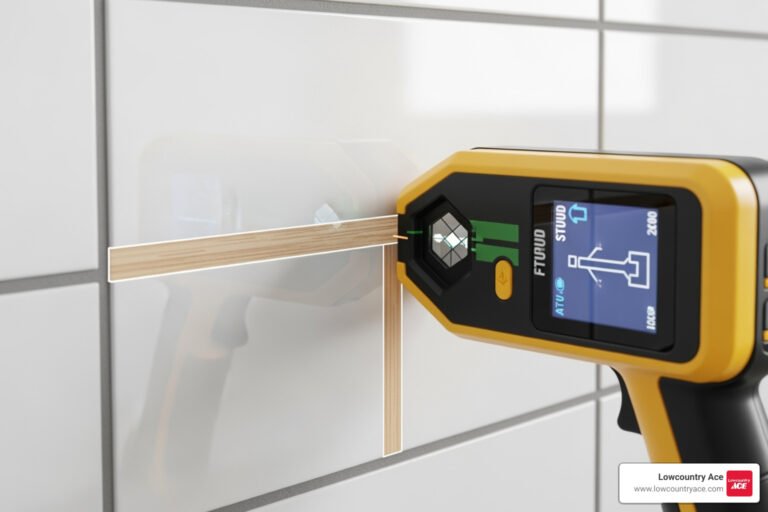
Will a Stud Finder Find Electrical Wires? Detection and Safety Guide
Yes, a stud finder can find electrical wires if it has a live-wire warning or AC-detection feature, but a standard stud finder may only detect changes behind the wall and cannot reliably identify electrical wiring. Even models designed to detect live AC wiring can miss wires under certain conditions, so you should never assume a wall is safe to drill simply because the stud finder gives no electrical warning.
This distinction is important because modern stud finders vary considerably. Some are designed only to locate wood or metal framing. Others combine stud detection with metal scanning and live AC detection. More advanced wall scanners may distinguish between different kinds of hidden materials more effectively.
Electrical-wire detection also has limitations. A live-wire sensor normally relies on the electrical field produced by energized AC wiring. A wire that is not energized, sits too deep in the wall, runs through metal conduit, or is shielded by certain building materials may not produce a usable warning.
That means a stud finder should be viewed as one safety tool rather than proof that no wiring is present.
In this guide, I’ll explain whether a stud finder will find electrical wires, how live-wire detection works, why electrical warnings sometimes fail, what different stud-finder signals mean, and how to reduce the risk of hitting wiring when drilling, nailing, or cutting into a wall.
Will a Stud Finder Find Electrical Wires?

A stud finder may detect electrical wires, but whether it can actually identify them depends on the model and the type of detection technology it uses.
A basic electronic stud finder is primarily designed to locate changes in density behind drywall. It detects the difference between an empty wall cavity and an area containing a wood stud or another object.
Because pipes, wiring, metal, extra drywall, and other materials can also change what the sensor sees, a basic stud finder can sometimes react to something other than a stud. That does not mean it knows the object is an electrical wire.
A stud finder specifically equipped with live AC detection, wire warning, or AC scan mode is different. It is designed to sense the electrical field associated with energized alternating-current wiring.
If the tool senses a live wire, it may display a lightning-bolt symbol, illuminate a warning light, sound an alarm, or show a signal-strength indicator.
However, a warning does not necessarily pinpoint the cable with perfect accuracy, and no warning does not prove that wiring is absent.
Stud Detection and Wire Detection Are Different Functions
A useful way to think about the tools is:
| Stud Finder Function | What It Is Mainly Looking For |
| Stud mode | Changes caused by framing behind the wall |
| Deep-scan mode | Similar changes at greater depth |
| Metal mode | Metal fasteners, studs, or other metallic objects |
| Live-wire warning | Electrical field from energized AC wiring |
| Dedicated AC scan | Attempts to narrow the position of energized wiring |
The exact capabilities depend on the particular model, so check the instructions instead of assuming every stud finder works the same way.
Key Takeaways:
- Some stud finders can warn you about energized electrical wiring.
- A basic stud finder may react to hidden objects without identifying them as wires.
- Live-wire detection is not guaranteed to find every cable.
- Never treat a lack of warning as proof that drilling is safe.
How Does a Stud Finder Detect Electrical Wires?
A stud finder with live-wire detection generally senses the electrical field surrounding an energized AC conductor.
The sensor does not have to physically touch the copper wire. It reads the electrical activity through the wall surface.
As you move the detector toward the energized cable, the signal may become stronger. Moving away causes it to weaken.
Some multifunction scanners provide a dedicated AC mode that allows you to scan repeatedly from different directions and narrow the suspected wiring zone.
The Wire Normally Needs to Be Energized
This is one of the most important limitations.
A live-wire detector is designed to detect electrical activity, not simply the physical presence of copper cable.
If the circuit is switched off at the breaker, an ordinary AC-detection feature may no longer detect the wire.
The same problem can occur with a switched cable that is not energized at the time of the scan.
For example, wiring leading from a wall switch to a light fixture may behave differently depending on the switch position and circuit configuration.
This creates an important safety principle:
A cable can physically exist behind the wall even when your live-wire detector shows nothing.
How Deep Can a Stud Finder Detect Electrical Wires?
Detection depth varies by product and wall construction.
Many consumer live-wire detection systems are intended to find energized wiring relatively close to the finished surface rather than wiring buried deeply inside a complicated wall assembly.
The effective sensing depth can change depending on the wall material, moisture, wire position, electrical conditions, shielding, and the tool itself.
Instead of relying on a universal depth number, use the detection depth specified for your exact stud finder.
If the wall is unusually thick, has several layers, or contains masonry, the detection capability may be significantly reduced.
Why a Stud Finder May Not Detect Electrical Wiring
The absence of an electrical warning is one of the easiest things to misinterpret.
There are several reasons a hidden cable may go undetected even though it is physically present behind the wall.
The Circuit Is Not Energized
If there is no AC voltage creating the electrical field the detector expects, live-wire mode may not see the cable.
This is why a switched-off circuit can create a false sense of security.
The Wire Is Too Deep
A cable positioned well inside the wall cavity may be outside the sensor’s effective detection range.
The problem becomes more likely with thick wall assemblies.
The Wire Is Inside Metal Conduit
Metal conduit can shield the electrical field and interfere with AC detection.
In this situation, metal-detection equipment may detect the conduit, but a live-wire warning may not work as expected.
The Wall Contains Metallic Material
Metal wall coverings, certain insulation products, metal lath, foil-backed materials, or other metallic layers can interfere with scanning.
Older plaster walls with metal lath are especially challenging for ordinary stud finders.
The Wall Is Thick or Dense
Plywood, multiple drywall layers, tile, cement board, masonry, and other dense materials can reduce detection performance.
A tool that works perfectly through standard drywall may behave very differently on another wall.
Moisture Is Affecting the Reading
Moisture can influence some electronic detection methods and cause confusing or unreliable readings.
This can matter around bathrooms, kitchens, basements, exterior walls, and other damp areas.
Your Hand Position or Calibration Is Wrong
Some scanners are sensitive to how you hold them against the wall.
Improper calibration, lifting the tool away from the surface, moving too quickly, or using it differently from the manufacturer’s instructions can create inaccurate results.
A weak battery can also interfere with proper operation on some models.
Key Takeaways:
- Dead or switched-off wiring may not trigger live AC detection.
- Wall thickness, conduit, metallic materials, and moisture can interfere with scanning.
- Proper calibration and scanning technique matter.
- A negative scan cannot establish that the wall contains no wiring.
Can a Regular Stud Finder Detect Wires?
A regular stud finder without a dedicated electrical feature should not be relied upon to locate electrical wiring.
It may respond to something around the wire, such as a change in wall density, a metal component, or a nearby stud, but it cannot necessarily tell you what caused the reading.
Suppose the tool shows a wide area instead of the clear edges you normally see around a stud.
That could mean several things are behind the wall. It does not automatically mean electrical wiring is there.
The reverse is also true: the stud finder can identify a stud correctly while failing to warn you that wiring passes through that stud.
For electrical awareness, use a model specifically designed for live-wire detection or a suitable wall scanner.
Even then, use other information before drilling.
Can Stud Finders Detect Wires Running Through Studs?
Potentially, yes, but this situation deserves special attention.
Electrical cables frequently pass through holes drilled horizontally through wood studs.
That means finding a stud does not mean the whole width of that stud is automatically a safe place for a long screw.
Building practices commonly use protective metal plates where cables or pipes pass close enough to the face of framing that normal screws or nails could damage them.
If you begin drilling into what you believe is a wood stud and suddenly encounter unexpected metal, stop.
Do not try to force a drill bit or screw through the plate.
That metal could be intentionally protecting an electrical cable or plumbing line.
Wires Can Also Run Beside Studs
Electrical cables may run vertically alongside framing to reach:
- Outlets
- Switches
- Light fixtures
- Junction boxes
- Appliances
So scanning only the center of the wall cavity is not enough.
The exact path depends on how the building was wired.
Where Are Electrical Wires Usually Located in Walls?
Understanding common wiring patterns can help you interpret a scan, but you should not use these patterns as guarantees.
An electrical outlet is an obvious clue that wiring enters the area.
A cable may travel vertically from above or below the outlet, or it may run horizontally through neighboring studs to other receptacles.
Switches also indicate electrical wiring, but switch circuits can take several routes depending on the construction and electrical layout.
Ceiling fixtures suggest cables may travel upward through the wall or through the ceiling framing.
The safest assumption is that wiring may exist anywhere between visible electrical devices unless you have reliable information showing otherwise.
Be Especially Careful Around Electrical Boxes
If you are hanging something near an outlet or switch, avoid assuming that a spot directly above, below, or beside the box is safe.
Wires frequently enter electrical boxes from these directions.
Use your scanner to gather more information, but consider the electrical layout before choosing a drilling location.
What Does the Electrical Warning on a Stud Finder Mean?
If the AC or live-wire indicator activates, treat the area as potentially containing energized wiring.
The exact size of the indicated area may be wider than the actual cable location.
Electrical-field detection can sometimes create a broad warning zone rather than a precise line.
Try scanning from both directions according to the manufacturer’s instructions.
Some devices allow repeated calibration closer to the warning area to narrow the suspected position.
Even if you narrow the location successfully, I would avoid penetrating the wall there unless you have a clear reason and understand what is behind the surface.
What If the Stud Finder Keeps Showing a Wire Warning Everywhere?
A broad or continuous warning can happen for several reasons.
The tool may be near extensive wiring, the wall surface may be affecting the sensor, or electrical fields may be coupling through the material.
You may also have started calibration directly over an energized area.
Move to another part of the wall and repeat the process according to your tool’s instructions.
If the warning remains confusing, do not simply ignore it. Use another detection method or choose another mounting location.
What If My Stud Finder Detects a Stud and a Live Wire in the Same Place?
This can be completely plausible.
Electrical wiring often runs alongside studs or passes through holes in them.
Therefore, receiving both a framing indication and electrical warning in the same area is not necessarily a malfunction.
I would treat that location conservatively.
Do not assume the center of the stud is safe just because you found solid wood.
A long screw can penetrate through a stud and reach a wire passing behind or through it.
If you cannot determine the wiring path confidently, move the mounting location or seek professional assistance for an important installation.
Will a Stud Finder Detect Dead Electrical Wires?
Usually, you should assume live-wire detection will not reliably identify a dead or de-energized cable.
A cable that is physically inside the wall but disconnected from power may not produce the electrical field required by an AC sensor.
The same limitation applies when you turn a breaker off.
This creates a slightly counterintuitive workflow when scanning near suspected electrical wiring.
You may need the circuit energized while performing the manufacturer’s approved detection scan so the sensor has something to detect.
Once you have mapped the suspected area and are ready to drill or cut, turn the circuit off before penetrating the wall.
Do not deliberately work on an energized wall merely to keep the detector active while drilling.
Can Metal Mode Find Electrical Wires?
Metal mode can detect certain metallic objects, but it should not be treated as a universal wire detector.
Electrical cable contains copper, but the amount of metal, its depth, the wall material, and the scanner’s sensitivity all affect detection.
Metal mode may also respond to nails, screws, metal studs, pipes, conduit, corner bead, brackets, and protective plates.
That makes interpretation difficult.
If metal mode detects something long and continuous, it might be plumbing or conduit rather than an individual fastener.
If you encounter an unexplained metal reading in your intended drilling path, avoid drilling until you have a better understanding of what it is.
Stud Finder vs. Non-Contact Voltage Detector
A stud finder and a non-contact voltage detector have different jobs.
A stud finder primarily helps locate framing. Some models add AC warning as an extra safety feature.
A non-contact voltage detector is designed specifically to sense the presence of AC voltage near its tip.
However, neither device can guarantee that a concealed wall cavity contains no cable.
A non-contact voltage detector may have difficulty detecting wiring through thick wall material because it is commonly designed for closer proximity to energized conductors.
For concealed-wall investigation, a multifunction wall scanner designed for that purpose may provide more useful information.
What About Advanced Wall Scanners?
More advanced wall scanners may detect wood, metal, and energized wiring and provide more information about hidden objects.
They can be useful when installing cabinets, shelves, televisions, handrails, or other fixtures where several substantial fasteners are required.
Even sophisticated scanners have limitations, though.
Use their results alongside construction knowledge, visible electrical locations, and other available information.
How to Check for Electrical Wires Before Drilling
The objective is not to prove there are absolutely no electrical components behind the wall—that can be difficult without opening it.
The objective is to gather enough information to choose the safest practical drilling location.
Start by examining the wall.
Look for switches, receptacles, wall lights, thermostats, electrical panels, and other devices that suggest wiring routes.
Next, locate the studs using the appropriate stud-finder mode.
Then perform an AC or live-wire scan if your tool supports it and follow the manufacturer’s procedure carefully.
Scan from multiple directions. A result that repeats consistently is more useful than a single brief warning.
If metal-detection mode is available, it can provide another layer of information, particularly when you suspect conduit or protective plates.
When you have identified your mounting location, consider the required fastener length. Avoid using a longer screw than the application requires.
Finally, if the work will penetrate into an area where electrical wiring may be present, de-energize the relevant circuit before drilling.
Important Tip: Turning off a breaker reduces electrical risk during drilling, but it does not remove the cable from the wall. A drill or screw can still damage de-energized wiring, creating a fault that becomes dangerous when power is restored.
Key Takeaways:
- Inspect visible outlets, switches, and fixtures before scanning.
- Use multiple detection methods rather than trusting one signal.
- Keep fasteners only as long as necessary for the installation.
- De-energize relevant circuits before penetrating a wall where wiring may be present.
Can You Safely Drill Where the Stud Finder Shows No Wires?
Not automatically.
A no-wire reading simply means the tool did not detect an electrical field under those particular conditions.
There could still be:
- De-energized wiring
- Deep wiring
- Shielded cable
- Cable inside conduit
- Plumbing
- Another hidden object outside the sensor’s range
This is why manufacturers commonly caution against relying exclusively on a scanner before penetrating a wall.
If the project requires only a small fastener into drywall, the risk profile differs from drilling a long structural screw several inches into a wall.
The deeper you penetrate, the more important it becomes to understand what lies behind the surface.
How Deep Should You Drill Into a Stud?
There is no universal drilling depth that is appropriate for every project.
The correct screw length depends on the wall covering, object being installed, fastener type, expected load, framing, and any manufacturer requirements.
For example, mounting a lightweight accessory and attaching a heavy wall cabinet are completely different structural tasks.
The safest approach is to use a fastener long enough to achieve the required structural engagement without adding unnecessary penetration beyond what the installation requires.
Do not choose an extremely long screw simply because longer feels stronger.
When structural fastening is required, follow the mounting-hardware or fixture manufacturer’s specifications.
What Should You Do If You Hit Metal While Drilling?
Stop drilling immediately.
Unexpected metal behind drywall should never be treated as an obstacle that simply needs more force.
The object could be:
- A protective nail plate
- Metal conduit
- Metal framing
- A pipe
- A bracket or structural connector
A protective plate is specifically intended to stop screws and drill bits from reaching wiring or plumbing passing through the framing.
If your bit hits something solid and metallic, move the mounting point or determine what the metal is before proceeding.
Switching to a metal drill bit and forcing your way through can defeat an important safety feature.
Can a Stud Finder Tell the Difference Between Pipes and Electrical Wires?
Basic stud finders generally cannot identify every hidden object with certainty.
A density-based sensor may simply indicate that something differs behind the wall.
A metal detector can identify metal but may not tell you whether it is plumbing, conduit, a steel stud, or a fastener.
A live AC sensor provides another clue because an electrical warning suggests energized wiring.
More sophisticated wall scanners may provide separate indications for wood, magnetic metal, non-magnetic metal, and live electrical wiring.
Even then, interpretation is necessary.
For example, an electrical wire running through metal conduit may produce different results than ordinary nonmetallic-sheathed cable.
When Should You Call an Electrician?
For an ordinary picture or shelf installation, careful scanning and sensible fastener selection are often sufficient.
Professional help becomes more appropriate when you repeatedly detect live wiring exactly where substantial drilling is required, you cannot understand the wall construction, or the project involves extensive cutting.
An electrician can also help when you need to drill close to an electrical panel, major cable runs, large appliances, or complicated circuits.
If you accidentally drill into wiring, stop work and turn off the appropriate circuit. Do not simply cover the hole and assume the wire is fine.
Damaged insulation or conductors should be properly inspected and repaired before the circuit is returned to service.
Common Mistakes When Using a Stud Finder Around Electrical Wires
One common mistake is assuming that a model advertised with “wire detection” can locate every cable in every wall.
No handheld scanner has perfect visibility through all construction materials.
Another mistake is turning the breaker off first, scanning for a live wire, and concluding that no cable is present. With no voltage on the circuit, an AC-detection feature may have little or nothing to detect.
Users also sometimes ignore electrical warnings because they believe the scanner is giving a false positive. Even if you suspect the warning is caused by the wall material, treating an unexplained electrical signal cautiously is much safer than assuming it is irrelevant.
Another serious mistake is drilling through unexpected metal. That plate may be exactly what prevents the drill from reaching a hidden wire.
Finally, a stud finder should not replace thinking about the building layout. An outlet, switch, or electrical box is useful evidence that wiring is nearby even if the scanner remains silent.
FAQs about Will a Stud Finder Find Electrical Wires
Can a stud finder detect electrical wires?
Yes, if the model includes live-wire or AC detection. Basic stud finders may detect an unusual object but may not identify it specifically as electrical wiring.
Do all stud finders detect live wires?
No. Some models locate only studs, while multifunction models may include live AC warning, metal detection, or dedicated electrical scanning.
Will a stud finder detect electrical wires if the breaker is off?
Live AC detection may fail once the circuit is de-energized because the electrical field used for detection is no longer present. The physical cable is still inside the wall.
Can a stud finder detect wires through drywall?
Many AC-enabled stud finders are designed to detect energized wiring through ordinary drywall, but actual performance depends on wire depth, wall material, shielding, moisture, and the detector.
Can a stud finder find wires inside conduit?
Live-wire detection may be less effective when wiring is enclosed in metal conduit. Metal-scanning equipment may detect the conduit itself.
Why does my stud finder show an electrical warning over a stud?
Electrical wires often run beside studs or pass through holes drilled through them. Detecting a stud and an electrical field in the same area is therefore possible.
Why does my stud finder keep detecting live wires everywhere?
Wall material, calibration, moisture, nearby electrical fields, or actual wiring can create a broad detection area. Rescan according to the manufacturer’s instructions and do not ignore an unexplained warning.
Can a stud finder detect plumbing?
Some multifunction scanners can detect metal pipes, and ordinary stud finders may react to changes caused by hidden objects. However, a basic stud finder cannot necessarily tell you whether a reading is a pipe, wire, or framing member.
Is it safe to drill if my stud finder shows no electrical wires?
A negative reading is not a guarantee. Hidden wiring may be de-energized, too deep, shielded, or otherwise difficult to detect. Consider visible electrical fixtures, wall construction, metal readings, and other information before drilling.
What should I do if I hit metal inside a stud?
Stop drilling. The metal may be a protective plate placed over wiring or plumbing. Identify the obstruction or move the mounting location rather than forcing through it.
Should I turn off the breaker before drilling?
If there is a reasonable possibility that electrical wiring is near the drilling location, de-energizing the relevant circuit adds an important layer of protection. Remember that turning the power off does not prevent physical damage to the cable.
Can a stud finder tell exactly where an electrical wire is?
Some dedicated AC scan modes can help narrow the suspected area, but the result should be considered an approximate detection zone rather than a guarantee of the cable’s exact path.
Conclusion
Will a stud finder find electrical wires? Yes, some models can detect energized AC wiring, but only if they include a live-wire warning or dedicated AC-detection feature. A basic stud finder is primarily designed to locate framing and should not be expected to reliably identify electrical cables.
Even a good live-wire detector has limitations. Wiring may go undetected when it is de-energized, positioned too deeply, shielded by metal conduit or other materials, or located behind a wall assembly that interferes with the sensor.
For that reason, I would never rely on a “no wire detected” reading as proof that a location is completely safe to drill.
The better approach is to combine the stud finder with basic knowledge of the wall layout. Look for outlets, switches, electrical boxes, and fixtures; scan repeatedly from different directions; use metal detection when appropriate; and pay attention to any unexpected signals.
If you encounter a metal plate while drilling, stop rather than forcing through it. It may have been installed specifically to protect electrical wiring or plumbing.
When wiring may be close to your drilling location, de-energizing the relevant circuit before penetrating the wall provides an additional safety measure. Just remember that an unpowered cable can still be physically damaged by a screw or drill bit.
Ultimately, a stud finder’s electrical-warning feature is valuable because it can alert you to a hazard you might otherwise miss. Use it as an extra layer of protection—not as a guarantee that everything hidden behind the wall has been found.