Are Impact Wrenches Worth It: What to Know and Why It Matters
Yes, an impact wrench is worth it when you regularly remove stubborn fasteners, work on vehicles, or need to install and remove bolts faster than a hand ratchet allows. It is usually not worth buying for occasional light-duty assembly, where a standard drill or ratchet costs less and offers better control.
You may notice the difference when a lug nut that looks ordinary refuses to move, a rusted suspension bolt rounds off under repeated effort, or a long afternoon of manual wrenching turns a simple repair into a tiring job. The fastener’s appearance can be misleading: a clean bolt may be seized by corrosion, over-torqued, or loaded by damaged threads, while a small-looking task may demand far more breakaway force than a compact drill can deliver.
This article explains where impact wrenches provide real value, when their power creates problems, and how corded, cordless, and pneumatic models compare. You will learn what torque ratings actually mean, which tasks justify the cost, what accessories and safety habits matter, and how to decide whether an impact wrench belongs in your garage or tool collection.
What an Impact Wrench Does Better Than
An impact wrench combines motor power with a hammering mechanism that delivers short bursts of rotational force. Those impacts help break loose fasteners that resist steady torque, especially when rust, thread friction, or excessive tightening has created a high breakaway torque requirement.
A regular drill or impact driver can handle many screws and smaller bolts, but an impact wrench is designed around larger fasteners and socket use. Its square drive accepts impact sockets, commonly in 1/4-inch, 3/8-inch, 1/2-inch, or 3/4-inch sizes depending on the tool’s intended workload.
The main benefit is not simply maximum power. It is the combination of speed, leverage, and reduced physical effort. Removing four vehicle wheels with a hand ratchet may be manageable, but an impact wrench can perform the initial loosening and rapid removal in a fraction of the time.
When an Impact Wrench Is Worth the Money
The strongest case comes from repeated work. If you rotate tires, repair brakes, maintain farm equipment, service trailers, build heavy structures, or regularly deal with large bolts, the tool can quickly repay its purchase price through saved time and reduced strain.
It is also valuable when access is awkward. A long-handled ratchet may not fit comfortably in a wheel well or around a frame component, while a compact impact wrench can reach the fastener without requiring room for a wide swing. This does not make the tool automatically safe for every confined space, but it can make certain repairs more practical.
Professionals and serious do-it-yourself mechanics may value repeatable speed more than occasional users do. A shop that removes dozens of fasteners each day benefits from reducing repetitive hand movements, while a homeowner who encounters one difficult bolt every few months may see little financial advantage.
Common jobs that justify an impact wrench
- Removing and installing wheel lug nuts during tire or brake work
- Suspension, steering, and undercarriage repairs
- Trailer maintenance and hitch installation
- Equipment, machinery, and agricultural repairs
- Construction framing with large structural fasteners
- Deck, timber, and heavy-duty assembly projects
- Removing rusted or heavily tightened nuts and bolts
For these applications, the tool’s value comes from shortening the difficult part of the job. It can also preserve your energy for diagnosis, alignment, cleaning, and final inspection rather than spending it on repeated wrench strokes.
When an Impact Wrench May Not Be Worth It
An impact wrench is often unnecessary for light household repairs. Furniture assembly, small machine screws, cabinet hardware, and ordinary home maintenance usually call for less torque and more finesse. A hand ratchet, socket set, or drill may be cheaper, quieter, and easier to control.
The tool can also be a poor choice if storage, noise, and battery cost matter more than speed. Cordless models require battery packs and chargers, pneumatic models require an air compressor and hose, and corded models limit mobility. The advertised tool price may not represent the complete cost of a usable setup.
Another limitation is that an impact wrench is not a substitute for a torque wrench. Its power can tighten a fastener quickly, but the final clamping force depends on many variables, including thread condition, lubrication, washer friction, and the tool’s setting. Critical fasteners should be tightened to the vehicle or equipment manufacturer’s specification with a calibrated torque wrench when required.
Understanding Torque Ratings
Manufacturers commonly list several torque figures, such as fastening torque, nut-busting torque, breakaway torque, or maximum torque. These numbers are useful for comparison, but they are not a guarantee that the tool will remove every bolt with the same rating.
Breakaway torque describes the force needed to start loosening a fastener. Once the nut begins moving, the required torque may drop substantially. Test conditions, battery charge, socket type, fastener condition, and contact time can all affect the result.
A tool rated for extremely high torque may sound attractive, but excess power can damage threads, shear small bolts, crack weaker components, or over-tighten wheel hardware. Choose capacity based on the fasteners you actually service rather than buying the largest number available.
Useful torque categories
Compact 1/4-inch and 3/8-inch impact wrenches are suited to smaller automotive fasteners, light equipment, and confined areas. They provide better maneuverability but generally offer less power than full-size models.
A 1/2-inch impact wrench is the most versatile choice for many vehicle and workshop applications. It can handle wheel lugs, suspension components, trailer hardware, and other larger fasteners, although the exact capability varies considerably between compact, mid-torque, and high-torque designs.
High-torque 1/2-inch and 3/4-inch tools are intended for heavy machinery, commercial vehicles, structural work, and severely stubborn fasteners. They can be unnecessary and even risky for delicate automotive work if the operator does not control the setting carefully.
Cordless, Pneumatic, or Corded?
For most home garages, a cordless impact wrench offers the best balance of portability and convenience. Modern battery tools can deliver substantial torque without an air hose, and the same battery platform may power drills, lights, ratchets, and other tools.
The drawbacks are battery expense, added weight, charging time, and performance changes as the battery discharges. A compact model may be comfortable for wheel work but lack the power for severely seized suspension bolts. A high-output model may solve that problem while becoming heavier and more tiring to hold overhead.
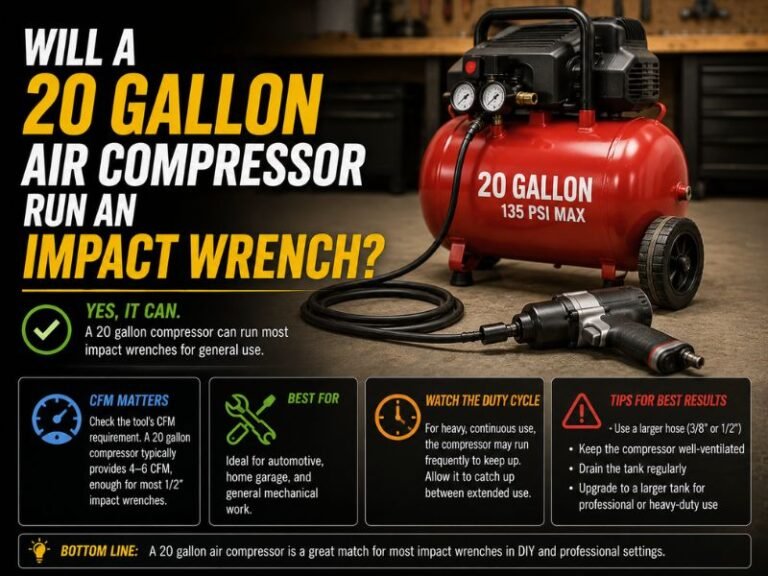
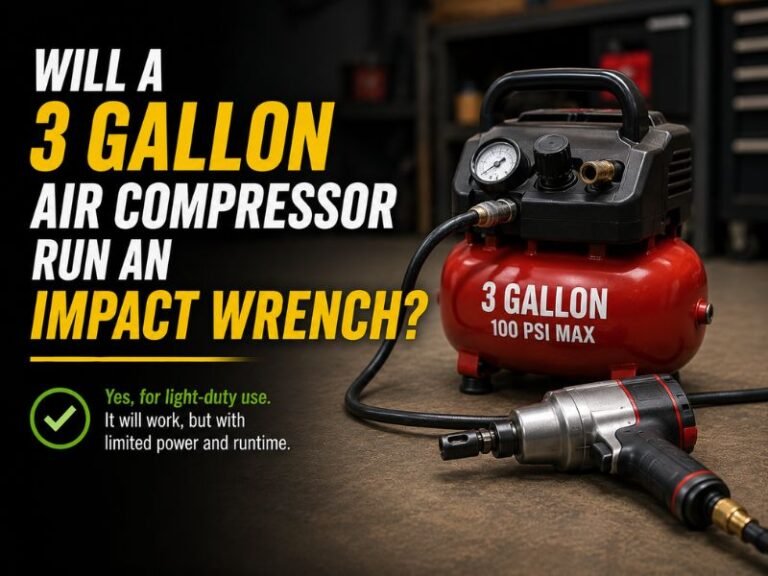
Pneumatic impact wrenches remain common in professional shops because they can run for long periods and often have a favorable power-to-weight ratio. However, the compressor must provide enough air volume at the specified pressure. A small compressor may run continuously, produce inconsistent performance, or fail to supply the tool’s full capability.
Corded electric impact wrenches can be affordable and dependable near an outlet, but the cord limits reach and can become a trip or damage hazard. They make the most sense for stationary work where portability is not important.
How to choose the drive size
- 1/4-inch drive: Small fasteners and light-duty access work.
- 3/8-inch drive: Compact automotive and general mechanical repairs.
- 1/2-inch drive: General vehicle, trailer, and workshop use.
- 3/4-inch drive: Heavy equipment and very large fasteners.
Drive size alone does not determine power. Two 1/2-inch tools can have very different torque, speed, weight, and control characteristics, so compare the complete specification and intended use.
Important Limitations and Risks
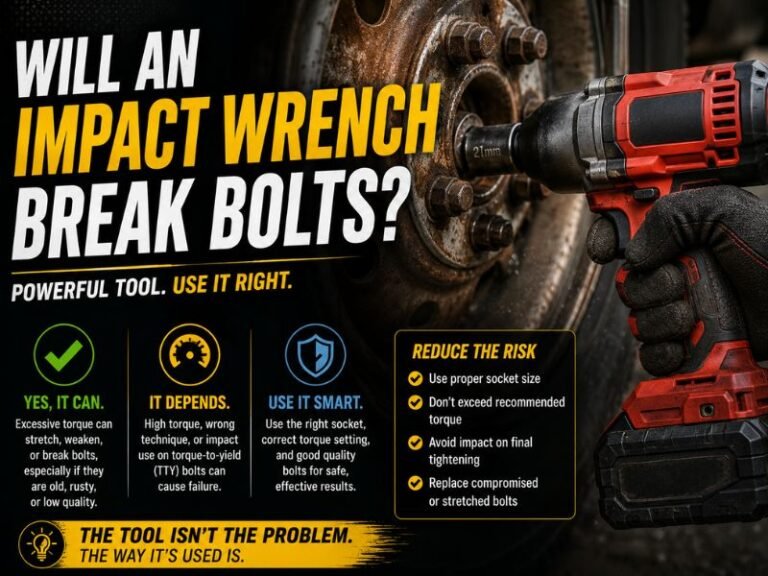
The biggest risk is treating an impact wrench as a precision tightening tool. A few seconds of impact action can drive a nut far beyond its intended torque, particularly on smaller fasteners. This may stretch a bolt, damage threads, distort a wheel, or make later removal more difficult.
Use the impact wrench mainly for removal and for preliminary tightening. For installation, select a low power or speed setting when available, stop before the fastener is fully seated, and finish with a hand tool or torque wrench. Never assume that a low setting produces an exact torque value.
Use only impact-rated sockets and extensions with an impact wrench. Standard chrome sockets can fracture under impact loads, sending sharp pieces outward. Avoid improvised adapters unless they are specifically rated for the force involved.
Personal protective equipment matters because rust, metal fragments, and broken accessories can become airborne. Wear safety glasses, keep hands clear of pinch points, and secure the workpiece before applying high torque. Disconnect or remove the battery before changing accessories or servicing the tool.
Situations requiring extra caution
- Wheel lug nuts, brake components, steering parts, and suspension fasteners
- Small bolts installed in aluminum or other soft materials
- Fasteners with manufacturer-specified torque or tightening sequences
- Damaged, cross-threaded, or visibly cracked hardware
- Work near fuel, flammable vapors, or sensitive electrical components
- Any repair where a broken fastener could affect safety or control
If a fastener does not move, more torque is not always the right answer. Penetrating fluid, heat used appropriately, cleaning, a breaker bar, or professional service may be safer than repeatedly hammering the bolt with a more powerful tool.
Features That Affect Real-World Value
Speed and torque receive most of the attention, but control features often determine whether an impact wrench feels useful. A variable-speed trigger, several power modes, and an automatic shutoff or reduced-power mode can help prevent accidental over-tightening.
An LED work light, belt hook, brushless motor, and battery charge indicator may improve convenience, but none replaces adequate torque capacity or good technique. Brushless designs commonly offer efficient operation and reduced maintenance, though the value depends on price and how frequently the tool will be used.
Weight and balance deserve careful consideration. A powerful tool that strains your wrist may be less useful than a slightly weaker model you can position accurately. For overhead or tight-space work, compact dimensions can matter more than peak torque.
Also consider the complete ownership cost: tool, battery, charger, impact sockets, adapters, replacement parts, and possibly an air compressor. A lower-priced bare cordless tool is not a bargain if you must buy an entire battery system for one occasional repair.
How to Use One Without Creating Problems
Start by inspecting the fastener and selecting the correct socket. Make sure the socket is fully seated, the tool is aligned with the fastener, and the workpiece cannot shift unexpectedly.
- Use the lowest suitable power or speed setting.
- Run the tool in short bursts instead of holding the trigger continuously.
- Stop when the fastener is loose or nearly seated.
- Inspect the threads and hardware for damage.
- Finish critical tightening with the specified torque procedure.
For removal, an impact wrench may save time, but it should not be forced indefinitely against a seized fastener. If repeated short bursts do not work, stop and investigate corrosion, thread damage, trapped load, or an incorrect direction of rotation.
Keep the tool clean and follow the maintenance instructions supplied with it. Pneumatic models need appropriate air preparation and lubrication when specified, while cordless models need proper battery storage and charging practices.
FAQ: Are Impact Wrenches Worth It?
Are impact wrenches worth it for changing tires?
Yes, they can be worth it for frequent tire changes, but use a torque wrench for final tightening. An impact wrench quickly removes lug nuts and can lightly run them down, but wheel hardware should be tightened to the vehicle’s specification rather than relying on impact force.
Are impact wrenches worth it for occasional home repairs?
Usually not unless the repairs involve large or stubborn fasteners. A socket set and breaker bar may handle occasional work at a lower cost, while a compact cordless impact wrench becomes more reasonable if difficult bolts repeatedly consume time and effort.
Is an impact wrench better than an impact driver?
An impact wrench is better for larger bolts and socket-based mechanical work. An impact driver is usually smaller and more convenient for screws, lag bolts, and lighter fasteners. Neither tool fully replaces the other for every application.
What size impact wrench should a homeowner buy?
A 1/2-inch cordless model is the most broadly useful starting point for automotive and general workshop jobs. Choose a compact 3/8-inch model for lighter fasteners and tight access, or a high-torque model only when your work regularly involves heavy equipment or severely seized bolts.
Can an impact wrench replace a torque wrench?
No, an impact wrench should not replace a torque wrench for specified final tightening. Impact tools are affected by battery charge, impact duration, fastener friction, and other variables, so their settings do not reliably establish precise clamping force.
Do impact wrenches damage bolts and lug nuts?
They can damage hardware when used with excessive force, the wrong socket, or poor alignment. Cross-threaded fasteners, over-tightened wheel nuts, broken studs, and stretched bolts are possible when the tool is used without controlled settings and manual verification.
Is a high-torque impact wrench always better?
No, higher torque is useful only when the job requires it. More power adds weight, cost, and the potential for damage. A moderate tool with good speed control is often more practical for routine automotive and household work.
Conclusion: Decide by Workload, Not Maximum Torque
Impact wrenches are worth it when repeated mechanical work, stubborn fasteners, or time-consuming removal justifies their speed and reduced effort. They are less valuable for light, infrequent repairs, and their major limitation is the lack of precise torque control.
Choose the drive size and power for your actual jobs, budget for compatible impact sockets and batteries or air equipment, and use a torque wrench for critical final tightening. If you are uncertain, start by listing the fasteners you regularly encounter; that workload will usually reveal whether an impact wrench is a practical tool or an expensive convenience.