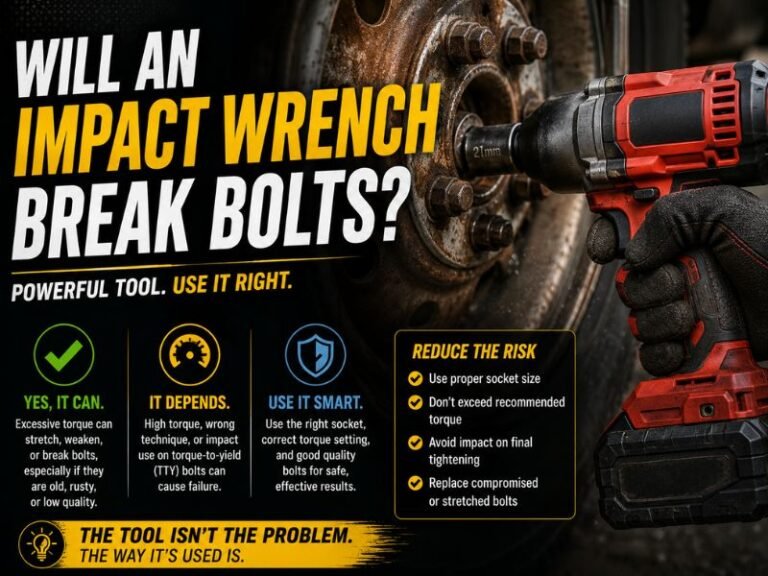
How to Test Impact Wrench Torque: A Simple Guide for Accurate Results
If you need to know how to test impact wrench torque, start by knowing what you want to measure. An impact wrench does not apply torque in the same smooth way as a hand torque wrench. Its hammer mechanism delivers short bursts of force, so the final result depends on the joint and the test setup.
A good test uses the same battery or air supply, socket, fastener, and test method each time. This lets you compare readings in a useful way. In a shop, this matters when an impact wrench seems weak, when a tool has been serviced, or when you want to check whether its output matches your work needs.
One lesson that experienced mechanics learn quickly is that a tool’s advertised maximum torque is not the same as the torque you will get on every bolt. Joint stiffness, rust, thread fit, lubrication, and run time can all change the result. That is why a controlled test is much more useful than simply reading the number on the box.

Why Test the Torque of an Impact Wrench?
Testing an impact wrench can tell you how much torque it produces under a known set of conditions. This is useful for checking tool performance, comparing settings, finding a weak tool, and setting a repeatable work process.
The test is most useful when you repeat it in the same way. If you change the battery, air pressure, socket, bolt, or test joint, the reading may change even when the tool itself has not changed.
For routine automotive work in the United States, this can help when servicing wheels, suspension parts, equipment, and other fasteners. The test should support your work process rather than replace the manufacturer’s torque specifications.

- ✦ Check tool output
A test can show whether the impact wrench still produces useful torque compared with a known baseline.
- ✦ Compare settings
You can test low, medium, and high settings to see how the tool behaves across its range.
- ✦ Find performance problems
A sudden drop in output can point to a weak battery, low air pressure, worn parts, poor lubrication, or another tool issue.
- ✦ Build a repeatable process
A controlled test can help a shop learn what a specific tool setting does on a specific type of joint.
Advertised Torque Is Not the Same as Measured Torque
Manufacturers may list fastening torque, nut-busting torque, breakaway torque, or another rating. These terms do not always describe the same test. A high breakaway number does not mean the tool will tighten every fastener to that same torque.
Before comparing tools, check what each torque number means. Also check the test conditions. A fair comparison needs the same type of joint, socket, power source, and measurement method.
- ✦ Fastening torque
This describes torque produced while the tool drives a fastener during tightening.
- ✦ Breakaway torque
This describes the force needed to start moving a tightened fastener and is not a direct measure of normal tightening torque.
What You Need to Test Impact Wrench Torque
The best setup depends on how precise the result needs to be. A purpose-built impact torque tester gives the clearest direct measurement. A controlled bolt test can also help, but it needs more care because the joint itself affects the result.
Use quality tools and keep the setup stable. Do not hold a loose test fixture by hand while the impact wrench is running. The reaction force can be strong enough to move the fixture or cause an injury.
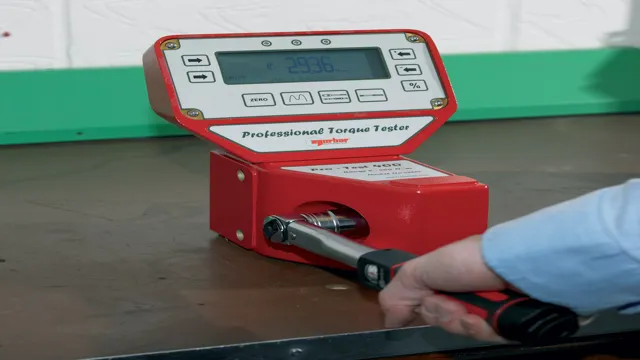
- ✦ Impact torque tester
A dedicated tester is designed to measure impact tool output and is the preferred choice for repeatable testing.
- ✦ Correct socket
Use a suitable impact-rated socket that fits the test adapter or fastener correctly.
- ✦ Known power source
Use a fully charged battery or a controlled air supply so the power source does not create an unknown variable.
- ✦ Test fixture
A strong fixture or suitable test joint gives the wrench a controlled place to apply torque.
- ✦ Calibrated reference tool
A calibrated torque measuring device helps you judge whether the impact wrench result is within the range you expect.
- ✦ Safety equipment
Wear eye protection and keep hands clear of the socket, reaction point, and moving parts.
Choose the Right Test Device
If you need to know how to test impact wrench torque with good repeatability, a dedicated torque tester is the simplest choice. These devices are built to handle the pulsing force from impact tools and can provide a more useful reading than a basic hand torque wrench.
A standard click torque wrench is mainly designed to measure or apply torque during steady hand operation. It is not a direct substitute for an impact torque tester. Always follow the instructions for the measuring device you use.
- ✦ For shop checks
A suitable impact torque tester can provide quick and repeatable checks.
- ✦ For precision work
Use a calibrated measuring system and follow its stated test procedure and limits.
How to Test Impact Wrench Torque With a Torque Tester
A torque tester provides the most direct answer to how to test impact wrench torque. The basic process is simple: connect the wrench to the tester, select the correct test mode, run the tool for a controlled time, and record the result.
Always follow the tester maker’s instructions first. Different testers can use different adapters, test modes, run times, and ways of displaying peak or average torque.
Repeat the test several times under the same conditions. One reading can be affected by the hammer cycle or the exact point at which you stop the tool, while repeated readings give you a better picture of normal output.

- ✦ 1. Inspect the tool
Check the impact wrench, socket, drive, battery or air line, and tester for damage before starting.
- ✦ 2. Set the power source
Use a fully charged battery or the air pressure and hose setup required by the tool maker.
- ✦ 3. Connect the tester
Fit the wrench to the tester with the correct impact-rated adapter and make sure the connection is secure.
- ✦ 4. Select the test setting
Choose the tester mode and tool setting you want to measure. Record both before testing.
- ✦ 5. Run the tool
Operate the wrench for the test time stated by the tester instructions. Keep the tool and fixture stable.
- ✦ 6. Record the reading
Write down the torque value, tool setting, power source, socket or adapter, and test conditions.
- ✦ 7. Repeat the test
Run several tests and look for a consistent range rather than relying on one number.
Why Repeatability Matters
Suppose an impact wrench gives a different reading on every run. That does not always mean the tool is faulty. The tester, joint, battery level, run time, or test technique may be changing the result.
A good test keeps the variables fixed. When the same setup produces similar readings, you can use the result with much more confidence.
- ✦ Keep the battery consistent
Use the same battery type and a similar charge state for comparison tests.
- ✦ Keep run time consistent
Use the same trigger time or the tester’s defined test cycle for each reading.
- ✦ Keep the adapter consistent
Changing adapters can change the test setup and make comparisons less useful.
How to Test Impact Wrench Torque With a Bolt Test
A controlled bolt test can be useful when you do not have a dedicated impact torque tester. The idea is to tighten a known fastener and then measure the resulting clamp or torque condition with a suitable reference method.
This method needs more care than a dedicated tester. The bolt, nut, washers, threads, joint material, lubrication, and surface condition all affect the result. Because of that, a bolt test should not be treated as a perfect direct measurement of impact wrench output.
If you use this method to learn how to test impact wrench torque, keep the joint as consistent as possible. Use the same fastener type, same hardware, same joint, same socket, and same tool setting for every test.

- ✦ Use a controlled joint
A rigid and repeatable joint makes the results easier to compare.
- ✦ Use the same hardware
Do not compare readings from different bolt sizes, grades, thread conditions, or washer types.
- ✦ Measure with a suitable reference
Use a calibrated torque or tension measurement method that matches the test goal.
- ✦ Repeat the test
Several runs help reveal whether the result is stable or strongly affected by the joint.
Why a Bolt Test Can Mislead You
Torque is not the same as bolt tension. A large part of tightening torque can be used to overcome friction in the threads and under the fastener head or washer. Small changes in friction can therefore cause large changes in the final clamp load.
This is one reason an impact wrench can appear to give a different torque on two similar bolts. The tool may be working normally while the joints behave differently.
- ✦ Thread friction
Dirty, damaged, dry, or lubricated threads can change the relationship between torque and clamp force.
- ✦ Joint stiffness
A soft joint and a rigid joint can respond very differently to the same impact wrench.
- ✦ Fastener condition
Rust, wear, plating, and thread damage can change the test result.
How to Test an Impact Wrench on Different Power Sources
Battery and pneumatic impact wrenches need different test controls. A cordless tool can change output as the battery state changes. An air tool can change output when pressure, flow, hose size, or fittings change.
For a cordless impact wrench, start with a fully charged battery when you want to compare tools or settings. Record the battery type and tool mode. If you are checking real-world performance, you can also repeat the test at different battery states, but label each result clearly.
For a pneumatic impact wrench, use the pressure and air flow conditions recommended by the tool maker. Measure pressure at the tool when possible, because pressure at the compressor may not match pressure at the wrench during use.

- ✦ Cordless impact wrench
Control battery charge, battery model, temperature, tool mode, and run time.
- ✦ Pneumatic impact wrench
Control working pressure, air flow, hose length, hose size, fittings, and compressor capacity.
- ✦ Temperature
Very cold or hot conditions can affect batteries, lubricants, and tool behavior.
Testing Air Impact Wrench Torque
Air pressure is one of the most important variables when testing a pneumatic impact wrench. A gauge at the compressor may show a healthy pressure while the pressure at the tool drops when the trigger is pulled.
Use a suitable regulator, hose, and fitting setup. If the tool maker gives a working pressure or air-flow requirement, use that information as the starting point for the test.
- ✦ Check pressure under load
A loaded pressure reading gives more useful information than static compressor pressure alone.
- ✦ Check the hose
A long or narrow hose can restrict air flow and reduce tool performance.
How to Test Impact Wrench Torque Using a Torque Wrench
A calibrated torque wrench can help check the final torque on a fastener, but it does not directly measure the pulsing output of an impact wrench. This distinction is important when learning how to test impact wrench torque.
One practical method is to let the impact wrench tighten a test fastener, then use a suitable calibrated torque wrench to check the fastener under controlled conditions. The result can help you understand the joint, but it should not be treated as a direct measurement of the impact wrench’s peak torque.
For critical fasteners, the safer workflow is usually to use the impact wrench for speed and then use a calibrated torque wrench for the specified final torque. Follow the vehicle, equipment, or fastener manufacturer’s instructions.

- ✦ Use a calibrated reference
A torque wrench should have a current calibration status appropriate for the work.
- ✦ Check final torque
Use the torque wrench to verify the final fastener condition when the specification calls for it.
- ✦ Do not confuse tools
An impact wrench is built for fast fastening and removal, while a torque wrench is built for controlled torque application or verification.
Why This Method Has Limits
Once a fastener has been tightened, friction and joint condition affect the torque needed to move it again. A torque wrench reading taken after impact tightening may therefore differ from the torque delivered by the impact wrench during the original tightening cycle.
Use this method as a practical verification step, not as a substitute for a proper impact torque tester when accurate tool-output data is required.
- ✦ Good use
It can help verify final fastener torque when used with the correct procedure.
- ✦ Poor use
It should not be used as a simple way to claim that an impact wrench produces exactly the same torque value.
Common Factors That Change Impact Wrench Torque
If your torque test changes from one day to the next, look at the test conditions before blaming the wrench. Impact tools respond to the power source and the joint in ways that a simple hand tool does not.
When you learn how to test impact wrench torque, the goal is not just to get a number. The goal is to understand why that number changes and to control the factors that matter.
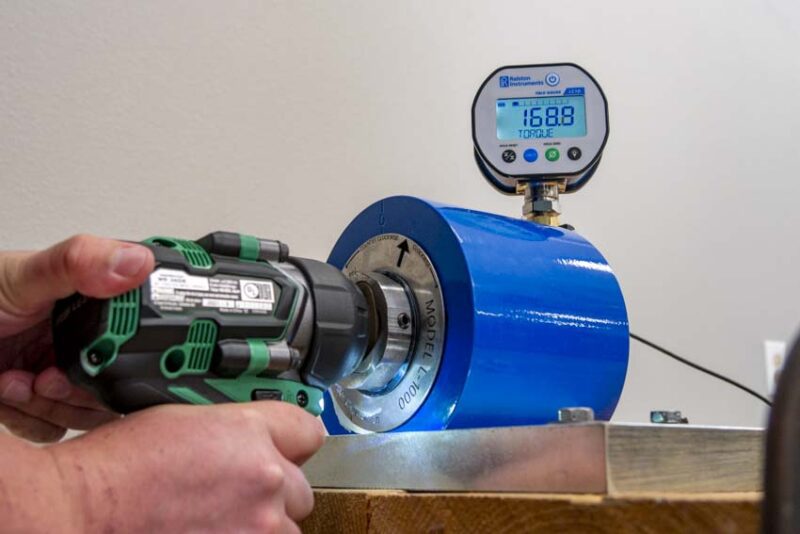
- ✦ Battery charge
A cordless tool may perform differently as the battery state changes.
- ✦ Air pressure
Low working pressure or restricted air flow can reduce pneumatic tool output.
- ✦ Socket condition
A worn, damaged, loose, or incorrect socket can affect both performance and safety.
- ✦ Joint type
Hard and soft joints can produce different torque behavior with the same tool.
- ✦ Fastener friction
Thread condition and lubrication can change the torque needed to produce clamp load.
- ✦ Tool temperature
Temperature can affect battery performance, lubricant behavior, and tool operation.
- ✦ Tool wear
A worn hammer mechanism, motor, anvil, or other internal part can change output.
- ✦ Run time
The torque result can change based on how long the impact mechanism runs.
Hard Joints vs. Soft Joints
A hard joint reaches resistance quickly. A soft joint allows more movement before the fastener reaches the same resistance. An impact wrench can react very differently to these two joint types.
This is why a torque number from one test setup may not predict the result on a vehicle or machine. For meaningful comparisons, test tools under the same type of joint.
- ✦ Hard joint
Resistance rises quickly, so the impact mechanism may build torque rapidly.
- ✦ Soft joint
The fastener moves more before resistance rises, which can change the impact pattern and final result.
How to Get More Reliable Torque Test Results
The best way to improve a torque test is to control as many variables as possible. Write down the test setup before you start. This creates a simple record that you can repeat later.
Do not compare a fully charged cordless tool against a partly drained battery and then assume the difference comes from the tool design. The same rule applies to air tools with different hose or pressure setups.
If the result matters for a safety-critical job, use a proper calibrated measurement system and follow the equipment manufacturer’s procedure. A home test can help with troubleshooting, but it may not meet the accuracy needs of professional inspection work.
- ✦ Test at the same setting
Keep the impact wrench mode or speed setting unchanged when comparing runs.
- ✦ Use the same socket
Keep the socket size, type, and condition consistent.
- ✦ Use the same power source
Keep battery or air supply conditions consistent.
- ✦ Run multiple tests
Repeated readings can show the normal range and expose unusual results.
- ✦ Record the conditions
Note the tool model, setting, battery or air pressure, adapter, joint, test time, and readings.
- ✦ Keep the fixture secure
A stable test setup reduces movement and lowers the risk of injury.
Create a Simple Test Record
A small test log can make future checks much easier. Record the date, tool, power source, setting, tester, socket, joint type, and each reading.
This also helps you spot gradual changes. If a wrench normally produces a similar range and later falls well outside that range, you have a useful reason to inspect the tool, battery, air supply, or test equipment.
- ✦ Tool information
Record the brand, model, and tool setting.
- ✦ Power information
Record the battery or air supply used for the test.
- ✦ Measurement information
Record the tester, units, test method, and repeated readings.
Safety Tips When Testing an Impact Wrench
Impact wrenches can deliver high force very quickly. A poor test fixture can move, break, or release stored energy without warning. Treat a torque test like powered shop work, not like a simple hand-tool check.
Wear eye protection and use the correct impact-rated accessories. Keep your hands away from the socket and reaction points. Never defeat a safety feature or hold an unstable fixture in place while the tool is running.
If a test setup needs more force than your equipment can safely handle, stop and use a suitable tester or professional service. Accurate results are not worth an unsafe setup.
- ✦ Wear eye protection
Protect your eyes from broken hardware, debris, and other unexpected movement.
- ✦ Secure the test fixture
Make sure the fixture can safely resist the tool’s reaction force.
- ✦ Use impact-rated sockets
Use accessories designed for impact tools and inspect them before use.
- ✦ Keep clear of moving parts
Keep hands, clothing, and loose items away from the drive and reaction area.
- ✦ Follow tool limits
Stay within the tool and tester limits given by their manufacturers.
When to Stop Testing
Stop if the socket, adapter, fixture, or fastener shows damage. Also stop if the tool makes an unusual sound, becomes excessively hot, or behaves in a way you cannot explain.
A damaged test setup can give a false reading and create a serious safety risk. Inspect the equipment before trying again.
- ✦ Visible damage
Do not continue with cracked, bent, badly worn, or damaged components.
- ✦ Unusual tool behavior
Stop if the impact wrench behaves differently from its normal operation.
When Should an Impact Wrench Be Calibrated or Serviced?
A torque test can show that an impact wrench behaves differently from its normal baseline, but it does not always tell you which internal part has failed. If output changes sharply, inspect the power source and accessories first, then consider service.
Professional calibration and testing can make sense when the tool is used in a controlled production process or when documented torque performance matters. Follow the tool maker’s service recommendations and any requirements that apply to your workplace.
For general home and automotive use, a repeatable test can be a useful condition check. For critical fasteners, rely on the specified torque procedure and a suitable calibrated reference tool.
- ✦ Output has changed
A large change from a known baseline is a reason to inspect the tool and test setup.
- ✦ The tool was repaired
Retest after major service or repair when torque performance matters.
- ✦ The tool is used professionally
A shop may need documented testing or calibration based on its quality system and work requirements.
- ✦ Results are inconsistent
Large changes between repeated tests can indicate a test setup issue, power problem, or tool problem.
Calibration vs. Performance Testing
Performance testing checks how a tool behaves under a defined test. Calibration is a more formal process that compares a measurement system with a known reference under specified conditions.
These terms should not be treated as interchangeable. If a job requires documented calibration, use a qualified calibration service or a measurement system that meets the required standard.
- ✦ Performance test
Useful for checking tool behavior and comparing repeatable results.
- ✦ Calibration
A formal measurement process with defined equipment, procedures, and traceability requirements.
What Torque Should You Expect From an Impact Wrench?
There is no single torque value that applies to every impact wrench. Output varies by model, drive size, power source, operating mode, joint, and test method. Even two tools with similar advertised ratings can behave differently on the same fastener.
Use the manufacturer’s specifications as a guide, then test the actual tool if you need to understand its behavior. When learning how to test impact wrench torque, compare measured results only when the test conditions are also comparable.
For a vehicle or machine fastener, do not choose a final torque based only on the impact wrench’s rating. Use the manufacturer’s specified torque and the correct final tightening method.
- ✦ Check the tool manual
Look for the manufacturer’s stated fastening, tightening, or breakaway ratings and their test conditions.
- ✦ Check the fastener specification
The required torque comes from the vehicle, machine, equipment, or fastener specification, not from the impact wrench rating.
- ✦ Verify critical fasteners
Use the required calibrated torque tool and procedure when final torque accuracy matters.
Do Not Use Maximum Torque as a Target
The maximum torque printed on a tool is not a universal tightening target. Using maximum power on every fastener can over-tighten parts, damage threads, stretch fasteners, or cause other problems.
Use the lowest suitable impact setting for the job, then follow the specified final torque procedure. This gives you speed without treating the impact wrench as a precision control device.
- ✦ Use the correct setting
Select a tool mode that suits the fastener and job instead of always using full power.
- ✦ Finish with the specification
Use the required final torque method when the fastener has a specified torque value.